International Rescue Committee (IRC)

VOICES FROM THE FIELDTHE IRC BLOG

A malnutrition crisis grips eastern Kenya


Beza Tesfaye, an intern with the Princeton University in Africa program, is working for the International Rescue Committee in Kenya where malnutrition and a severe lack of food is threatening refugees and Kenyans alike.

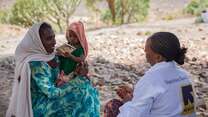
This mother brought her baby to an IRC hospital in Dadaab, Kenya, which has a special center for malnourished children. Photo: The IRC

This mother brought her baby to an IRC hospital in Dadaab, Kenya, which has a special center for malnourished children. Photo: The IRC

Nothing quite prepared me for my first encounter with a severely malnourished child. On a recent visit to the Dadaab refugee camp in eastern Kenya, an IRC doctor showed me into the Hagadera hospital, where the IRC treats malnourished children.

We entered the dimly-lit wooden building to find a middle-aged man lying on a cot with a small bundle in his arms. As the man sat up to greet us, I could make out the big round eyes of a tiny child in his arms. “How old is she?” I asked, imagining that this must be the most emaciated six-month-old baby I had ever seen. “She is three years old,” her father replied.
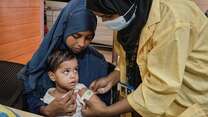
A mother and child at a hospital in Dadaab refugee camp, Kenya, where the IRC treats malnourished children.  Photo: The IRC

A mother and child at a hospital in Dadaab refugee camp, Kenya, where the IRC treats malnourished children. Photo: The IRC

Malnutrition in Dadaab is especially afflicting the most vulnerable—children under the age of five. A recent survey conducted by IRC found that over the past year malnutrition rates have increased in all three of Dadaab’s camps. In the Hagadera camp, where the IRC operates its hospital, the rate jumped to 13.6 percent from 11.2 percent.

Aid agencies and the Kenyan government are doing their best, but the influx of refugees into Dadaab is overwhelming. Around 5,000 refugees arrive every month. Most are fleeing violence and drought in Somalia. Many of new arrivals are exhausted and sick after their journey, which is particularly hard on young children. Once in the camp, refugees face a lack of water and sanitation and the threat of disease. The good news is that the IRC and other aid organizations have been able to reduce the rate of severe acute malnutrition in all three of Dadaab’s camps. Still, the anemia rate is startlingly high—more than 70 percent—clearly demonstrating the need for increased assistance to Dadaab’s young population.

Malnutrition is not limited to refugees.  In October 2008, the Kenyan government declared a national food emergency. Indeed, while on a drive through Fafi District, where the Dadaab camp is located, it becomes clear that the lack of food is a major problem in the region. Community leaders say that their wells are dry and that prized livestock are dying from starvation.  Meanwhile, they complain about sky high prices for food staples like maize. It is hoped that the fall rains will bring some relief. But the situation is dire and it is critical that international donors, aid agencies and the Kenyan government search for effective ways to address the crisis.

1 comment

Comments

if you know that adrought and

if you know that adrought and famine exists in somalia and you want help the somali people why don't you open branches for somalia's stabalized regions

Post new comment

The content of this field is kept private and will not be shown publicly.
Type the characters you see in this picture. (verify using audio)
Type the characters you see in the picture above; if you can't read them, submit the form and a new image will be generated. Not case sensitive.

ABOUT THIS BLOG        COMMENT GUIDELINES        DONATE        ARCHIVE