Since 1933, the IRC has provided hope and humanitarian aid to refugees and other victims of oppression and violent conflict around the world.
The IRC on Twitter
-
Thanks to all who voiced support for U.S. #CIR! What your calls on the Senate immigration reform bill achieved: t.co/z5OAvG7uFs
May 24, 2013
-
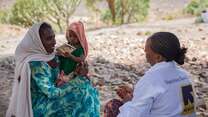
RT @DocEdH: The best of @theIRC: amazing local staff -in this case Immaculee M- listening thoughtfully to a community leader t.co/LH…
May 24, 2013
-
@angusa Thx for your interest in working with us! Positions posted at t.co/w3SDWahSdt; if a position isn't there it's no longer open.
May 24, 2013
-
A woman awaits a checkup at an IRC clinic inside #Syria. t.co/KYCuHf1zWA Photo: Peter Biro/IRC t.co/qptp52tHvi
May 23, 2013
-
Please tweet @theIRC if you have questions, comments or requests!
May 23, 2013
VOICES FROM THE FIELDTHE IRC BLOG
A measure of commitment
December 13, 2011
By Semir Tanovic
An IRC doctor examines a malnourished child in a hospital on the outskirts of Liberia's capital city, Monrovia. Fifteen years of civil war left the country's healthcare system in ruins.
The International Rescue Committee stands out in many ways from other humanitarian organizations. This may sound like a boast, but it is no exaggeration to say that we help millions of people every year, staying on as they recover from war or disaster. That commitment is reflected in the dedication of my IRC colleagues, many of whom devote not only their professional careers but also a portion of their paychecks to supporting our work.
IRC staff braved shelling and sniper attacks to bring the residents of Bosnia’s capital, Sarajevo, clean water to drink and natural gas for heat – helping them endure the longest siege in modern history. As the war continued and it became clear to my family that we had no choice but to leave our homeland, it was the IRC that helped us apply for sanctuary in the United States.
A similar process happens elsewhere in our work around the world: I remember one young man I met in the Nuba Mountains of southern Sudan. Growing up in a refugee camp in Kenya during Sudan’s civil war, he received an education from the IRC that helped him get a scholarship and graduate from college. When I met him, he had just returned to Sudan as a part of a repatriation program run by the IRC. He was working for the local government as an education coordinator, helping his community rebuild.
'Something More'
I work in the IRC’s Global Supply Chain unit, where we are known to constantly measure everything, from the time stamps on correspondence to the weight of an extra fuel tank in a vehicle. For us, “measure” is a very important word, one we pronounce with a capital “M.”
Just 10 or 15 years ago, the general public had no idea how much money humanitarian organizations spent on their operational costs vs. how much they spent on programs and services that directly benefit people. When the word got out that the IRC’s program percentage was over 90% — an impressive measure of our committment and efficiency — we were placed on the top of “best charities” lists by leading publications like Time, Forbes and Money.
I am proud to say that I work for the IRC.
Semir Tanovic is the director of the IRC’s Global Supply Chain. He is based in New York.
To Help

No comments yet.
Voices From...
Contributors


Comments
Post new comment