Since 1933, the IRC has provided hope and humanitarian aid to refugees and other victims of oppression and violent conflict around the world.
The IRC on Twitter
-
@missblair140 Glad you like the t-shirt. Thanks for your support!
May 21, 2012
-
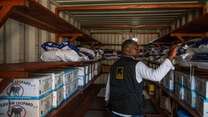
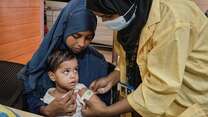
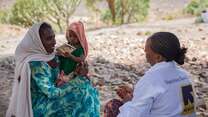
#Mali: Addressing hunger one health center at a time t.co/KzExlHb1
May 21, 2012
-
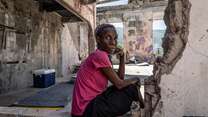
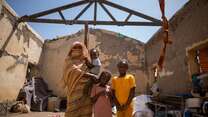
These pix from Mali show the devastating impact of the #drought sweeping across Africa's #Sahel region: t.co/6dO5jkrY
May 21, 2012
-
@mmm_dumpling @GPTW_Global @CorConnection @hiltonprize @NataCour @SharonDAgostino Thanks for your support!
May 18, 2012
-
On the blog: Uganda after #Kony: Alice Akoko’s story t.co/qpKLefsZ
May 18, 2012
VOICES FROM THE FIELDTHE IRC BLOG
Back to school
Haider Alzubaidy, a student at an IRC summer program for refugee youth in New York City, speaks with WABC TV.
A group of resettled refugee students ages five to 18 are ready to start the school year in their new home -- New York City -- thanks to an IRC summer program that helps young people who grew up in war zones and refugee camps adjust to life and education in United Satets.
"These students are from conflict zones, and even if they had a school, it is often closed, so that sense of routine is taken away,” says Academy principal, Elizabeth Demchak, speaking with the New York Times.
Here's what some of the students remember about what they left behind when they came to the U.S. and what they learned this summer:
"I have to run to other side, like to, like, zig-zag all the way to the school, because if I walk slowly, the sniper will catch me and kill me."
- Haider Alzubaidy, 18, a native of Iraq, telling WABC TV about his memory of running to his school in Baghdad, to avoid being shot by a sniper.
"In Nepal, we were refugees and we didn't get better education, we didn't go to boarding school high schools or learn lots of English."
- Anita Sharma, a refugee from Nepal, explaining differences in education to WABC TV
"In my country, the teacher teach what he wants. You don't understand, it's your problem."
- Basserou Kaba, 16 from the Ivory Coast, telling the AP that he is happy that U.S. teachers expect students to ask questions, unlike those in his homeland.
"And from the games, we know like, how important teamwork and - to learn. They can solve something together better. And sometimes, I think its a good way to learn."
Rigzin Wangyal, from Tibet, telling NPR about games that teach skills the students need to succeed in an American classroom, such as speaking up, teamwork, voicing opinions and tolerating disagreement.
Helen Samuels (AP TV)
"I saw how IRC helped me and other students who have come to the U.S. and deal with all the emotion and culture shock."
Helen Samuels, a Burmese refugee and former New York Refugee Youth Summer Academy student, telling CNN why why she returned to be a peer counselor for this year's class.
Comments
I feel so happy to and hear
I feel so happy to and hear what the IRC does towards refugee,I wish other NGOs should copy ex from example form IRC
Thanks
More will be communicated
Post new comment
Voices From...
Contributors