International Rescue Committee (IRC)

VOICES FROM THE FIELDTHE IRC BLOG

Delivering critical care, when and where it's needed most

Photo: Michael Scharff/The IRC

Photo: Michael Scharff/The IRC

Seated inside the communal hall in St. John’s Church in the remote Ugandan town of Iriiri, Gloria Irota is not attending a service.  Rather, she’s learning how to identify symptoms of malaria in young children. 

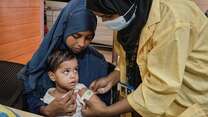
Although malaria has long been treatable, it still kills tens of thousands of Ugandan children every year. In response, the International Rescue Committee (IRC) is training dozens of local volunteers like Irota to tackle malaria and two other potentially fatal illnesses  diarrhea and pneumonia  in their villages in the country’s northeastern sub-region of Karamoja.

Every year, an estimated 17 percent of children under the age of five in Karamoja die from preventable illnesses.  There are myriad reasons: Severe food shortages have left 11 percent of the population malnourished and so more susceptible to disease, while a critical lack of mosquito nets leaves many exposed to malaria. 

Some 30 percent of local households get their water from unprotected sources and just 4 percent of the population have latrines, which also greatly increases the risk of diarrhea. “All three of these diseases are preventable and curable,” says Raphael Ogutu, IRC’s health manager in Karamoja.  “Yet many deaths still occur because people live in isolated villages and can’t reach a health center quickly.  Either they don’t have transport, or tensions between rival clans means they are unwilling to travel far.”

 Photo: Michael Scharff/The IRC

Photo: Michael Scharff/The IRC

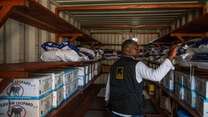
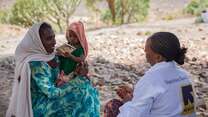
To provide treatment where it is most needed, the IRC is training 118 people in Karamoja as community medicine distributors (CMDs). These trainees have already been instructed as village health team (VHT) workers by the Ugandan Ministry of Health and the United Nations Children’s Fund (UNICEF), meaning they can identify sick children and refer them to the health centers, but they cannot presently dispense medicine. Once they are done with their latest round of training, the CMDs will be given a regular supply of drugs so that they can provide immediate and free treatment to children suffering from malaria, diarrhea, and pneumonia. Parents can bring their sick child to the CMD’s house at any time and receive treatment from a trained member of their own community who they know and trust. Irota says that is particularly useful in her community. “Here in Iriiri, a handful of villages are nine miles away from the closest health center. That would take about three hours to walk,” she explains.

Photo: Michael Scharff/The IRC

Photo: Michael Scharff/The IRC

But CMDs are only the first line of defense against these fatal, albeit preventable, diseases. “If a CMD treats a child but his or her symptoms persist, then the CMD can refer the child to the nearest health center for further treatment, Ogutu, the IRC’s health manager, explains. “The CMDs will work alongside existing health facilities, but the advantage of having them on the ground is that they can help to stabilize the child with medication before the long journey to the health center.” The first 70 CMDs will begin making rounds in their home villages in early May, and Ogutu believes the project could not be timelier. “Soon the rains will come to Karamoja, and with it, an increase in the number of kids developing the very illnesses our project is designed to treat,” he says.  “I’m confident that we’ve got the mechanisms in place to make a big impact, by helping to save lives.” Funding for the IRC’s Community Case Management program in Karamoja is being provided by the United Nation’s Children’s Fund (UNICEF).

1 comment

Comments

reading this brang tears to

reading this brang tears to my eyes i have thought about helping those less fortunate then us many times before but i didnt think i was old enough but i would love to help in any way in which is possible.

Post new comment

The content of this field is kept private and will not be shown publicly.
Type the characters you see in this picture. (verify using audio)
Type the characters you see in the picture above; if you can't read them, submit the form and a new image will be generated. Not case sensitive.

ABOUT THIS BLOG        COMMENT GUIDELINES        DONATE        ARCHIVE