News, Photos & Videos › Blog › Drought in Chad: An update from one of the hardest-hit areas [Q&A]
Since 1933, the IRC has provided hope and humanitarian aid to refugees and other victims of oppression and violent conflict around the world.
The IRC on Twitter
VOICES FROM THE FIELDTHE IRC BLOG
Drought in Chad: An update from one of the hardest-hit areas [Q&A]
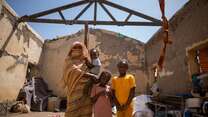
The Mongo district of Chad has been hit especially hard by the ongoing drought in Africa's Sahel region.
Photo: Sophia Jones-Mwangi
Chad is experiencing its worst drought in several years. In 2010, five regions of this vast country were affected. This year it is eight. To exacerbate the situation, violent conflicts in neighboring countries have cut off sources of food and income that the people in these regions relied on.
When I visited Chad in April, my International Rescue Committee colleagues there told me that it was children who were being hit hardest by the crisis — and that the situation was worsening. Since then the IRC has been scaling up our health and nutrition programs. In May, we started working in a new area: Mongo, where the children are some of the most seriously malnourished throughout all of Chad. We’re providing emergency nutrition to children under five, and to pregnant and new mothers in the district.
A few weeks ago I had a chance to speak with Dr. Charles Ido, the IRC’s nutrition manager in Mongo, and get an update on the situation there:
Have the rains started? Will the drought affect food crops?
Yes, we are now in the rainy season. It has been good so far, but we are only now in the middle of the season. We can’t tell this early how the harvest will be in September. But farmers have started to plant crops.
Are people still going hungry?
Yes, people still have little to eat. They are feeling the effects of the drought – it is very hard for them. They will be dependent on food aid until September when the harvest is expected. The World Food Program has started food distributions throughout the region. It is a small improvement and only enough for people to survive on.
How is the health of the children you are treating?
We are still seeing a lot of malnourished children. Their mothers are very worried, telling us, “we haven’t enough food and we don’t know what to do.” In June we treated 600 children for malnutrition.
Since we started working here, our health workers have been able to screen children early for malnutrition, and our aim is to ensure that they avoid medical complications. This is working as we are treating more children with malnutrition than children with both malnutrition and medical complications. But the general situation isn’t changing as families still don’t have enough to eat. In fact, I think the situation may worsen now that the rains have started. Access to the most remote areas is becoming difficult and mothers aren’t able to reach the health centers. Also our health workers are finding it difficult to get to the most remote villages. Mothers are going to very remote areas to work in the fields planting seeds, and are often cut off because of the rains making it difficult for them to get to the health centers or see a community health worker.
What is the IRC doing in Mongo?
Our health workers are going out into the community to support the 17 health centers throughout Mongo. These centers serve a population of 200,000. Our health workers give out information to mothers on hygiene and teach them how to prevent disease in their children. We are screening children from six months old to 59 months for sicknesses, particularly malnutrition. If we find malnourished children who have medical complications such as diarrhea or malaria they are referred to the hospital in Mongo town. For the malnourished children we are providing them with special therapeutic food, Plumpy’nut. We have a medical doctor and four nurses working full time in the stabilization ward at the hospital.
The IRC’s emergency nutrition program in Chad receives support from the European Commission’s Humanitarian Aid Department (ECHO) and the U.S. Office of Foreign Disasters Assistance (OFDA).
Posted in Emergency Response, Health, Sahel Crisis, Africa, Chad | Tags: drought, hunger, malnutrition, Sahel crisis, Mongo
No comments yet.
Voices From...
Contributors


Comments
Post new comment