Since 1933, the IRC has provided hope and humanitarian aid to refugees and other victims of oppression and violent conflict around the world.
The IRC on Twitter
-
Thanks to all who voiced support for U.S. #CIR! What your calls on the Senate immigration reform bill achieved: t.co/z5OAvG7uFs
May 24, 2013
-
RT @DocEdH: The best of @theIRC: amazing local staff -in this case Immaculee M- listening thoughtfully to a community leader t.co/LH…
May 24, 2013
-
@angusa Thx for your interest in working with us! Positions posted at t.co/w3SDWahSdt; if a position isn't there it's no longer open.
May 24, 2013
-
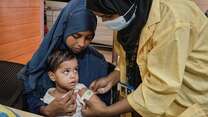
A woman awaits a checkup at an IRC clinic inside #Syria. t.co/KYCuHf1zWA Photo: Peter Biro/IRC t.co/qptp52tHvi
May 23, 2013
-
Please tweet @theIRC if you have questions, comments or requests!
May 23, 2013
VOICES FROM THE FIELDTHE IRC BLOG
Fighting malaria at home
April 25, 2011
By Yolanda Barbera Lainez
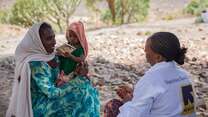
The IRC has trained 11,000 villagers in six countries in Africa to treat children in their own communities for malaria and other deadly conditions. Here, a community health volunteer in Agusha — a remote village near Ethiopia’s border with Southern Sudan — demonstrates how to give a child oral rehydration salts and zinc for diarrhea.
Health volunteers
The IRC has trained 11,000 villagers in six countries in Africa to provide lifesaving care for children in their communities who are suffering from malaria and other common illnesses. In the last six years, health volunteers like these women from a remote region of Ethiopia have provided over 1 million treatments to sick children.
All IRC Slideshows >
All Health, Ethiopia Slideshows >
Yolanda Barberá oversees the International Rescue Committee’s community-based child healthcare programs in Rwanda, Sierra Leone, Southern Sudan, Ethiopia, Ivory Coast and Uganda. Yolanda, a native of Spain, has worked in healthcare for over 14 years in Africa in Asia.
One of the most familiar and devastating diseases in the countries where the IRC works is also one of the most preventable and treatable: malaria.
The World Health Organization estimates that in 2009 alone there were 225 million malaria cases worldwide; 800,000 of these cases resulted in death. Children are the most vulnerable to this pandemic – 85% of malaria deaths occur in children under the age of five. In fact, in Africa a child dies of malaria every 45 seconds.
These startling statistics can be easily prevented if children receive the right treatment in time. But, sadly, only 17% of children under five with fever receive the medication they need. The main reason for this is that health facilities are just too far from their homes. Many mothers must walk up to 20 miles with their children just to reach a rural clinic.
To tackle this problem, the IRC has been training villagers in six countries in Africa to treat children in their own communities -- not only for malaria, but also for other deadly conditions like diarrhea and pneumonia. These men and women are selected by their neighbors and once they are trained they become community health volunteers. In the last six years, IRC-trained volunteers have provided over 1 million treatments to sick children.
So how do these volunteers deliver lifesaving care? To see their work in action I recently visited several volunteers who work in remote villages along Ethiopia’s border with Southern Sudan.
When children get sick, the first thing a mother does is go to the home of a local community health volunteer to seek help. There, the volunteer talks to the mother about the child’s symptoms and observes the child for convulsions and other danger signs. The volunteer must then decide whether the child needs to be referred to a health center or if the child can be treated at home.
If the volunteer can treat the child, she will continue to talk to the mother to find out information that will help her identify the disease the child suffers from. The volunteer then gives the child the first dose of the treatment to show the mother how it is done. To ensure the mother fully understands the correct procedure, the volunteer asks her to describe how she will give the treatment at home.
Once the volunteer is confident the mother can give the treatment, she dispenses the correct amount of medication with instructions to complete the full course. (Sometimes mothers stop giving the treatment as soon as they feel the child has recovered, and keep the remaining tablets in case any of their other kids fall sick).
In the case of malaria, the volunteer instructs the mother to give the treatment for a full three days even if the child’s fever disappears in one. In addition, the volunteer advises the mother on the use of insecticide-treated bed nets to help protect children from the bites of malaria-infected mosquitoes that spread the disease.
The volunteer tells the mother that it is important to continue feeding the sick child, even if he is listless and seems unwilling to eat. She also advises her on what to do if the child doesn’t improve. The last step is to schedule a follow-up appointment.
While going through all these steps, the volunteer carefully records all of the information about her young patient’s case in her register.
While I watched the volunteers at work, I recalled the many times I visited hospitals in my home country. I wish I had received the care, information, and ongoing support the mothers in these remote villages receive from these dedicated volunteers.
To Help
Mother's Day is May 8. Dedicate a set of mosquito nets to a special mother in your life.
No comments yet.
Voices From...
Contributors


Comments
Post new comment