Since 1933, the IRC has provided hope and humanitarian aid to refugees and other victims of oppression and violent conflict around the world.
The IRC on Twitter
-
Classes that Ghanian immigrant Olivia Laryea teaches are as much cultural exchange as cooking lesson: t.co/003Uw3x0
May 16, 2012
-
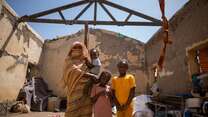
Latest news: Imminent rains will jeopardize response to Sudans conflict t.co/Y1Tgx583
May 15, 2012
-
Your generous support enables the IRC to help mothers and their families in conflict and disaster zones around the world.
May 15, 2012
-
Thank you to the 1,700+ donors who contributed more than $81,000 thru Mother's Day Rescue Gifts! Photo: Chris deBode/SV t.co/fhsCoEIa
May 15, 2012
-
The IRC's New Roots garden in San Diego is a veritable United Nations of farmers and foods. t.co/4zU4QgRO
May 14, 2012
VOICES FROM THE FIELDTHE IRC BLOG
The first-ever Refugee Congress
WASHINGTON, D.C. - On August 3, the first-ever Refugee Congress held in the United States took place in Washington, D.C. at Georgetown University's law school. The event was the brainchild of the UN Refugee Agency's (UNHCR's) Washington office. The International Rescue Committee (IRC) was one of several private agencies that stepped forward in support — I was invited to attend as an observer.
Shortly after arriving, I spotted Bank of America managing director Trinh Doan, a refugee from Vietnam who also serves on the IRC's board of directors. Trinh not only attended as a ‘refugee of distinction,’ she was featured in a stirring video (above) that UNHCR made for the event that portrayed six of the nearly 60 refugees who participated — one for each of the past six decades. In the video, Trinh relates the moving story of how her family escaped from Vietnam in the 1970s on a fishing boat and then spent two and a half years in Hong Kong before receiving a chance to restart their lives in the U.S. She also tells how startled her mother was on the family's first Halloween in America, when neighborhood children came around in costume and knocked on their door — no one had alerted the family to expect this!
The video celebrates the sixtieth anniversary of the UN Convention Relating to the Status of Refugees. Originally adopted to help refugees in Europe after World War II, the treaty defines who is a refugee — a person with a well-founded fear of being persecuted for reasons of race, religion, nationality, membership of a particular social group or political opinion. It also explains the rights and obligations between host countries and refugees and is considered the legal foundation for the work of UNHCR.
In Washington, the refugee participants —one from each of the 50 states, joined by some ten "notables" (download bios) — examined how the tradition of helping refugees could be improved. Who better to inform and lead this discussion than refugees themselves? Split up into working groups, refugee participants developed a proclamation that was unveiled at the end of the Refugee Congress.

Supermodel and IRC "Refugee of Distinction" Alek Wek (left) and the IRC's
Maggie Fleming at the Refugee Congress on August 3. (Photo: IRC)
The following day, August 4th, the refugees met on Capitol Hill with U.S. Congressional staff. Mr. Bertine Bahige, who fled the Democratic Republic of the Congo at 15 and now resides in Wyoming, was able to meet one-on-one with Senator Mike Enzi before Congress began its August recess.
The attendance of supermodel Alek Wek was a magnet for cameras. Well known on the runways of Milan, Paris and New York, Wek is also a refugee who fled Sudan as a teenager. She now uses the platform her career has given her to draw attention to the plight of refugees. In 2011 — the year in which South Sudan has achieved its independence from the north after decades of war — it is particularly meaningful to hear a Sudanese refugee speak out. Wek is eloquent not just about refugee needs but also about the many contributions refugees make to our society.
My strongest memory of the day, however, was the power in the voices of the refugees. From the 82-year-old woman from Poland whose father had perished in the Holocaust, to the Cuban-American state official in Florida, to the Sudanese former "Lost Boys" (now men) and the more recently arrived Iraqis. Everyone had a story and, while the refugees came from all around the world, many of their stories shared common themes, such as sadness over terrible loss, courage in the face of adversity, and resiliency in coping with many challenges. Gratitude for a chance to make a new life in the United States was another oft-expressed sentiment — as was amazement to find themselves involved in what may turn out to be an historic event: the first U.S. Refugee Congress.
No comments yet.
Contributors


Comments
Post new comment