Since 1933, the IRC has provided hope and humanitarian aid to refugees and other victims of oppression and violent conflict around the world.
Recent Posts
The IRC on Twitter
VOICES FROM THE FIELDTHE IRC BLOG
On the front line of medical care in a vast drought zone
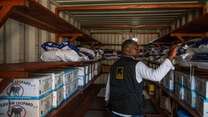
Midwife Linda Neloum checks the assignment roster for the week. She is part of a team of IRC health workers who fan out across drought-stricken Bahr el Gazal to support 26 rural health centers.
The International Rescue Committee is scaling up health and nutrition programs in Chad and dispatching emergency experts to Mali as millions of people in these countries and across the drought-ravaged Sahel region face a growing humanitarian disaster. IRC media and information manager Sophia Jones-Mwangi is in Chad's western region of Bahr el Gazal, posting updates on our response there.
Every Monday at 7am, IRC field coordinator Dr. Martin Bubu meets with 12 nurses, 10 midwives and other staff to discuss their schedules for the coming week and any urgent issues they need to address. Afterwards, they all climb into IRC vehicles to make journeys of up to three hours to the 26 health centers scattered throughout the region.
Before we went our separate ways, I talked with senior health manager Dr. Rondouba Firmin, nurse Elias Konodji and midwives Habiba Hassan and Linda Neloum.
I asked them whether they have seen an increase in illnesses among mothers and children. “Food is a big concern here,” explained Habiba. “They don’t have enough to eat, despite the food provided by the World Food Program.”
![]() |
Linda heads out with an IRC driver on her first assignment of the day. She and other IRC medical staff travel up to three hours to reach the remote health centers they support. |
On a logistical level, the IRC is trying to make it easier for people to access health services. “There is now an ambulance provided by the Ministry of Health but maintained by the IRC, so people can be referred to the hospital from the health centers, said Rondouba. “We have also put in place a strategy using a horse and cart in the villages to transport people to all 26 health centers.”
I asked them how it would be if the IRC were not here. “It would be a catastrophe!” exclaimed Rondouba. “Unfortunately, the Ministry of Health is very weak. It doesn’t have enough capacity to cover the health of this community without outside help.… They have limited drugs and supplies, so they need a lot of support. If IRC were to leave quickly, it would be a disaster.”
According to midwife Linda, the community is well aware of the shortcomings of local health services, “so now they rely on our services.” When people know the IRC will be visiting a health center, the news spreads. “One of people’s big concerns is that IRC will leave one day,” she said.
Elias noted that nurses are seeing an increase in certain illnesses. “We are treating more cases of infection such as pneumonia,” he said. “This is because of lack of food, which compromises the immune system so children are predisposed to infection.
Diarrhea, which leads to malnutrition, is also on the rise. The process is too often cyclical. “A baby comes to the health center, it is given therapeutic food and then recovers,” said Linda. “But sometimes the food that is for one baby is shared with the entire family or even sold, because the family is so poor. Then the same baby gets sick again.”
Tomorrow, from N’djamena, I leave for Guera, a region also struck by drought. Unlike Bahr el Gazal, the IRC is not yet working there, although plans are underway to start an emergency nutrition response for children under five and for new and pregnant mothers.
Get Involved
No comments yet.
Voices From...
Contributors


Comments
Post new comment