Since 1933, the IRC has provided hope and humanitarian aid to refugees and other victims of oppression and violent conflict around the world.
Recent Posts
The IRC on Twitter
-
RT @So_Jo1: @theIRC's Felix Leger on VOA today t.co/vzvenVNEJ1
May 22, 2013
-
RT @So_Jo1: @theIRC will provide 70,000 liters of clean water daily--enough potable water for 5,000 people a day to drink, cook and bathe #…
May 22, 2013
-
Less than 10 yrs after fleeing Somalia, Amal Kahim Jama & her family became refugees again, in Syria: t.co/wZkmKWqy00 via @AJEnglish
May 22, 2013
-
@IRCPress You've been quoted in my #Storify story "Crisis in Darfur, 10 Years On" t.co/guLOti8F02
May 21, 2013
-
RT @IRCPress: Race against time to aid new #Darfur #refugees in Chad before rains begin: t.co/z6eDBFeR1I
May 21, 2013
VOICES FROM THE FIELDTHE IRC BLOG
George Rupp in Kenya - Day 2
Here’s an update from International Rescue Committee president George Rupp, who is visiting IRC programs in Kenya and Uganda. Read day about Day 1 here.
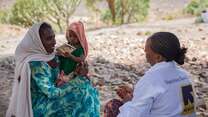
Day 2 - I next visited Kenya’s northwest, the Turkana region, to observe the IRC’s varying work with local communities. The contrast with urban Nairobi is striking. As we drive the one hour from Lodwar to Kalokol, the heat is intense and the terrain is almost like a moonscape – dry and barren, with large rocky outcrops. Kalokol is an area populated mainly by pastoralists who raise goats and camels. Here, we stop at a health center where the IRC partners with the Africa Inland Church to promote awareness about HIV/AIDS and encourage individuals to seek testing. The IRC also has a mobile unit that conducts testing and delivers treatment to those living with the disease. The IRC has been providing HIV/AIDS services here since 2004. But staff members tell me that Kenya’s ongoing food crisis — recent estimates are that 10 million Kenyans do not have enough to eat — is making their job much harder. “You can’t talk to people about HIV when they don’t have food,” Peter Mutanda, HIV/AIDS coordinator told me. He said, “If people are lining up to get their food baskets, they don’t have time to come to the health center. So we’re advocating for more food assistance on their behalf as well.” As we were visiting the Kalokol Heath Center a baby born a few kilometers away was rushed in to receive emergency antenatal care. I was relieved to hear that the baby is doing well. We move from the health center to a graduation ceremony for 72 students from the IRC’s ‘Families Matter’ training course. They have been learning why it is important to talk to their children about sexuality and gaining tips on how to approach such sensitive subjects. One elderly male graduate said: “According to Turkana tradition, these things aren’t discussed openly. Children usually get embarrassed and surprised when their parents try to talk about them. Initially, I wasn’t open; I was not able to speak to my children about sex or HIV. Since I’ve started coming here, now I’m able to talk to them.” Despite the harsh midday sun, the ceremony was truly entertaining, with traditional Turkana dancers and local singers. I was presented with a beautiful gift of a wooden staff and a colorful elder’s outfit.
Read about Day 3 of George Rupp's visit.Comments
please help me get
please help me get involved!!! i would love to find out how much it is to go and help... for me and my husband... i have wanted to do something like this my whole life
Post new comment
Voices From...
Contributors