Since 1933, the IRC has provided hope and humanitarian aid to refugees and other victims of oppression and violent conflict around the world.
The IRC on Twitter
-
@LCO_orchestra @RiyadNicolas @cadoganhall Hope it's an amazing night! Thanks for your support.
May 17, 2013
-
RT @DCComics: Amazing. 2.6k of you gave $150K+ to #WeCanBeHeroes. Big thanks from DCComics @SavetheChildren @mercycorps @theIRC t.co…
May 17, 2013
-
Cyclone Mahasan update: It spared Myanmar almost entirely, and the storm’s impact in Rakhine State was minimal.
May 17, 2013
-
Cyclone Mahasan update: Storm weakened & then dissipated Thurs, causing far less damage than had been feared as it passed over Bangladesh.
May 17, 2013
-
Call Senate Judiciary Cttee & urge them to pass #CIR that includes protections for asylees & #refugees: t.co/4OQrSoAGVt #CIRmarkup
May 16, 2013
VOICES FROM THE FIELDTHE IRC BLOG
A harvest of hope in Zimbabwe
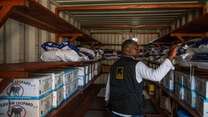
A chili farmer in Zimbabwe surveys his fields. With the International Rescue Committee's help, he and other small farmers now have more opportunities to sell what they grow and are better able to provide for their families and expand their businesses.
Agriculture was once a driving force of Zimbabwe’s economy, and then an economic crisis that peaked in 2008 put 85% of the population out of work. Without access to markets for their produce, the country’s small farmers were left struggling to make a living.
To help plant the seeds for recovery, the International Rescue Committee is matching Zimbabwean farmers with supermarkets, wholesalers, exporters, hotel restaurants and other buyers for their produce. We’re also organizing market fairs to help them reach new customers.
“Creating links to the market is extremely important,” says Paolo Cernuschi, who manages IRC programs in Zimbabwe. “When we find a willing buyer for our farmers’ products that is a reason to celebrate, because the farmers will now have a sustainable source of income.”
Calister Bore is one of more than 1,800 farmers taking part in the IRC program, which includes training in business skills as well as enrollment in Ministry of Agriculture courses in effective farming techniques. Participants also have a chance to visit flourishing farms to share experiences with other farmers and learn about best practices.
Calister says she has benefitted a great deal from the program: Thanks to a connection made through the IRC she can now sell her produce at fair prices at the wholesale Manica Produce Market in eastern Zimbabwe.
“I now have a direct market for my onions at twice the price the middleman offers,” she says.
With the extra income, Calister is planning to purchase pipes to extend the irrigation system on her farm. She hopes that that investment will enable her to harvest even more bountiful crops in coming seasons.
“This introduction to the formal markets has opened my eyes,” Calister says. “I will spread the news to my fellow farmers.”
Comments
It is very important for
It is very important for Africans in general to have access to markets in which they can sell their produce. A majority of African countries are dependent on agriculture to feed their people and drive their economies. With access to markets, farmers will be able to do more and produce more, while at the same time contributing to the livelihood of their families. Market access has been a big problem for many african farmers. I am glad to see that this is finally being addressed. More still needs to be done though. Perhaps we seriously need to take the example of Indonesia and other countries and consider seriously running Green Economies that advocate for sustainable use of resources along with sustainable development. An article well done.
Post new comment
Voices From...
Contributors