News, Photos & Videos › Blog › Inside the Sahel drought emergency
Since 1933, the IRC has provided hope and humanitarian aid to refugees and other victims of oppression and violent conflict around the world.
The IRC on Twitter
-
@LCO_orchestra @RiyadNicolas @cadoganhall Hope it's an amazing night! Thanks for your support.
May 17, 2013
-
RT @DCComics: Amazing. 2.6k of you gave $150K+ to #WeCanBeHeroes. Big thanks from DCComics @SavetheChildren @mercycorps @theIRC t.co…
May 17, 2013
-
Cyclone Mahasan update: It spared Myanmar almost entirely, and the storm’s impact in Rakhine State was minimal.
May 17, 2013
-
Cyclone Mahasan update: Storm weakened & then dissipated Thurs, causing far less damage than had been feared as it passed over Bangladesh.
May 17, 2013
-
Call Senate Judiciary Cttee & urge them to pass #CIR that includes protections for asylees & #refugees: t.co/4OQrSoAGVt #CIRmarkup
May 16, 2013
VOICES FROM THE FIELDTHE IRC BLOG
Inside the Sahel drought emergency
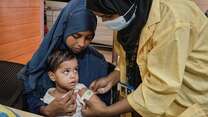
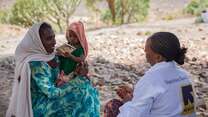
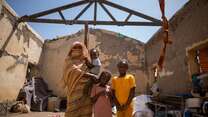
The IRC’s mobile health clinics support communities in northern Bahr el Ghazal that have been devastated by drought.
Photo: Henrik Boejen/IRC-UK
The International Rescue Committee is scaling up health and nutrition programs in Chad and dispatching emergency experts to Mali as millions of people in these countries and across the drought-ravaged Sahel region face a growing humanitarian disaster. IRC media and information manager Sophia Jones-Mwangi is in Chad's western region of Bahr el Gazal, posting updates on our response there.
MOUSSORO, CHAD, April 13, 2012 - I have finally arrived in Moussoro, Bahr el Gazal, after a five-hour drive from Chad’s capital city N’djamena. The IRC started providing emergency health care here in 2010, in response to the last severe drought to hit this arid region.
Traveling with me through Bahr el Gazal is Felix Leger, the IRC’s country director in Chad. As we drove across the desert in temperatures as high as 50 degrees Celsius (122 degrees Fahrenheit), Felix explained why this year’s drought has hit people in Chad especially hard. In 2010, he said, five regions were affected by drought. This year it is eight. Making matters worse, violent conflicts in neighboring countries have cut off sources of food and income that people from these already impoverished areas relied on.
After civil war broke out in Libya last year, for example, more than 80,000 migrant workers who used to send their earnings home returned to Chad without jobs. Another conflict, in northern Nigeria, has shut down trade in food and grain across the Chad-Nigeria border. Irregular rains in the south of Chad (traditionally the bread basket of the country), along with an insect infestation that has destroyed crops, have also left Chadians scrambling to find alternative sources of food.
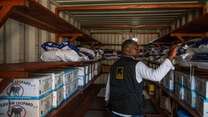
In response to the food crisis, the IRC is scaling up nutrition programs and medical assistance in all 26 of our health centers in Bahr el Gazal. We’re also dispatching a mobile clinic to reach nomadic communities.
Dr. Martin Bubu, the IRC field coordinator for the region, tells me that it’s children who have been hit hardest by this crisis. Typically about 750 children are treated for severe acute malnutrition in IRC clinics here during the month of March. That figure more than doubled in March 2012. “The situation is worsening,” Dr. Bubu said. “This is an emergency.”
Dr Bubu is also concerned that the incidence of measles, which exposes children to an increased risk of malnutrition, has worsened in the last six months. Nearly 9 out of ten children between the ages of six months and 12 years have not had the measles shots they need. “We plan to redress this next month by organizing a massive measles vaccination campaign,” Dr. Bubu said.
Health care in Chad is not free, so the medical assistance the IRC provides is vital for many families here. We are focusing our emergency response on some of the most vulnerable Chadians: children under the age of five, pregnant women and new mothers.
Tomorrow, I leave first thing in the morning to meet IRC medical staff in communities around Bahr el Gazal and talk with women about how the drought is affecting their lives.
To Help
Donate Now: On the ground in some of the world's most troubled places, the IRC helps people at their moment of greatest need — providing shelter, medical care and safety. And we stay for as long as we are able to help in the rebuilding of lives and livelihoods. Make a tax-deductible gift today.
Posted in Children & Youth, Emergency Response, Health, Sahel Crisis, Africa, Chad | Tags: children, health, malnutrition, humanitarian aid, emergency reponse, Sahel crisis, Bahr el Gazal, measles, Chad_Sahel
No comments yet.
Voices From...
Contributors


Comments
Post new comment