Since 1933, the IRC has provided hope and humanitarian aid to refugees and other victims of oppression and violent conflict around the world.
The IRC on Twitter
-
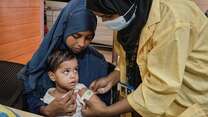
A woman awaits a checkup at an IRC clinic inside #Syria. t.co/KYCuHf1zWA Photo: Peter Biro/IRC t.co/qptp52tHvi
May 23, 2013
-
Please tweet @theIRC if you have questions, comments or requests!
May 23, 2013
-
Thanks to your support, we made @Klout's list of the world's most influential NGOs on social media: t.co/Abc4bTjEY0 #KloutPulse
May 23, 2013
-
RT @So_Jo1: @theIRC's Felix Leger on VOA today t.co/vzvenVNEJ1
May 22, 2013
-
RT @So_Jo1: @theIRC will provide 70,000 liters of clean water daily--enough potable water for 5,000 people a day to drink, cook and bathe #…
May 22, 2013
VOICES FROM THE FIELDTHE IRC BLOG
The IRC brings health to Hobyo
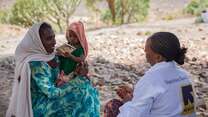
The IRC’s Dr. Marian Hassan gives a child a checkup at the new health clinic in Bajela, a village near the Somali coastal town of Hobyo.
Even as East Africa struggles to recover from its worst drought in 60 years, a new food crisis is looming in the wake of an unusually short rainy season. With the support of the We Can Be Heroes campaign, the International Rescue Committee has reached over 1.15 million people in Somalia, Ethiopia and Kenya with lifesaving assistance. We’re fighting malnutrition, building water systems, providing medical care, educating communities on ways to prevent disease, and empowering women to protect themselves from violence that spikes during times of crisis. Here’s just one story of our work in action:
Despite the dangers, the IRC has worked in Hobyo and surrounding villages since 2008, but with a new assessment of humanitarian needs, and at the request of local communities, we initiated a primary health care program this July.
“This is a wonderful opportunity,” explains Prafulla Mishra, the IRC director for Somalia. “Not only have we been asked by the community to provide health care for them, but they are taking ownership from the very beginning. They are participating fully in the day-to-day operations of the centers we are running.”
Marian Hassan, an IRC medical officer in Somalia, helped establish the centers in Galkayo, the capital of Mudug administration region in north-central Somalia, and in Bajela and Eldibir villages. The health team is concentrating on prevention and treatment of chronic conditions like diabetes and respiratory disease in the elderly and anemia and malnourishment in children.
“The community is extremely happy to have us here,” says Dr. Hassan. “You can’t imagine the way they welcomed us. There was no clinic here before.”
In order to bring health and hygiene education to some 14,000 Somalis in the region, the IRC is training 20 community health workers in each village to identify illnesses such as malaria so that people, especially children, can be treated early.
For Abshiro Hassan Awale, a mother of five from Eldibir, having the clinic so close to home is far more than a convenience. “I cannot travel great distances,” she says. “We used to go to Galkayo, 180 kilometers [111 miles] away. I paid $100 for transportation, plus the costs of staying overnight and the medicines. Now I get medicine and consultation free of charge. I have access to the service at any time in the day.”
Abshiro has used the center twice. “The first time I brought my child, who was coughing. My child got well very soon when I gave her medication. The second visit, I came to the center as a patient myself. Everyone was so kind to me. They gave me good advice and medication.”
Learn More and Help
No comments yet.
Voices From...
Contributors


Comments
Post new comment