Since 1933, the IRC has provided hope and humanitarian aid to refugees and other victims of oppression and violent conflict around the world.
The IRC on Twitter
VOICES FROM THE FIELDTHE IRC BLOG
The IRC helps support thousands of Pakistanis fleeing renewed border clashes
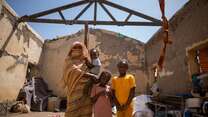
Since January, IRC protection teams at the Jalozai camp have registered thousands of families fleeing fighting in northern Pakistan. Registration enables them to receive essential humanitarian aid and support.
The massive influx is finally tapering off at Pakistan’s Jalozai camp. For weeks, teams from the International Rescue Committee have been registering tens of thousands of Pakistanis who’ve fled their homes since January. At the peak of the arrivals two weeks ago, they were registering three thousand families a day. In all, close to a half million people have passed through the camp since January, registering to ensure they receive vital humanitarian aid. IRC staff at the camp says the numbers of those registering have dropped recently, only because the villages in the conflict area have been all but emptied. There is no one left.
Massive shifts of humanity are nothing new in Pakistan. Since the 1980s there has been an ebb and flow of Afghan refugees fleeing conflict at home. And for the past three years, fighting between Pakistan troops and militants near the Afghan border has forced hundreds of thousands of Pakistanis to leave their homes. This most recent cycle erupted in January in the Federally Administered Tribal Areas (FATA), when Pakistan troops were deployed to rout militants.
24-year-old farmer Ihsan Ullah is typical of many now at the Jalozai camp for the displaced. He’s been here since late February. He, his wife and children fled here two days after a shell dropped on nearby house, killing a neighbor. The family’s current home is a single tent at Jalozai. Like so many of the tens of thousands now in the camp, Ihsan Ullah’s life is difficult. The camp is miles from the nearest village, so he can’t get a job. Two months ago he took out a loan for the equivalent of $100 (typically a year’s salary in rural Pakistan), and despairs of paying it back. But worse, he’s running out of money. He says he only has about 1000 Rupees (approximately $11) left. He bemoans conditions at the camp as well. While his family does receive a monthly food ration through the United Nations, he complains it’s not enough, and contains no fresh food. And coming from a culture where family privacy is paramount, his family shares a latrine and water access with people they don’t know. Ihsan Ullah says it makes his wife uncomfortable about leaving her tent, even when she is covered in her blue burqa. They have no electricity in the tent, and there’s little for them to do. Ishan Ullah says there is one positive, the fact that his eight-year-old daughter attends classes at an IRC-run school. She had no school at home. But still, he says, like so many here, the entire family yearns to return.
The conditions at Jalozai are the reason why anyone who can, lives with relatives or rents an apartment nearby. Only about 15% of those who’ve fled the most recent upsurge in violence are at Jalozai. The rest have registered and moved on to live with relatives or rent apartments. Even for them, life is extremely difficult. Many have no income, live in crowded conditions, and have no access to health care. They return only to pick up their monthly food ration of rice, flour, oil, and beans. But all share a dream of returning to their homes.
Learn More
No comments yet.
Voices From...
Contributors


Comments
Post new comment