Since 1933, the IRC has provided hope and humanitarian aid to refugees and other victims of oppression and violent conflict around the world.
Recent Posts
The IRC on Twitter
-
@IRCPress You've been quoted in my #Storify story "Crisis in Darfur, 10 Years On" t.co/guLOti8F02
May 21, 2013
-
RT @IRCPress: Race against time to aid new #Darfur #refugees in Chad before rains begin: t.co/z6eDBFeR1I
May 21, 2013
-
RT @MoveEndViolence: Why do we need a #movement to end #VAWG? #MovementMaker Heidi Lehmann of @theIRC on the blog. t.co/H74c80BdAs
May 20, 2013
-
@Doylech @oneworldadopt @Just_Naomi_chan @socialfund @AFRIpads @tamaraduker @lynndalsing @HuTerra @scribblymouse thanks for your support!
May 20, 2013
-
RT @IRCuk: Thanks @LCO_orchestra @RiyadNicolas @cadoganhall for an excellent concert & for supporting our work w. Syrian refugees #TheAsfar…
May 20, 2013
VOICES FROM THE FIELDTHE IRC BLOG
"It could be any one of us": Supporting Syria’s women refugees
May 17, 2012
By The IRC
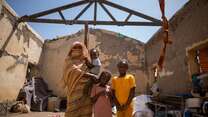
Syrian women await a distribution of aid in the northern Jordanian city of Ramtha. Women and girls fleeing Syria say they have been directly targeted in the ongoing conflict.
Violence against Syrian civilians escalated again this weekend, with more than 100 people killed in Houla according to the U.N., including 34 women and 49 children. The IRC continues to support displaced Syrian women and families in Jordan. Learn more about our work below from Asmaa Donahue, a technical advisor with the IRC’s Women’s Protection and Empowerment Team.
By Asmaa Donahue
I’m from a small town in the American Midwest, but sitting and listening to the stories, I couldn’t help but feel that these women and girls could just as easily be my mother, aunts or cousins — their patience worn thin by worry, implacable toddlers, and the endless effort to provide for their families.
I was in the Jordanian border town of Mafraq, where I met with dozens of Syrian refugee women and girls to assess their protection needs. Thousands have crossed into Jordan — alone or with family members — since the outbreak of violence in Syria more than a year ago. There are now an estimated 30,000 Syrian refugees in Jordan, about half of them women.
So many of the women’s complaints are easy for me, as a woman, to relate to: not being able to pay the rent or access decent pre-or antenatal care. And others are (I hope) very abstract—such as not knowing the fate of loved ones, and the trauma that lingers after fleeing an armed conflict in which women and children have been attacked and targeted. Somehow, however, I felt reassured by these strong women who were obviously distressed, but still put their own needs last. And of course, as strong women keeping the proverbial home fires burning, they do put their own needs last.
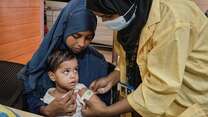
Many of these stalwarts are quite young, like the three teen mothers in black abayas (robes) and niqabs (face veils) that I met waiting their turn with their children at a health clinic. Like many of the refugee women I met, they were as smartly dressed as their reduced means allowed: Clean clothes and a hint of style being the first line of defense in their strategy to keep it all together at a chaotic time. My colleague Rama and I cooed over a baby and struck up a conversation with his 19-year-old mother. She looked stressed and a bit lost. She told us she had two other toddlers and needed baby formula, as she hasn’t been able to breastfeed. While local Jordanian charities have been impressive in their response, it’s clear they’re struggling to meet the needs of expectant and new mothers that continue to arrive.
The three teen moms (we learned not to ask for names as most of the women fear retribution against relatives or themselves when they return home) told us they were sisters-in-law, married to three brothers. They had been in Jordan for two months, three young couples and their children — totaling eleven household members — in a three-room apartment. Like the majority of Syrian refugees in Jordan, they live in crowded apartments, and try to remain below the radar. After a week of home visits and focus groups, Rama and I became familiar with the scenario, and nodded when the young women told us that they pay three times the normal rent and have no hot water, only a rooftop water tank that they can rarely afford to fill.
What struck us most was the tremendous resilience of these women. Even in those packed apartments, somehow Syrian and Jordanian women found each other and connected, opening their homes and hearts to each other to share their news, their insight, and their solidarity.
Sadly, one group remained isolated even in the warmth of these gatherings. It’s something I’ve seen time and time again in armed conflict. Due to the stigma attached to rape, survivors of sexual violence can be surrounded by supportive friends, neighbors and family, yet still be unable to share their pain. A key International Rescue Committee goal is to break through this isolation, offering both physical and emotional space where survivors of sexual violence and trauma can find the confidential services and the support they require to heal. We are currently working on setting up such spaces, partnering with a Jordanian aid agency to open a pair of health clinics in two border cities. While the clinics will provide primary health care, medicine and referrals to refugees and vulnerable Jordanians, they will also provide what we call psychosocial support- emotional healing for women and girls in need, after the horrors of war.
Asmaa Donahue is a technical advisor with the IRC’s Women’s Protection and Empowerment Team
Please donate now to help the IRC provide critical support to Syrian families in need.
More from the IRC:
From Syria to Jordan: Refugees escaping conflict
Jordan's refugee crisis: Where to begin
The view from Jordan: Helping Syria's refugees
More from other sources:
No comments yet.
Voices From...
Contributors


Comments
Post new comment