Since 1933, the IRC has provided hope and humanitarian aid to refugees and other victims of oppression and violent conflict around the world.
The IRC on Twitter
-
Thanks to all who voiced support for U.S. #CIR! What your calls on the Senate immigration reform bill achieved: t.co/z5OAvG7uFs
May 24, 2013
-
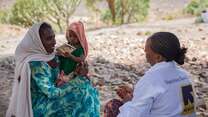
RT @DocEdH: The best of @theIRC: amazing local staff -in this case Immaculee M- listening thoughtfully to a community leader t.co/LH…
May 24, 2013
-
@angusa Thx for your interest in working with us! Positions posted at t.co/w3SDWahSdt; if a position isn't there it's no longer open.
May 24, 2013
-
A woman awaits a checkup at an IRC clinic inside #Syria. t.co/KYCuHf1zWA Photo: Peter Biro/IRC t.co/qptp52tHvi
May 23, 2013
-
Please tweet @theIRC if you have questions, comments or requests!
May 23, 2013
VOICES FROM THE FIELDTHE IRC BLOG
New Roots in America
October 10, 2012
By The IRC
Fresh produce grown by refugees in a New Roots community garden.
When refugees arrive in the United States, they leave behind everything familiar. For many that also means losing ties to the land and a tradition of growing their own food. In response, the International Rescue Committee has launched New Roots, a nationwide program that helps refugees establish community gardens, farmers markets, food pantries and farm-based businesses. The IRC provides agricultural training, tools and seeds, as well as connections to potential buyers. The program brings refugees together to share experiences and plant new and lasting roots in their adopted communities.
![]() |
Puspa Lal Regmi, a refugee from Bhutan, harvests greens and other produce at a New Roots community garden in Boise, Idaho. Photo: Peter Biro/IRC |
![]() |
Refugees sell produce at a farmers market in the City Heights neighborhood of San Diego. Like most IRC-supported markets, this one accepts food stamps and vouchers from WIC, the program specifically designed to help supplement low-income families with children or pregnant women. Photo: Peter Biro/IRC |
![]() |
Refugees and their children are at high risk for developing diet-related diseases. Hailey Nielson (center), an IRC education coordinator in Salt Lake City, informs a Burmese refugee about good nutrition habits. Photo: Peter Biro/IRC |
![]() |
Sudanese refugee Bossn Gumaa works at a refugee owned and operated goat farm outside Phoenix, Ariz. The farm was started with support from a New Roots micro-enterprise program. Photo: Peter Biro/IRC |
![]() |
New Roots enables refugees to make extra money by selling vegetables to restaurants and food companies. Here, the IRC’s Ralph Achenbach shows locally grown vegetables from a New Roots farm to Jeff Rossman, executive chef at the Terra American Cuisine restaurant in San Diego. Photo: Peter Biro/IRC |
Get Involved in New Roots
Comments
This program seems to be very
This program seems to be very innovative and successful. Congratulations. Hopefully, it will expand across the country. As an adjunct, you might be able to pair IRC clients with elderly farmers who've been unable to find the next generation to continue their farm. Maybe, the American Farmland Trust (farmland.org) would be interested in a joint program.
Post new comment
Voices From...
Contributors