Since 1933, the IRC has provided hope and humanitarian aid to refugees and other victims of oppression and violent conflict around the world.
The IRC on Twitter
-
Thanks to all who voiced support for U.S. #CIR! What your calls on the Senate immigration reform bill achieved: t.co/z5OAvG7uFs
May 24, 2013
-
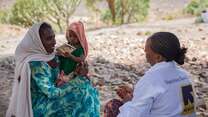
RT @DocEdH: The best of @theIRC: amazing local staff -in this case Immaculee M- listening thoughtfully to a community leader t.co/LH…
May 24, 2013
-
@angusa Thx for your interest in working with us! Positions posted at t.co/w3SDWahSdt; if a position isn't there it's no longer open.
May 24, 2013
-
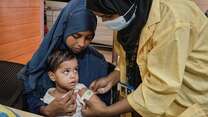
A woman awaits a checkup at an IRC clinic inside #Syria. t.co/KYCuHf1zWA Photo: Peter Biro/IRC t.co/qptp52tHvi
May 23, 2013
-
Please tweet @theIRC if you have questions, comments or requests!
May 23, 2013
VOICES FROM THE FIELDTHE IRC BLOG
Race against time in Haiti [Photos]
The IRC’s Melissa Winkler is in Haiti to help earthquake survivors tell their stories and to document the IRC’s emergency work. She shared these photos from the shanty towns of Port-au-Prince, where a high concentration of people, paltry or non-existent sanitation and the buildup of waste pose a massive health threat. IRC workers and community members are working together, racing against time and the approaching rainy season to prevent outbreaks of disease. This photo blog first appeared in the Huffington Post.
I’m told The Simbi Continentale was once a grand hotel in Port-au-Prince. It closed in 1986 after a period of extreme turbulence and an army rebellion that forced the resignation of Jean-Claude Duvalier’s regime. The defunct hotel quickly fell into disrepair. Destitute families began moving into the decaying rooms and setting up camp on the grounds outside. Year after year, the place, now known as Kawoussel, grew more congested and filthy. The pool, as you can see, became a fetid dumping ground for garbage and other waste. That there were no functioning toilets for 180 families living there contributed to the squalor. (Photo: Melissa Winkler/The IRC)
All that was before the catastrophic earthquake that ravaged much of Port-au-Prince and surrounding areas on January 12. Since then, newly homeless Haitians have moved in and the population at the already heaving site has nearly doubled. Earthquake survivors have created makeshift shelters of metal scraps, plastic sheeting, and even flattened cereal boxes, expanding the existing little village of ramshackle huts. On the day I visited this week, tempers were flaring as more and more people squeezed in and sanitary conditions deteriorated even further. (Photo: Melody Munz/The IRC)
In another swelling shanty town, Bel Air, some 3,600 people have been living amid growing mounds of human waste and trash. In fact, the site itself sits atop a sprawling garbage dump. My colleague Melody Munz, an environmental health coordinator, signed a new contract here a couple of days ago with community representatives to build more latrines and showers and mobilize community members to start cleaning up the appalling mess. Melody says the high concentration of people, paltry or non-existent sanitation and the buildup of waste in countless settlements like Bel Air pose a massive health threat. (Photo: Melissa Winkler/The IRC)
The rainy season, which usually starts in late March, is only expected to cause more misery. This Port-au-Prince neighborhood is called Cité de la Joie, but I can tell you that there’s no joy here. Many residents are living and sleeping next to open sewers and feces-clogged drainage channels. When heavy rain starts battering this hamlet, these sewers and channels will likely overflow, washing human waste everywhere and creating conditions ripe for disease. (Photo: Melody Munz/The IRC)
Melody tells me that if the sanitation problem is not adequately addressed now, it will be hard to stem the spread of dysentery and other diseases that arise when fecal matter contaminates food and water. That’s why the IRC’s environmental health team is focusing relief efforts on sites like Kawoussel and Bel Air and neglected communities like Cité de la Joie, which have received no sanitation assistance to date. (Photo: Nancy Farese)
So far, our sanitation team has constructed dozens of pit latrines and bathing stations at five settlements and is tackling five more sites and a hospital in the coming weeks, which will dramatically improve health and hygiene conditions for more than 50,000 Haitians. Our cash-for-work program, starting shortly, will focus on needed sanitation interventions like drainage clean-up, waste disposal in settlements and removing pools of stagnant water, which tend to be breeding grounds for mosquitoes that can spread malaria and dengue. (Photo: Ezra Millstein)
In the meantime, we’re distributing thousands of household hygiene kits, which include items like water containers, soap, detergent, toothbrushes, toothpaste, toilet paper and shampoo, and special kits with added sanitary supplies for women. Aside from improving hygiene, these kits seem to lift spirits too. It’s a good feeling to brush your teeth and wear a clean pair of underwear. (Photo: Ezra Millstein)
Back at Kawoussel, Blaise Jean-Liverson, an IRC engineer, along with a newly hired Haitian crew make fast progress on a set of desperately needed pit latrines. These latrines are being built in a recently cleared field that had been used as the settlement’s bathroom—steps away from where the homeless live and children play. Blaise tells me that ditches beneath latrine are dug two meters deep, so that waste is contained, there’s no concern about run-off, and the waste eventually decomposes. (Photo: Melissa Winkler/The IRC)
IRC teams are also recruiting "hygiene promoters" in settlements and communities – the best tool out there to find out the real needs of the communities and to spread messages about good health and hygiene practices. The assertive Madame Armelle Chérie is in charge of volunteer coordination at Kawoussel. She's been partnering with Melody to rally a cadre of energetic hygiene promoters who will have a busy week this week, helping register residents for a distribution of hygiene kits and other supplies set for Friday. (Photo: Melissa Winkler/The IRC)
TO LEARN MORE: Visit our Haiti Special Report page TO HELP: Donate Now Your donation will help the IRC rescue men, women and children driven from their homes by conflict, violence and natural disaster in over 40 countries including Haiti, Pakistan, Iraq, Sudan, Myanmar and the Democratic Republic of Congo.
No comments yet.
Voices From...
Contributors


Comments
Post new comment