Since 1933, the IRC has provided hope and humanitarian aid to refugees and other victims of oppression and violent conflict around the world.
The IRC on Twitter
-
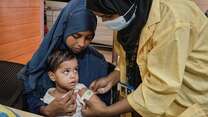
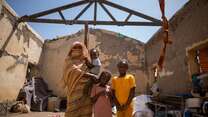
A woman awaits a checkup at an IRC clinic inside #Syria. t.co/KYCuHf1zWA Photo: Peter Biro/IRC t.co/qptp52tHvi
May 23, 2013
-
Please tweet @theIRC if you have questions, comments or requests!
May 23, 2013
-
Thanks to your support, we made @Klout's list of the world's most influential NGOs on social media: t.co/Abc4bTjEY0 #KloutPulse
May 23, 2013
-
RT @So_Jo1: @theIRC's Felix Leger on VOA today t.co/vzvenVNEJ1
May 22, 2013
-
RT @So_Jo1: @theIRC will provide 70,000 liters of clean water daily--enough potable water for 5,000 people a day to drink, cook and bathe #…
May 22, 2013
VOICES FROM THE FIELDTHE IRC BLOG
In Uganda, hoping water = peace
June 4, 2009
By The IRC
Lazaro Loyep’s shovel cuts into the dry earth. It takes him a few attempts before he manages to fill it with soil, which he deposits into a plastic container to be carted away. Behind him, scattered across an area roughly the size of a football field, some 280 other men and women are also busy chopping, scooping and carting away the earth with shovels, pick axes and wheel barrows.
Here in Rupa, Karamoja, in Uganda, much of the community has gathered to work on one of five dams being de-silted as part of a project organized by the International Rescue Committee (IRC), to improve access to water for villagers’ livestock. In recent years, a prolonged drought has led to serious water shortages, so it is vital to ensure that existing sources provide as much water as possible. “During the dry season, and particularly when there are prolonged periods of drought, herders are forced to journey long distances in search of water for their cattle,” says Ben Obim, IRC’s environmental health officer in Karamoja. “On the way, they may cross into a rival clan’s area, leaving them susceptible to attack.”
With few other opportunities to earn a livelihood in this part of Uganda, local clans are highly protective of their cattle and the few sources available to water them. So, when rival herders try to use their water supply, conflict can occur. And, in an area where automatic weapons are abundant, events can quickly escalate out of control. “By de-silting dams, we’re increasing the amount of water they can hold and so the amount available for people to share. This water will remain here longer during the dry season, meaning that people won’t have to seek water elsewhere so often,” Obim says: Currently some dams, including the one in Rupa, are so clogged with silt that they can barely hold more than a month’s supply of water.
At the dam in Rupa, I meet Lotud Lopeykonga, 34. “Right now the only water is far away,” says Lopeykonga, pausing momentarily from chipping at an embankment. “If we can bring our animals to drink here, then things will be more peaceful.” Working a short distance away, Aleper Lotyang, 29, adds: “The closest place where we bring our animals every day is a two-hour walk away. This dam is going to help us.”
For their efforts, Lotyang, Lopeykonga, and other workers are given vouchers that they can swap for agricultural goods, such as hoes, ox plows and livestock vaccines. However, 20 percent of the voucher’s value is paid in cash so that workers can receive some money for other, urgent concerns. “This project alone won’t be able to end the rivalry between clans,” says Obim, “But when I look around and see the number of people working on just this one dam and their enthusiasm for the project, I can say this is definitely going to have a measurable impact on easing tensions.”
Funding for IRC’s Environmental Health projects in Karamoja is being provided by the European Commission’s Humanitarian Aid Office (ECHO) and the European Development Fund (EDF).
No comments yet.
Voices From...
Contributors


Comments
Post new comment