News, Photos & Videos › Blog › This Week's Voices: Mali crisis 'threatens millions'
Since 1933, the IRC has provided hope and humanitarian aid to refugees and other victims of oppression and violent conflict around the world.
Recent Posts
The IRC on Twitter
-
@IRCPress You've been quoted in my #Storify story "Crisis in Darfur, 10 Years On" t.co/guLOti8F02
May 21, 2013
-
RT @IRCPress: Race against time to aid new #Darfur #refugees in Chad before rains begin: t.co/z6eDBFeR1I
May 21, 2013
-
RT @MoveEndViolence: Why do we need a #movement to end #VAWG? #MovementMaker Heidi Lehmann of @theIRC on the blog. t.co/H74c80BdAs
May 20, 2013
-
@Doylech @oneworldadopt @Just_Naomi_chan @socialfund @AFRIpads @tamaraduker @lynndalsing @HuTerra @scribblymouse thanks for your support!
May 20, 2013
-
RT @IRCuk: Thanks @LCO_orchestra @RiyadNicolas @cadoganhall for an excellent concert & for supporting our work w. Syrian refugees #TheAsfar…
May 20, 2013
VOICES FROM THE FIELDTHE IRC BLOG
This Week's Voices: Mali crisis 'threatens millions'
March 30, 2012
By The IRC
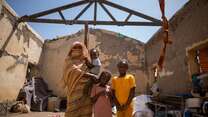
The International Rescue Committee's director of emergency response programs on the hunger crisis and escalating violence in Mali ... plus other notable quotes touching on the IRC's work around the world.
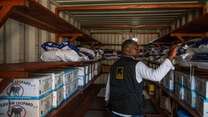
“The hunger crisis in Mali combined with escalating violence is threatening the lives of millions of people.”
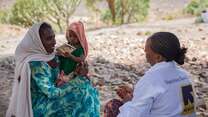
- Bob Kitchen, director of the IRC’s emergency response programs. IRC emergency experts arrive in Mali next week to begin preparations for health, nutrition, water and sanitation programs in eastern Mali, which has been hard-hit by drought and is also hosting populations displaced by fighting in the north.
"I remember coming to Boston for the first time from my home in Honolulu and seeing an alien city, grey and cold and moving too fast for me. How much more foreign to a man who will never have set foot on an airplane until the day he leaves Thailand for Massachusetts? A man who has never tasted a hot dog, never owned a refrigerator or shoes with laces, never seen snow?"
- Sarah Wayne Callies, on meeting a Burmese refugee in Thailand who was preparing to relocate to Boston. The actress and IRC Voice has been blogging about her recent visit to Thai camps on the border with Myanmar, also known as Burma, where the IRC assists Burmese refugees.
"For journalists, the standard refugee scenario is the classic one. If you’ve watched news coverage about Syria in the past week, you have likely seen it. It’s where thousands of refugees are packed into tented border camps. That’s how Turkey has responded to its influx of Syrians. It’s a different scenario in Lebanon and Jordan, where other Syrians have fled. Neither country has large camps, and most of the refugees I speak with say, if there were, they would avoid them."
- Ned Colt, IRC regional media manager. He says that many refugees -- as in the case of Syrians fleeing growing violence in their country -- are moving into urban areas, which makes them more difficult to find and support.
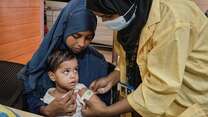
"My new skills as a weaver of baskets and mats provide me with a small income to help support my family — which has improved things with my husband."
- Saadia, a Somali woman who received counseling and vocational skills training from the IRC after she was beaten by her husband outside the Dadaab refugee camp.
"In northern Uganda, the conflict created a massive number of IDPs [internally displaced persons] -- virtually 100% of the population in some places -- but very few refugees. The fact that the great majority of people stayed within Uganda does not diminish the hardship they suffered."
- Cristine Betters, IRC country director in Uganda, responding to a question we received via social media about whether Ugandans who fled Jospeh Kony and his rebel group the Lord's Resistance Army (LRA) ever became refugees.
“Before, the bridge was dangerous. It has now changed for the better.”
- Annamore Chinyede, 11, who was so happy with the new footbridge the IRC helped build in her village in Zimbabwe that she danced her way across it. The bridge made it possible for Annamore and her friends to get to school without wading through a river.
"Brave femme, leve-toi contre la violence!" (Brave woman, stand up against violence!)
- A banner held by Maimouna Konè, an Ivorian woman who was at the recent launch of a new IRC campaign that uses social media to change attitudes that foster violence against women. Research conducted by the IRC in 2010 found that three in five women in rural Ivory Coast had experienced some form of violence over their lifetime and that, in the overwhelming majority of cases, the perpetrator had been a male partner.
No comments yet.
Voices From...
Contributors


Comments
Post new comment