News, Photos & Videos › Blog › "We've been running for a year" / Congo
Since 1933, the IRC has provided hope and humanitarian aid to refugees and other victims of oppression and violent conflict around the world.
The IRC on Twitter
-
Thanks to all who voiced support for U.S. #CIR! What your calls on the Senate immigration reform bill achieved: t.co/z5OAvG7uFs
May 24, 2013
-
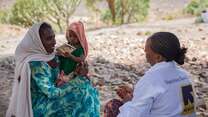
RT @DocEdH: The best of @theIRC: amazing local staff -in this case Immaculee M- listening thoughtfully to a community leader t.co/LH…
May 24, 2013
-
@angusa Thx for your interest in working with us! Positions posted at t.co/w3SDWahSdt; if a position isn't there it's no longer open.
May 24, 2013
-
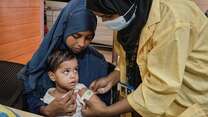
A woman awaits a checkup at an IRC clinic inside #Syria. t.co/KYCuHf1zWA Photo: Peter Biro/IRC t.co/qptp52tHvi
May 23, 2013
-
Please tweet @theIRC if you have questions, comments or requests!
May 23, 2013
VOICES FROM THE FIELDTHE IRC BLOG
"We've been running for a year" / Congo
November 12, 2008
By The IRC
Gina Bramucci continues her report from Kibati, Democratic Republic of Congo, as the camp refilled and the International Rescue Committee's firewood distribution program restarted on Sunday.
"The IRC emergency response team made it back to Kibati on Sunday, after ensuring that the situation was calm and civilians had returned home. Most of those who fled the fighting on Friday trickled back over the weekend, and as we drove into the camp late arrivals were just beginning to re-establish shelters.
The sky was gray on Sunday, so even as IRC staff organized the distribution grounds and unloaded firewood, we were wary of rain. Aisha Bain, the IRC staff responsible for firewood distributions in Kibati, pushed through the morning impervious to menacing clouds.
Firewood distribution in Kibati is important on several levels right now, and the team is trying to reach all of the families in the camp as quickly as possible. This is not just a distribution to facilitate cooking, although that's an obvious outcome. For IRC, this is the first in what will be many steps taken to mitigate the risks faced by displaced civilians.
In conflict areas trips outside of the population center or camp in search of firewood and water expose civilians to a higher potential of violent attacks. In Congo, men and boys can be beaten, intimidated or forced into labour by armed groups. But the chore of collecting firewood falls to women and girls, and for them, the stakes are even higher. Sexual violence has been endemic throughout the conflict in eastern Congo. IRC started programs to prevent and respond to sexual violence in North and South Kivu in 2007, but the recent escalation in conflict brings a new wave of concern for the safety of women and girls where. For civilians, rape is the armed combatants' vilest weapon.
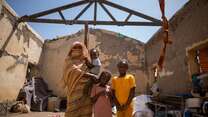
And so, there is urgency about this firewood distribution. Aisha and her team unload wood and begin distribution in one part of the camp, then divide into two teams and head out to another site, further down a mud and lava road. The second section of Kibati is smaller, slightly less crowded, but also surrounded by forest, more exposed on all sides. The camp sits under the shadow of the volcano that erupted here in 2002, and untouched lava fields line the road to the small displaced settlement. Around 5,000 people live here in unsound shelters - a frame of tree branches, a plastic sheet as a roof, dry banana leaves to fill gaps and act as a windbreak. The ground is different, not the crushed lava and soot of Goma town, but large lava rocks and hills. The hardened lava could easily cut through bare feet, but children skillfully race through the camp, doing chores and playing games, chasing after IRC staff to ask if we brought candy.
I wander through the camp and am quickly encircled by a troop of children between the ages of 5 and 15. A 12-year-old boy who speaks better French than my own asks why we're here, and if we know that he's hungry. We chat for a while and I ask him about his village in Rutshuru Territory, north of Goma.
"The war came to our village," he says. "I had to leave school. We've been running for a year."
This boy's story is not unique. Most people I talk to in the camp mention "running for a year." It's a life that is mobile and erratic. It offers none of the stability or security young children need to thrive. And there are no schools here.
Back at the distribution site Aisha's team is starting to huddle under umbrellas. Rain drops come first large and gentle, until the sky finally lets loose and we're forced to take shelter and wait out the storm. The population disperses to crouch under shelters or the rooftop overhangs of a few public buildings. There are intermittent breaks in the storm throughout the afternoon, so our teams go back to work. Aisha stands tall above the crowd of people and directs IRC staff, who, after checking off recipients of the wood also identify the most vulnerable for assistance. Teams are in place to chop wood into smaller bundles and transport it to the homes of the elderly, people with disabilities, pregnant women and children without adult guardians.
By the end of the day, 2,550 households in the Kibati camps have carried home 25 kilograms of firewood each. As IRC staff push through the rain and finally prepare to close activities for the day I find myself shivering, wondering about the cold that must hit here at night, when clothes are already soaked through by rain, when shelters shudder and leak."
1 comment
Comments
[...] Bramucci of the
Submitted by DR Congo: Human Rights and Gender Violence Situation in Nort (not verified) on December 15, 2009 - 8:40pm.
[...] Bramucci of the International Rescue Committee (IRC) also writes about the Kibati IDP camp, where around 5,000 people live “in unsound shelters – a frame of [...]
Post new comment
Voices From...
Contributors