International Rescue Committee (IRC)

Education

Guest Column: Resilience, strength are hallmarks of refugees who now call Tucson home

Source Title: 
Guest Column: Resilience, strength are hallmarks of refugees who now call Tucson home
Date: 
June 20, 2012
Source: 
Arizona Daily Star (AP)
field_meltwater_suppress: 
Post to IRC Press Coverage Page

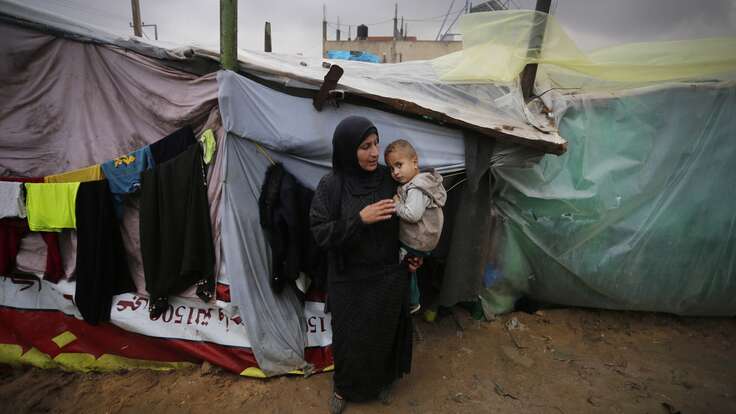
Each year, between 800 and 1,000 refugees - survivors of violent conflict, persecution and oppression unimaginable to most Americans - make their homes in greater Tucson.

Meltwater ID: 
MNEWS_2211081156
Source ID: 
20976

IRC announces comprehensive project to support tens of thousands of Afghan students

Afghan children study the Koran at a streetside shop in Kabul.

Photo: REUTERS/Omar Sobhani, courtesy Trust.org - AlertNet

Program involves four global aid agencies

The International Rescue Committee will participate in a major education campaign aimed at reaching more than 25,000 students in Afghanistan. The project, funded by the Canadian International Development Agency (CIDA) and bringing together four international aid agencies including the IRC, will reach students across more than a third of Afghanistan.

A ray of hope for Pakistan's displaced children

Some of the 5,000 students attending IRC-run schools at Jalozai camp in Pakistan

Ned Colt/IRC

Providing stability amid upheaval

  • Children at Jalozai Camp in Pakistan study in their tent classroom
  • A pair of shy young girl students smiles at the camera.
  • A boy is engaged in class activity at an IRC tent school.
  • A young girl traces letters in a penmanship class.
  • Young students enjoy recess at an IRC-run school at the Jalozai Camp.
  • A student at an IRC-run school at Jalozai Camp plays cricket during recess.
  • Girl students enjoy recess with their teacher at Jalozai Camp.
  • The dusty Camp streets are lined with canvas walls, behind which, are tents.
  • A student peers out of her tent classroom.

More than 5,200 children attend IRC-run schools at the Jalozai camp for those displaced by conflict. The schools provide a stable environment and a routine that helps the children recover from the traumatizing experiences many have faced. Teachers are trained to actively involve students in learning, increasing their self-awareness and confidence.


All IRC Slideshows >
All Refuge, Pakistan Slideshows >

No comments yet.

Q&A: "New Kids" author Brooke Hauser on refugee teens in America

Chit Su in her room. When she arrived in New York from Myanmar, also known as Burma, no one in her new school spoke her language.

Photo: Brooke Hauser
2 comments

In Turkana, water quenches children’s thirst for knowledge

James Lachule of the IRC’s water and sanitation team speaks to a class at the Natagilae Primary School about the importance of hand washing.

Photo: Kate Heitz/IRC
2 comments

IRC and Japanese aid partners offer a lifeline for tsunami survivors

With support from the IRC, the aid group Japanese Emergency NGO (JEN) is helping fishermen get back to work. These fishermen received aid to restart fish farms on the devastated Oshika peninsula. (Photo: Peter Biro/IRC)

Japan tsunami recovery

  • <p>A year after the disaster, Japan&rsquo;s coastal cities are still filled with rubble. Recovered photo albums and other keepsakes have been placed near the entrances of the few buildings that still stand.</p>
  • <p>A fisherman harvests abalone in Minami Sanriku, a once thriving fishing village where some 9,500 people perished.</p>
  • <p>Nearly a quarter of Japan&#39;s population is 65 or older. Losing family members, homes and possessions has made the elderly even more vulnerable and dependent on outside help. Here, staff members from the Japanese aid group Association for Aid and Relief (AAR) spend time with elderly survivors at a nursing home, near the city of Rikuzentakata.</p>
  • <p>Following the disaster, this nursing home provided shelter to about 600 people. The AAR, with the IRC&rsquo;s support, has helped repair the home as well as distribute food to the elderly.</p>
  • <p>AAR&rsquo;s Honda Masumi walks among the ruins of what was once a school in the city of Kamaishi. The city&rsquo;s breakwater, recognized by the Guinness World Records as the world&rsquo;s deepest, was destroyed by the tsunami.</p>
  • <p>As part of a health program for the elderly, AAR&rsquo;s Honda Masumi massages an elderly woman in an evacuation center near the city of Kamaishi.</p>
  • <p>Children at the Karakuwa elementary school in Kesennuma prepare for a school performance. The IRC and its partner Peace Winds Japan equipped the school with furniture and other items.</p>
  • <p>Waka Ueno, 86, lost her home in the tsunami. She now lives in an evacuation center in the fishing hamlet of Hakozaki.</p>
  • <p>With support from the IRC, the aid group Japanese Emergency NGO (JEN) is helping fishermen get back to work. These fishermen received aid to restart fish farms on the devastated Oshika peninsula.</p>
  • <p>JEN and the IRC are helping fishermen replace equipment and local tradesmen to manufacture new fishing tools. Here, Motomu Suenaga teaches a young fisherman, Fumiyuki Abe, how to make a traditional fishnet.</p>
  • <p>&nbsp;</p><p class="p1">The IRC&#39;s Japan advisor, Shinko Tana, hands over snow blowers, shovels and other equipment to Tadamitsu Wakasaki, deputy mayor of the tsunami-stricken city of Kamaishi.</p>
  • <p>After the tsunami hit the city of Rikuzentakata, the Seisho-kan vocational center, which served mentally and physically disabled people, was inundated with people seeking help. The ARR handed out food, heaters and other supplies. A year after the disaster, Satoshi Chiba (above) is able to resume his work printing billboards and stickers.</p>

On Japan’s tsunami-devastated northeast coast, the IRC is helping Japanese aid groups support the elderly and people with disabilities; supply people living on remote islands with food, fuel, tents, blankets and other critical supplies; and help kick-start the fishing industry.

Story and photos by the IRC's Peter Biro (Published Mar. 6, 2012)


All IRC Slideshows >
All Emergency Response, Japan Slideshows >

Photo Essay: Japan, One year on >

By Peter Biro

In Congo, hope comes to remote shores

Mushenyi, a village of 3,500 people in eastern Congo, is cut off from its neighbors by massive Lake Kivu on one side and overgrown mountains on the other.
Photo: Sinziana Demian/IRC

No comments yet.

Photo Share: Lunchtime, Thailand

Photo: Peter Biro/IRC

No comments yet.

Syndicate content