Energy-Saving Stoves Project Introduces Efficient Technology For Cooking
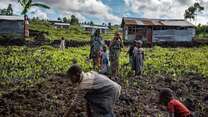
In the Walanihbiy camp, it has been common for refugee families to spend several hours a day on colleting firewood. Women and children walk for many miles, often under a hot sun, to gather wood for cooking. The availability of firewood in and around Grat Reda camp is even more limited, with the nearest site for wood collection several hours of walk away.
To ease the burden of firewood collection and combat vegetation depletion in and around Grat Reda, the IRC introduced energy-saving stove technology in July 2001. Energy-saving stove recipients get trained to use, care, and maintain the stoves so that they can train others in the future. Through the project, the IRC wants to empower camp residents and help stove manufacturers acquire new skills and generate future revenue.
Twelve trained stove manufacturers, 80 percent of whom are women, produced 1,249 stoves over six months. Of them, 868 have been distributed. By the end of December, a contingency of 149 stoves was available for new camp residents or to replace stoves damaged or broken during camp relocation. The use of energy-saving stoves has decreased wood consumption and time spent on collecting wood by approximately 40 percent.