Building a Future for Former Child Soldiers: Programs at a Glance
![]() | |
| Children at an IRC interim care center in Sierra Leone. (Photo: IRC) | |
The widespread use of children in armed conflicts by governments and rebel forces is one of the most atrocious trends in wars today. The United Nations estimates 300,000 children under the age of 18 are currently fighting in conflicts around the world and hundreds of thousands more are members of armed forces - either being trained for combat or used as laborers. Physical, sexual and emotional abuse is commonplace. Most of these children were forcibly conscripted or abducted by fighting forces. Compelled to become instruments of war, to kill or be killed, child soldiers are robbed of their childhood and their rights under the international Convention on the Rights of the Child. Without exception, the experience has devastating effects on their physical, psychological and intellectual development.
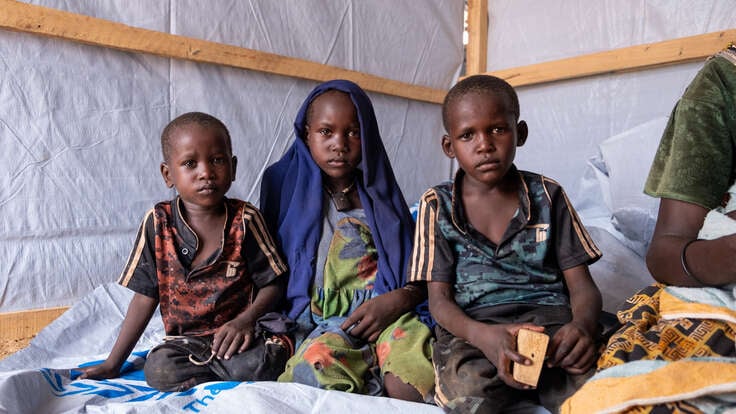
The International Rescue Committee works to identify and care for child soldiers who have been demobilized or escaped from armed forces. IRC Interim Care Centers help meet the children's immediate health and protection needs and provide critical emotional support while efforts are made to trace their families and relatives. Our extensive experience in family reunification and community reintegration has taught us that rehabilitation is most effective when communities are actively involved and local traditional and cultural approaches are used to promote healing and reconciliation. In countries such as Uganda, Sudan and Sierra Leone, we have not only been able to return thousands of former child combatants to their families, but the children have been able to resume normal social and developmental activities and contribute to their families and communities.
Sierra Leone
Sierra Leone's civil war devastated the economy, infrastructure and social services, as well as its people. In contravention to international law, at least 10,000 girls and boys were abducted and recruited by both government and rebel forces. As both victims and aggressors in the war, these young people served as armed combatants, sexual slaves, human shields, cooks, spies and porters.
Since 1999, the IRC's Child Protection Program in Sierra Leone has helped facilitate disarmament and demobilization of some 2,000 child combatants, and provided them with emergency aid in our Interim Care Centers. To date, we have successfully traced and reunified 1,157 of these children and adolescents with their families and helped them with the difficult process of adjusting to life in their communities. The IRC has also sponsored 93 small-scale reintegration projects in communities where the children are returning. These projects, which benefit former child soldiers and children already living in these war-impacted villages, include skills training workshops, vegetable gardening, youth clubs and cultural performance groups.
Special Project for Sierra Leone Abducted Girls
Abducted child and adolescent girls were initially left out of Sierra Leone's official demobilization process and many were forced to remain "wives" of former commanders and soldiers. As time went on, most of the former rebels were not able to support this arrangement and the girls were abandoned. A majority had bore children from these "bush marriages." In spite of their desperate situation, most of the girls were reluctant to find their way home, feeling marginalized and fearing ostracism by their families and communities.
The IRC works to identify and provide emotional support and basic care for demobilized and abandoned young mothers, many of whom support themselves and their children through commercial sex activity. After gaining the trust of IRC staff, nearly all of the young women communicate a desire to return home to their families and to start working or to take classes to make up for years of lost learning. It's our goal to try to make that happen.
Tracing families can be an arduous process after a war, often requiring IRC mobile teams to visit village after village to learn information on the whereabouts of family members and relatives. But locating the family is just the start. Because of the girls' anxieties about being accepted by their communities, the IRC launched an innovative video project in 2002 to assist its family tracing efforts. Upon finding families, the IRC videotapes warm and welcoming messages from the families to show to the girls, and in turn, videotapes messages from the girls for their families. The approach has been immensely successful, leading to the emotional reunions of more than 60 young women with their families.
Uganda
A brutal conflict between the rebel Lord's Resistance Army (LRA), and Uganda government forces has persisted for 14 years. The LRA employed tactics such as raiding, looting and burning villages, killing and abducting people, destroying crops, and laying landmines. LRA attacks on civilians have generated the internal displacement of hundreds of thousands of people. Some 150,000 displaced persons live in Kitgum District, northern Uganda.
As in all violent conflicts, children are the most vulnerable, and in Uganda, they have suffered immeasurably. The LRA's ongoing abduction, forced conscription, and killing of children is perhaps the worst violation of children's rights anywhere in the world. It is estimated that almost half of LRA combatants are abducted children. Well over 10,000 children, some as young as 7 or 8 years old, have been taken from their homes and forced to become child soldiers. These abductions are brutal, with many of the children witnessing family members killed, or destruction of their homes, and some forced to commit the atrocities themselves. Younger children are preferred because they are more easily intimidated and indoctrinated. Girls are given to rebel commanders as "wives," are sexually abused, and made to cook and carry heavy equipment. Living conditions are extremely harsh and many children have died of dehydration or hunger. Children who try to escape, or those who do and are caught, are killed. Other child abductees are often forced to do the killing.
IRC Protection, Tracing, and Reintegration Programs
At least 4,000 children have escaped from the LRA. When found, the children are usually in a state of shock, severely traumatized and in need of immediate medical and psychological attention. The IRC began work in Kitgum District in 1998 in response to the emergency and long-term needs of formerly abducted children, child-headed households, child mothers, and other vulnerable groups in war-affected communities in Kitgum and Pader Districts. In 2002, the Ugandan Amnesty Commission designated the IRC the lead agency in receiving and reintegrating formerly abducted children and young adults in Kitgum.
In partnership with local communities, district government and local NGOs, the IRC works to locate and care for vulnerable separated children, trace families, resettle children at home, assist families with emergency support and basic needs, and initiate and support economic and social projects that encourage acceptance, reintegration and sustainable livelihoods. A key focus is strengthening the community capacity to support effective rehabilitation of formerly abducted children and respond to the special needs of these vulnerable children and adolescents.
![]() | |
| Healing ceremony for released children in Kitgum, Uganda. | |
Activities in Kitgum and Pader Districts include the following:
- Partnership with the Uganda National Psychosocial Core Team, UNICEF, government authorities and several national NGO's to coordinate psychosocial activities for formerly abducted child soldiers and other vulnerable war-affected children.
- Support to Kitgum Concerned Women's Association, a reception and reintegration center initially established by the IRC, for formerly abducted children.
- Ongoing assistance to the Concerned Parents Association program for child and adult excombatants.
- Emergency health care, primary health care and referrals for child and young adult excombatants.
- Educational programming, vocational skills training and income-generation opportunities for child and young adult excombatants. Income-generation projects are also extended to vulnerable families, especially child-headed households and AIDS orphans).
- Work with communities to promote culturally appropriate cleansing rituals.
Sadly, rebel activities escalated in June 2002 and continue today, with frequent attacks on civilian targets throughout northern Uganda. There are thousands of newly displaced persons in Kitgum, Pader and Lira. The increased insecurity resulted in a dramatic rise in abductions and destruction of life and property, as well as rising number of children escaping from the LRA. The need for psychosocial interventions remains enormous.