International Rescue Committee (IRC)

GBV programs

The Gender Based Violence Technical Unit
Based at IRC’s Headquarters in NY, the Gender Based Violence Technical Unit is responsible for quality and innovation for our Gender Based Violence programs around the world.  We do this through the development of policy and practice, promotion of research and learning, staff development, representation and advocacy, and the provision of technical expertise.

A Safe Space: Women’s Centers
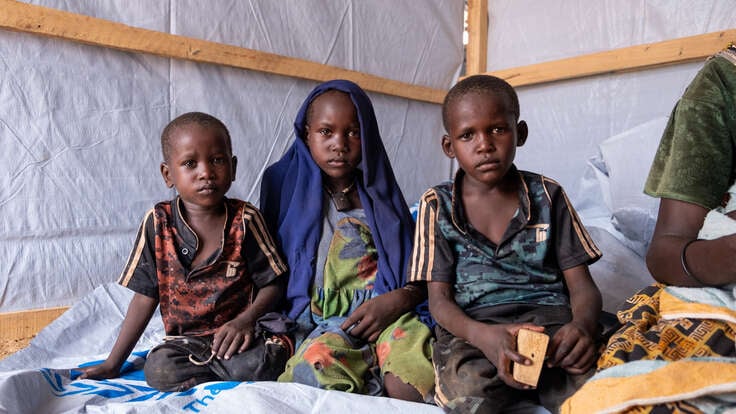
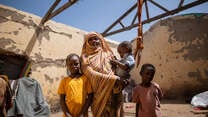
Whether IRC is responding in Darfur where displaced women and girls are victimized by sexual violence at high rates…or in refugee camps along the Thai-Burma border where women face extreme levels of violence in their homes... or in West Africa where violence continues to be a part of women’s lives despite peace…fundamental to our response is the Women’s Center.  Such centers have been created to provide women with a space where they can feel safe and supported. Women’s centers help IRC facilitate survivor’s access to resources, support and referrals. They are also places where women can build skills and foster self-efficacy. The IRC provides a range of activities at its women’s centers – emotional support, literacy classes, information about health, skills-building classes that link with other income generation activities, and opportunities for social interaction. 

In Darfur, the IRC has established 10 women’s centers that have not only been safe places to seek assistance, but also places where women can talk about their experiences of violence and life in the camps.  As women share their individual stories, the barriers to seeking assistance—shame, fear of social rejection— are broken down as women realize that they are not alone in their experience.  

How do we carry out our work in different contexts?
It is important that the IRC tailor it’s interventions to the most pressing needs women and girls face with regard to violence.  Thus, the nature of IRC’s Gender Based Violence programs varies depending on the stage of the conflict and the location. 

1) First Responders
In the Central African Republic (CAR) women and girls were caught between past and recent fighting between rebel groups and the military, and systematically targeted for sexual violence. IRC identified a tremendous need to address the immediate and long-term health consequences of survivors given the dearth of existing services or infrastructure.  Since April 2007, IRC has provided comprehensive and confidential health services to survivors, and survivors receive psychosocial support services within the health facilities. IRC’s community workers helped to make communities aware of the existing services and encouraged women to step forward to get the care they deserve.  This intervention to date has resulted in women and girls coming forward in droves to receive care and support.

2) Developing Civil Society as Service Providers and Advocates
The ongoing conflict in the eastern Democratic Republic of Congo (DRC) has been characterized by extensive and brutal sexual violence.  To redress the dearth of services available to survivors in remote locations of eastern DRC, the IRC established a GBV program in 2002 with local partners to provide health, mental health, and legal services to survivors. Women’s associations have been crucial in successfully referring survivors to viable service providers and providing long-term peer support in their communities.  These associations’ collective ability to mobilize the community around the issue of sexual violence has strengthened advocacy efforts locally. IRC’s main role is to build the technical and institutional capacity of its partners, through consistent capacity building and support. 

3) Women and Girls Rebuilding Nations: Towards Gender Equality in West Africa
After long-standing conflict across the region, West Africa is embarking on an era of peace and stability.  Recognizing this timely opportunity to shape women’s status in post-conflict societies, the IRC launched a new five-year program. Funded by the NoVo Foundation, this unprecedented program to help women and girls in Sierra Leone, Liberia and Ivory Coast, is based on the premise that violence against women and girls is rooted in their marginalization and lack of power in society.  It specifically focuses on objectives the IRC has identified as critical to achieving women’s empowerment. These include: helping women gain access to sexual and physical assault response and referral services; mobilizing communities to combat violence against women; helping women gain greater economic independence and a more meaningful role in decision-making; and advocacy to influence policy and laws at the national level.