Since 1933, the IRC has provided hope and humanitarian aid to refugees and other victims of oppression and violent conflict around the world.
The IRC on Twitter
-
@LCO_orchestra @RiyadNicolas @cadoganhall Hope it's an amazing night! Thanks for your support.
May 17, 2013
-
RT @DCComics: Amazing. 2.6k of you gave $150K+ to #WeCanBeHeroes. Big thanks from DCComics @SavetheChildren @mercycorps @theIRC t.co…
May 17, 2013
-
Cyclone Mahasan update: It spared Myanmar almost entirely, and the storm’s impact in Rakhine State was minimal.
May 17, 2013
-
Cyclone Mahasan update: Storm weakened & then dissipated Thurs, causing far less damage than had been feared as it passed over Bangladesh.
May 17, 2013
-
Call Senate Judiciary Cttee & urge them to pass #CIR that includes protections for asylees & #refugees: t.co/4OQrSoAGVt #CIRmarkup
May 16, 2013
VOICES FROM THE FIELDTHE IRC BLOG
“If I could go home, I would”: Ten years on, Darfuri refugees still waiting to return
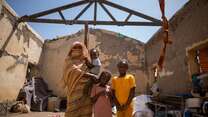
Amira Idriss, a 35-year-old mother of eight who has lived in the Oure Cassoni refugee camp since 2004, would love to return to Darfur. “If there is peace and everything is okay, then yes, we will go back, but not now,” she says.
In February, the International Rescue Committee’s Sophia Jones-Mwangi visited the Oure Cassoni camp in eastern Chad, home to 280,000 Darfuri refugees, some of whom have been living there for a decade. Sophia talked to a few who continue to dream of a time when it will be possible to return to their native villages in Sudan.
Ten years on, it is important that the Darfuri refugees are not forgotten. “The IRC is calling on the governments of Chad and Sudan to continue their dialogue in finding long-term solutions for the refugees’ safe return,” says Felix Leger, who runs the IRC’s programs in Chad. “We are grateful to our donors for their assistance these past ten years, but please don’t forget that the refugees are still in these camps and need to have their basic needs covered for as long as they stay here. Further cutbacks will only make their lives even more precarious than they already are, particularly as attention and resources move to more current crises, such as Syria and Mali.”
![]() |
Cuts in humanitarian aid funding will make life in refugee camps like Oure Cassoni more precarious that it already is, says the IRC's Felix Leger. Photo: Sophia Jones-Mwangi/IRC |
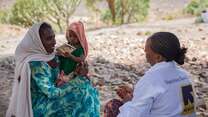
Amira is a community health worker in Oure Cassoni, one of three camps where the IRC has worked since 2004. Her job is to visit families, make evaluations, and offer advice. “Sometimes I may find a sick person in their house and tell her to go to the health center,” she explains, “or I may visit a pregnant mother to see how she is doing and make sure that her immunizations are up to date, or if I see that a child who looks malnourished, I will tell the mother to take him to the health center.”
Amira can never forget the day that she and her family fled to Chad. “Life was good before the war,” she recalls. “We decided to leave after we saw too many of our relatives and neighbors being killed by the air bombardments. We ran from the village after one bombing. I lost my children and couldn’t find them for three days. Then a neighbor found them scared and hiding.”
Amira, her husband and children trekked to Chad on foot and by donkey. “We walked for six days,” she says. “The Janjaweed were chasing us and my children cried all the way."
![]() |
A marketplace in Oure Cassoni: The approximentely 300,000 Darfuris living in eastern Chad have settled in as best they can. |
While visiting Oure Cassoni, I met Yussif Suleiman Nair, president of the Parents’ Association at the camp’s Zone A primary school, one of three schools that the IRC supports. He was a farmer in Darfur before he fled with his two wives and children in 2003.
“When someone flees from war, you just take what’s in front of you,” he told me. “We took some food and a donkey and came here. It took us five days. My second child was a very small baby and was still drinking his mother’s milk. It was cold and the cold affected the children in particular and they got sick.”
![]() |
Expectant Darfuri mothers wait to be seen at an IRC health center in Oure Cassoni. Many of them came to the camp as young children. Photo: Sophia Jones-Mwangi/IRC |
Ache arrived in Oure Cassoni nine years ago with her husband, Nadia and her siblings. “There were too many people with guns and doing very bad things,” she said about Darfur. When I asked her if she would go back, she didn’t hesitate. “If there is peace, then yes! Of course I would go back.”
The approximetely 300,000 Darfuris living in eastern Chad have settled in as best they can. Those who, like Nadia, were young when they fled Darfur have grown up and gone to school in the camps. They have had children of their own. This is the only life they know.
Darfur: An Ongoing Crisis
Comments
it is so sad to be a
it is so sad to be a refugee.from 1990 to 2005 i was a refugee on the buduburam refugee campam in Ghana so i known how is it to be a refugee especially single mother.
Post new comment
Voices From...
Contributors