Since 1933, the IRC has provided hope and humanitarian aid to refugees and other victims of oppression and violent conflict around the world.
Recent Posts
The IRC on Twitter
-
@IRCPress You've been quoted in my #Storify story "Crisis in Darfur, 10 Years On" t.co/guLOti8F02
May 21, 2013
-
RT @IRCPress: Race against time to aid new #Darfur #refugees in Chad before rains begin: t.co/z6eDBFeR1I
May 21, 2013
-
RT @MoveEndViolence: Why do we need a #movement to end #VAWG? #MovementMaker Heidi Lehmann of @theIRC on the blog. t.co/H74c80BdAs
May 20, 2013
-
@Doylech @oneworldadopt @Just_Naomi_chan @socialfund @AFRIpads @tamaraduker @lynndalsing @HuTerra @scribblymouse thanks for your support!
May 20, 2013
-
RT @IRCuk: Thanks @LCO_orchestra @RiyadNicolas @cadoganhall for an excellent concert & for supporting our work w. Syrian refugees #TheAsfar…
May 20, 2013
VOICES FROM THE FIELDTHE IRC BLOG
The daily struggles of refugee life in Nairobi [Photos]
February 22, 2010
By Joanne Offer
Young Somali refugees in Nairobi
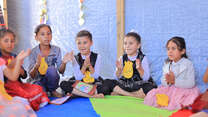
The word ‘refugee’ brings to mind images of sprawling camps, with rows of white tents reaching out to the skyline. Yet the reality is that 1 in 2 refugees now live in an urban setting. Take Nairobi, the bustling capital city of Kenya, for example. It’s now home to tens of thousands of refugees – like the Somali children pictured above. The five youngsters and their mother fled violent civil war in Mogadishu, and now live in one tiny room along with another Somali lady and her two children. That’s all they can afford.
The children’s mother, formerly a nurse in Somalia, now survives by cooking food and selling it to nearby market traders. Her ‘kitchen’ is a tiny space between the outside wall of her concrete room and some makeshift iron sheeting. She cooks on a charcoal stove – which makes the cramped space incredibly hot – and has to buy water on the street as none is piped to her compound. Such work brings a little income for her family, but she’s struggled to pay her rent for the past four months.
Putting together a short film to highlight the plight of urban refugees (Photo: Joanne Offer/The IRC)
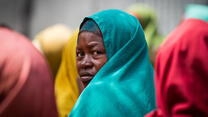
There are many nationalities of refugees in Nairobi, from Somalis and Ethiopians, to Sudanese and those from the Great Lakes. Mariam (pictured here) and her family fled Congo around two years ago. Today eight of them live in one cramped flat apartment because rent is hard to come by when you don’t have a job. (It’s difficult for refugees to get work permits, without which they can’t find official employment.) Here Mariam is preparing soup for her elderly, infirm mother. Mariam has scraped together a pile of chicken’s feet to make the soup. She says life in Nairobi is a massive struggle, but at least there’s peace unlike in Congo.
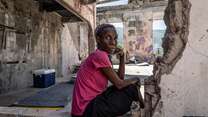
Many refugees live in the more run-down areas of Nairobi, such as Eastleigh (above). Here the few main streets are a bustle of activity, with many new enterprises and shopping centers springing up. However, the unpaved back streets are littered with rubbish and are virtually impassable in the rainy season. Untreated sewage is also a problem in here and frequently spills out onto the streets, creating an obvious health hazard.
Official estimates suggest that there are 50,000 refugees in Nairobi, but unofficial figures are many times higher. These numbers are likely to increase yet further with continued violent civil war in neighboring Somalia and fighting between ethnic groups in Sudan. The IRC and CineTrek hope that our short film on urban refugees –
No comments yet.
Voices From...
Contributors


Comments
Post new comment