Since 1933, the IRC has provided hope and humanitarian aid to refugees and other victims of oppression and violent conflict around the world.
The IRC on Twitter
-
Thanks to all who voiced support for U.S. #CIR! What your calls on the Senate immigration reform bill achieved: t.co/z5OAvG7uFs
May 24, 2013
-
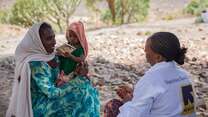
RT @DocEdH: The best of @theIRC: amazing local staff -in this case Immaculee M- listening thoughtfully to a community leader t.co/LH…
May 24, 2013
-
@angusa Thx for your interest in working with us! Positions posted at t.co/w3SDWahSdt; if a position isn't there it's no longer open.
May 24, 2013
-
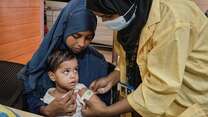
A woman awaits a checkup at an IRC clinic inside #Syria. t.co/KYCuHf1zWA Photo: Peter Biro/IRC t.co/qptp52tHvi
May 23, 2013
-
Please tweet @theIRC if you have questions, comments or requests!
May 23, 2013
VOICES FROM THE FIELDTHE IRC BLOG
Pledwaye ann Ayiti (Advocacy in Haiti)
The IRC recently held a workshop for civil society organizations in Haiti to help them engage effectively with decision makers and hold them accountable as the country rebuilds after the January 2010 earthquake.
Advocacy in Haiti
In January, the IRC hosted an advocacy workshop in Port-au-Prince for our local partners and their Haitian staff members working on clean water, health, and women’s and children’s issues. The workshop was part of an IRC initiative that seeks to bolster Haiti’s civil society organizations.
All IRC Slideshows >
All Haiti Slideshows >
Advocacy in Haiti
In January, the IRC hosted an advocacy workshop in Port-au-Prince for our local partners and their Haitian staff members working on clean water, health, and women’s and children’s issues. The workshop was part of an IRC initiative that seeks to bolster Haiti’s civil society organizations.
All IRC Slideshows >
All Haiti Slideshows >
I traveled to Haiti in late January to facilitate an advocacy workshop in Creole for the International Rescue Committee’s local partners and national staff in collaboration with IRC’s civil society development program. What does the term “advocacy” mean? The IRC defines it as “putting pressure on people in power in order to effect change on behalf of people in need or empowering people to speak up for themselves.” Advocacy is a core part of the history of the IRC and is practiced at every level of the organization.
The purpose of the training was to build on the expertise and experiences of my fellow Haitians while providing them with tools they could use to engage effectively with decision makers and hold them accountable. While some participants were new to doing this, others were seasoned advocates. But no matter what their background, the diversity of participants and the decision to carry out the workshop in Creole made for a very lively and animated conversation. In the words of one participant, “having the workshop in Creole allowed everyone to say what they think and what they know without feeling shy.”
At the workshop, there were representatives from local organizations and IRC staff working on different issues ranging from women’s rights, to protection of children, to access to water and health services.
During the first day of the training, we had discussed the importance of advocacy and what it means to participants. Guylande, a representative from the child protection organization known as Zanmi Timoun (Friends of Children) noted that advocacy is more effective when those who are affected by a particular issue speak on their own behalf. Other participants went on to explain how vital it is to not only involve the community, but also to have community members lead these efforts. Those who are disenfranchised and marginalized may not recognize their collective power until they come together to speak up for change.
This principle was reflected in the advocacy strategies participants developed as part of one of several group activities. One group wants universal, free education for all children, as mandated by the Haitian Constitution. As a tactic, they would have children and parents send letters to local newspapers and to government agencies to urge officials to make education affordable and accessible to all. Another group discussed a community based approach to addressing sexual violence issues. They would consult with women and girls during the initial stages of the campaign.
Despite enthusiasm for the innovative ideas generated by the workshop, everyone acknowledged that it’s important to take into account the context in Haiti. Political instability, limited resources for advocacy campaigns, lack of government accountability and transparency all contribute to a very challenging environment. However, these challenges did not make participants any less committed. They realized they must make their views known in more creative and strategic ways. The workshop provided an opportunity for groups to network, share strategies and learn from one another. By pooling their resources together and working collaboratively across the different issues, everyone can do his or her part to increase the effectiveness of advocacy efforts.
The workshop is part of a broader effort to leverage the expertise of local Haitian groups. Before the January 2010 earthquake, civil society organizations had a robust presence in Haiti and continue to play a vital role in the rebuilding of their country. This workshop is one of the many ways the IRC helps local actors to ensure that they play a role in reconstruction planning and implementation and lead Haiti’s recovery. Reconstruction cannot happen without local groups and affected populations. And the IRC is committed to giving these groups the support they need to make their voices heard.
No comments yet.
Voices From...
Contributors


Comments
Post new comment