News, Photos & Videos › Blog › A day in Dadaab
Since 1933, the IRC has provided hope and humanitarian aid to refugees and other victims of oppression and violent conflict around the world.
The IRC on Twitter
-
Thanks to all who voiced support for U.S. #CIR! What your calls on the Senate immigration reform bill achieved: t.co/z5OAvG7uFs
May 24, 2013
-
RT @DocEdH: The best of @theIRC: amazing local staff -in this case Immaculee M- listening thoughtfully to a community leader t.co/LH…
May 24, 2013
-
@angusa Thx for your interest in working with us! Positions posted at t.co/w3SDWahSdt; if a position isn't there it's no longer open.
May 24, 2013
-
A woman awaits a checkup at an IRC clinic inside #Syria. t.co/KYCuHf1zWA Photo: Peter Biro/IRC t.co/qptp52tHvi
May 23, 2013
-
Please tweet @theIRC if you have questions, comments or requests!
May 23, 2013
VOICES FROM THE FIELDTHE IRC BLOG
A day in Dadaab
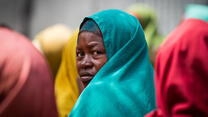
Photo: Gerald Martone/IRC
DADAAB, Kenya -
The worst drought to hit the Horn and East Africa in decades is driving tens of tousands of Somalis to seek help in refugee camps in Ethiopia and Kenya. Lobna Abdel Hadi, the International Rescue Committee’s emergency protection coordinator, has been working in an overcrowded settlement in Dadaab, Kenya, to ensure that the most vulnerable receive the care they need and that refugees are treated with dignity. Here, she shares her day in the world’s largest refugee complex, writing on a Blackberry from the field:
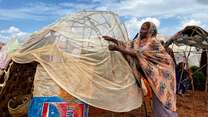
I wake up and get out of the blue mosquito net—no breakfast for me as it’s Ramadan—then make my way to one of the camp’s reception center, the first contact point for new arrivals. Hundreds of Somalis are already waiting to be processed and receive basic supplies. They have been walking for days, while fasting, to reach this destination. Ensuring orderly processing is a daily challenge, as is identifying vulnerable people for fast-tracking. One woman has an epileptic seizure and is brought under a tree so that our medical team can assist her. Another woman faints. Children wait patiently in the hot sun, and the process goes on, with new issues to deal with constantly.
A few hours later we drive across the rough terrain, with the mandated armed escort, to reach the outskirts of the camp where new arrivals are settled. Services are scarce and access to supplies is difficult. A five-year-old girl carrying a jerry can her own height tries to explain to me in Somali how faaaaaar her tent is from the water point. I spend some time playing football with kids, using an improvised ball made of socks. Luckily, we have some donated footballs, so hopefully our next game will be more authentic.
We next visit the UNHCR compound, the Office of the United Nations High Commissioner for Refugees, where we meet with local officers to resolve issues of land and property rights and priorities. Is lack of access to water more dangerous than possible night attacks? Is shelter more important than access to latrines? Can we house the chronically ill closer to the health facilities? So many challenges and only so much we can do at a time. After long discussion, we decide on a tentative plan and a way forward.
By now it is 5 p.m. and I am hungry and thirsty. Ramadan is not easy in Dadaab, but if Somalis fleeing famine and war, weak and malnourished, can make it, then I shouldn’t complain.
Sunset finally signals it’s time to break my fast along with my colleagues. Everyone around the table misses their home-cooked food and their families, but we are proud of our work. We exchange stories about our days over food with smiles…and tomorrow is another day.
Posted in Horn of Africa Drought, Africa, Kenya | Tags: drought, refugee camps, natural disasters, Dadaab refugee camps, humanitarian aid, famine
No comments yet.
Voices From...
Contributors


Comments
Post new comment