Since 1933, the IRC has provided hope and humanitarian aid to refugees and other victims of oppression and violent conflict around the world.
Recent Posts
The IRC on Twitter
-
RT @MoveEndViolence: Why do we need a #movement to end #VAWG? #MovementMaker Heidi Lehmann of @theIRC on the blog. t.co/H74c80BdAs
May 20, 2013
-
@Doylech @oneworldadopt @Just_Naomi_chan @socialfund @AFRIpads @tamaraduker @lynndalsing @HuTerra @scribblymouse thanks for your support!
May 20, 2013
-
RT @IRCuk: Thanks @LCO_orchestra @RiyadNicolas @cadoganhall for an excellent concert & for supporting our work w. Syrian refugees #TheAsfar…
May 20, 2013
-
Call members of Senate Judiciary Ctte & ask them to retain #CIR provisions that protect refugees & asylees t.co/xLIoPRWloc #CIRmarkup
May 20, 2013
-
#CIRmarkup: Sec. 3405 of U.S. #CIR bill is in markup right now. It contains important protections for #refugees, asylees & stateless people.
May 20, 2013
VOICES FROM THE FIELDTHE IRC BLOG
A precarious life for Somali refugees in Nairobi
Anne Richard, the IRC's vice president of government relations and advocacy (4th from left), with a group of young Somali refugees in Nairobi.
Somali refugees in Nairobi
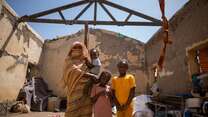
Far away from home and family, and subject to harrassment by police, Somali refugees living in Nairobi, Kenya are in a precarious situation. The IRC and our local partners are working to ensure that refugee rights are respected, and that these Somalis and other refugees in Kenya get the help they need.
All IRC Slideshows >
All Kenya Slideshows >
Somali refugees in Nairobi
Far away from home and family, and subject to harrassment by police, Somali refugees living in Nairobi, Kenya are in a precarious situation. The IRC and our local partners are working to ensure that refugee rights are respected, and that these Somalis and other refugees in Kenya get the help they need.
All IRC Slideshows >
All Kenya Slideshows >
In mid-November, I visited the Eastleigh neighborhood of Nairobi, Kenya. I went to meet refugees from Somalia who are being helped by the International Rescue Committee.
The refugees had fled a chaotic situation in their homeland. Somalia has suffered from years of civil war, lethal rivalries among ethnic clans, a barely functioning government in the capital, Mogadishu, and a weak economy. Other countries fear that Somalia is a haven for both anti-Western terrorists and pirates operating off the coast. So it is not surprising that some families flee to safety in neighboring Kenya. Many Somalis live in large, sprawling refugee camps – but some leave the camps in search of a better life.
Today, almost half of the world’s refugees live in cities. Precise numbers are not known. Many refugees are reluctant to come forward because they fear they could be deported or sent back to refugee camps. The IRC has been trying to draw attention to the plight of urban refugees and helped produce a report on urban refugees in Kenya in March 2010.
In Eastleigh, we drove through muddy streets to reach a local school. There, the refugees I met were young people and adults who were too old for school, yet came to an IRC class to learn English. In a vacant classroom at the end of a row of rooms filled with busy youngsters in school uniforms, these serious men and women gathered. We had a conversation in basic English, and they explained that they needed to learn English in order to find employment in Nairobi.
I also met a group of young women who had come to Nairobi to work as maids and domestic help. Some, but not all of them, had jobs. They, too, want to learn English to make a better life for themselves in Kenya. I asked, “How old are you?” Several answered: “ nineteen” and “twenty.” In Eastleigh, some lived with relatives. Others said they had been taken in by other Somalis and lived in group homes. They had to worry about earning enough to support themselves, and, if lucky, perhaps arrange to send a little money home. These girls seemed so young, with lovely eyes and hennaed hands. Muslims, they dressed modestly with hijab head coverings. They had interested expressions on their faces as they told me their stories in halting English. My heart went out to them, and I found myself worrying for their safety.
Finally, I met with a group of Somali women who ran a small shop to sell items they had sewn or other craft items. The shop was small but colorful as it was packed to the roof with clothing, linens, bedspreads and hard-to-find items for traditional Somali weddings.
Fortunately, the IRC is not alone in Kenya trying to help the refugees. We partner with a few local organizations – like the Refugee Consortium of Kenya and Kituo Cha Sheria (the Centre for Legal Empowerment) – to help ensure refugee rights are respected and that individuals who need legal or other help get what they need. I met with representatives of these groups who are dynamic Kenyan leaders. They were particularly grateful for the work IRC’s Kenya office has done in bringing the plight of urban refugees to the attention of policy-makers.
Now that I am back in Washington, I recall the faces of the refugees I met as I read reports that Ethiopian and Somali refugees in Nairobi have been arrested and harassed by the police. I think about how precarious their situations are, away from home and family, and how little they ask. They ask for things that I take for granted: a safe place to live, a job, a chance to learn English. I know my colleagues in Nairobi have their work cut out for them.
Blog editor's note: You can see a slideshow with new photos from Anne Richard's visit to Eastleigh here (1/19/11)
No comments yet.
Voices From...
Contributors


Comments
Post new comment