International Rescue Committee (IRC)

VOICES FROM THE FIELDTHE IRC BLOG

America's Responsibility to Iraqi Refugees

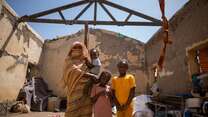
Photo: Peter Biro/The IRC


My colleague Gerry Martone, IRC's humanitarian affairs director, just gave me a heads-up about an excellent piece published by IRC government relations and advocacy VP Anne C. Richard in The Globalist this week: Over the past year, violence in their home country has forced many Iraqis to flee. Inside Iraq, about 2.2 million people are displaced — forced out of their homes, villages and towns. More than 2.2 million people have fled across borders into neighboring countries. Against this backdrop, Anne C. Richard argues that the United States should honor its historic tradition of aiding and providing sanctuary for those fleeing persecution and violence.This crisis is continuing to worsen — as an estimated 60,000 people reportedly flee violence and persecution in Iraq each month. According to the United Nations High Commissioner for Refugees (UNHCR), 2,000 people were fleeing to Syria each day before Syria recently joined Jordan in closing its border to the influx. Impact on host countries The impact of the displacement crisis has been especially difficult on Syria and Jordan. Syria has taken in more than 1.2 million Iraqi refugees, equal to 10% of Syria’s own population. Jordan is hosting up to 750,000 Iraqi refugees, who now make up 24% of Jordan’s population. Of course, adjusted for population size, that is the equivalent of 75 million people in the United States. And don't forget that Jordan already has many Palestinians living within its borders. Syria has opened its educational and health systems to Iraqi refugees, and the Government of Jordan is allowing Iraqi school children to enroll in Jordanian schools. Help needed Neither country has the resources to meet the needs of all the Iraqi refugees that they are hosting. Both countries need international help. With a combined displaced population of over four million people, this represents one of the largest and fastest-growing humanitarian crises of our time. These refugees are targets of persecution due to their political opinions, ethnicities, religious affiliations and professions, to name just a few factors. Life as a refugee Many of the Iraqi refugees fear persecution because they worked closely with and helped Americans — the U.S. military, U.S. contractors, humanitarian organizations and journalists. In Jordan, the majority of refugees are living in the country illegally. They have overstayed their visas — and, while some have resources, many have run through their savings. Most live in impoverished East Amman — or the cities of Zarqa and Irbid. It’s not unusual to find a family of six living in one room. The father and any adult sons may fear to leave the apartment and will not have jobs. They may rely on the women and children to go to the market, run errands — and make a little money. Turning down children Their greatest worry may be the health and education of their children. Despite Jordan’s generous official policy of admitting all refugee children to school this year, the local principal may in fact have turned the children away because of school overcrowding. Why the U.S. response matters When someone falls ill, the family will not have money for private physicians and have no access to healthcare. Even if their present circumstances are very difficult, going back to Iraq is not an option. That’s where they experienced killings, kidnappings and extortion — or saw that happen to someone close to them. At the same time, they must know that their chances of being resettled in a third country are slim. U.S. pledges On February 5, 2007, U.S. Secretary of State Condoleezza Rice established a senior-level State Department task force on Iraqi refugees and displaced people. Various State Department announcements indicated that the number of Iraqis resettled in the United States by the end of September 2007 would be either (a) unlimited, (b) 25,000 or (c) 7,000 Iraqi refugees. Despite these pledges, the United States resettled only 1,608 Iraqi refugees by September 30th. (Sweden, by comparison, took in 12,259 Iraqi asylum-seekers during the same period.) The U.S. State Department now plans to bring 12,000 Iraqis to the United States in fiscal year 2008. Examples from history Given the extent of the problem and the number of people who are suffering and in need of basic protection, however, this number of 12,000 people is clearly inadequate. It is an ambitious number only if a “business as usual” approach is taken, using current procedures for the U.S. refugee program. What is needed instead, however, is to adopt this crisis as a top U.S. government priority. That means to provide robust aid to help other countries host refugees, to do more inside Iraq for the displaced — and to scale up operations in order to bring many more Iraqis to the United States. We need something today on the order of what Presidents Ford and Carter did back in the late 1970s/early 1980s — the post-Vietnam War era — when they authorized and ensured the admission of hundreds of thousands of Southeast Asians per year to the United States. Back then, 131,000 people were resettled between May and December 1975 alone, and the United States has taken in more than 900,000 Vietnamese refugees overall. Similarly, the United States welcomed more than 600,000 Russian Jews during the Cold War — and took in more than 150,000 Bosnian refugees during the Bosnian conflict. Calls for doing more Recognizing that resettlement in another country will be a solution for only a minority of the cases, there is a pressing need to do more than admit more refugees and asylum seekers in Europe and North America. In particular, aid is needed for the countries hosting the refugees. Jordan and Egypt (and to a lesser extent Lebanon) already benefit from sizable U.S. government aid programs — but much of this is military aid, and more needs to be done to help these countries manage the impact on their economies. While Jordan’s public schools were already overcrowded and dilapidated before the refugees arrived and rents might have increased anyway, price hikes, rent increases and other economic problems are being blamed on the influx of Iraqis. Helping Jordan The Government of Jordan calculates it provides $1 billion in goods and services to the Iraqi refugees. Some fear that Jordan's economy and society will become unstable. It is in our interest to provide help to fix Jordan’s public schools, improve housing and upgrade health care. Recent pieces of U.S. legislation — such as Senator Ted Kennedy’s Refugee Crisis in Iraq Act and Representative Earl Blumenauer’s Responsibility to Iraqi Refugees Act of 2007 — are critical in that they address the massive displacement of Iraqis since 2003 in a comprehensive way. These measures would ensure that the United States begins to meet its promise to protect Iraqi refugees. Aid package A number of nongovernmental organizations, including my own, have recommended $1.4 billion in comprehensive assistance. Admittedly, there is a sharp contrast to the Bush Administration’s requests to Congress to provide more assistance. The recent war funding package sent to Congress requested just $240 million to help the displaced Iraqis, on top of $35 million previously requested. The $1.4 billion could be funded by Congress on an urgent basis in fall 2007/winter 2008 as part of a mid-year “supplemental” appropriations bill. Launching future aid programs But even this significant package does not begin to approach what the United States has done in the past. President Bush should recognize and acknowledge this serious crisis and launch an ambitious program. And it’s time for Americans to tell their President and Congress that the United States must honor its historic tradition of aiding and providing sanctuary for those fleeing persecution and violence. We must help these desperate and vulnerable Iraqis and the countries that are helping them.


5 comments

Comments

Dear Sir/Madam, God bless

Dear Sir/Madam,

God bless you as much as you are helping and saving the Humans. I hope you receive this e-mail in your good health and happiness.

As I promised the Iraqi People, I am sending you some information about my mission for protecting displaced Iraqis and to help the humans stop the terrorism and prevent the world from danger and fear.

It will be nice of you to have a look at my statement for “Messengers of HOPE”, please give me your suggestions; and kindly send it to your team to get their opinions on supporting us.

I am grateful to you and hope we can get help and advice from you for our project. Please send it to your contact and the Human supporters with many thanks.

Please; post it to everyone who can make a difference.

Sincere Regards,

Aziz Al-Naib

Ambassador for Peace

Sara Simeon Says : 23

Sara Simeon Says :
23 November, 2007 at 17:10 pm

I & my only son are an example of the Iraqis who are (waiting for nothing ) excuse me for using this term but because both of us are hopeless , we have applied in the UNHCR in Damascus but there is no response . We have nothing to do in Iraq & our decision was to leave Iraq for ever because ourlives are so preciouse to be ended by stupid terrorists whose minds are full of dark ideas especially aginst christians whom we are belong to . GOD bless you in your efforts

HI, WELL, I JUST CAME FROM

HI,
WELL, I JUST CAME FROM vaCATION FROM EGYPT, I MEET A FRIEND WHO IS A REGISTERED REGUGEE AT THE U.N.OFFICE IN CAIRO, BUT I WANT TO KNOWN IF THE IS ANY WAY TO ASSIST HIM TO RESETTLE HER WITH IS NEW WIFE.I CAN ALSO ASSIST WITH THEM WITH ANY HELP I CAN IF THEY A BROUGHT HERE.SO I JUST NEED A FEEDBACK WHAT TO DO.

Thanks very much for your

Thanks very much for your question, Diana. The IRC is launching various programs to assist Iraqi refugees around the Middle East. However, because we are primarily focusing our efforts on assisting people displaced by the violence happening in Iraq now, I am not aware of any IRC plans to assist Iraqis who have settled for the longer term in Greece--but I will share your note with my colleagues. Thanks again.

I am happy to hear about your

I am happy to hear about your new program that you added into your organization for helping Iraqi people. Iraqi refuges are in Middle East countries such as Jordan, Syria, & Turkey and they really need you help.. My question is about other Iraqi refuges that live in Greece for more than 15 years. Is there any hope to help them?? Even though, they are not in Middle East countries but they suffer too. Especially, they don’t have any legal permit residence to stay legally in Greece and have insecure life all these passing years. . Hoping to look into Iraqi refuge in Greece and help them.

Post new comment

The content of this field is kept private and will not be shown publicly.
Type the characters you see in this picture. (verify using audio)
Type the characters you see in the picture above; if you can't read them, submit the form and a new image will be generated. Not case sensitive.

ABOUT THIS BLOG        COMMENT GUIDELINES        DONATE        ARCHIVE