Since 1933, the IRC has provided hope and humanitarian aid to refugees and other victims of oppression and violent conflict around the world.
The IRC on Twitter
-
@missblair140 Glad you like the t-shirt. Thanks for your support!
May 21, 2012
-
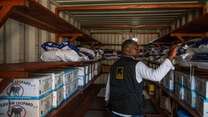
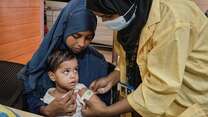
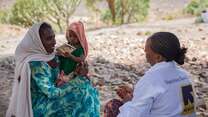
#Mali: Addressing hunger one health center at a time t.co/KzExlHb1
May 21, 2012
-
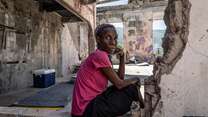
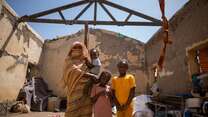
These pix from Mali show the devastating impact of the #drought sweeping across Africa's #Sahel region: t.co/6dO5jkrY
May 21, 2012
-
@mmm_dumpling @GPTW_Global @CorConnection @hiltonprize @NataCour @SharonDAgostino Thanks for your support!
May 18, 2012
-
On the blog: Uganda after #Kony: Alice Akoko’s story t.co/qpKLefsZ
May 18, 2012
VOICES FROM THE FIELDTHE IRC BLOG
Congo: Rebuilding shattered communities
The IRC-run Tuungane program has helped nearly two million people living in remote war-torn eastern Congo rebuild villages and construct new clinics, wells, schools, bridges and roads.
Noela M'Nagashenyi's labor pains began early in the morning. She limped out of the hut she calls home in her village in eastern Congo and began walking. It was a day's trek to the nearest health clinic where she might receive help giving birth. Two friends accompanied her, helping Noela navigate the narrow and muddy paths that cut across the steep green hills overlooking Lake Kivu. Two hours later, Noela suddenly stopped, crawled under some shrubs and gave birth. "There was no one to help us," Noela recalled three years later as she sat in her simple hut in the village of Mabula, surrounded by banana trees. "My friends didn't know how to deliver a baby. It was very painful and in the end I lost my baby boy. He is buried under a tree." Noela herself lost so much blood that she nearly died during the six hours it took to carry her to the clinic that was her original destination.
Noela M'Nagashenyi, 33, lost her baby and almost died from blood loss before she was brought to a hospital on a makeshift stretcher. Shortly after her ordeal, Noel became pregnant again and gave birth to a healthy girl, Jolie. Photo: Peter Biro/The IRC.
Ordeals like that of Noela's are common in Congo. After years of war and neglect, Congo, a country the size of Western Europe, has few hospitals, health clinics, paved roads or passable bridges. The hospitals and clinics that do exist lack trained health staff and proper equipment. According to studies conducted by the International Rescue Committee (IRC), the conflict in Congo have claimed the lives of 5.4 million people, mostly as a result of the disease, lack of health care and malnutrition that are the byproducts of violence. For the people of Mabula, however, change is coming at last. Thanks to Tuungane, an innovative IRC-run program based in eastern Congo, the village will soon have a health clinic as well as health staff able to deliver babies, treat injuries and administer medicine. Tuungane means "let's unite" in Swahili-and the program has helped nearly two million people living in remote war-torn eastern Congo rebuild villages and construct new clinics, wells, schools, bridges and roads since it was launched in 2007. Just as important, the program, which is centered in South Kivu, Maniema and Katanga provinces, introduces democratic methods to people who previously had little control over their lives or the future of their communities. In each village where Tuungane is introduced, villagers themselves nominate and elect members of local development committees. These elected committees then decide the reconstruction projects a village should pursue. The committee, which also manages the money and the actual work, is directly accountable to the community it serves.
Wherever Tuungane is introduced, villagers themselves nominate and elect members of local development committees. At this public meeting, villagers are able to discuss the community's projects with the committee. Photo: Peter Biro/The IRC.
The Tuungane program's goals are ambitious. In addition to building health clinics like the one in Mabula, the program is funding school construction, helping communities create links with local health authorities that in turn supply clinics with drugs and medical equipment, and training villagers in job skills such as bookkeeping and financial management. Emmanuel Rugango, a 45-year-old farmer from Mabula, recently experienced the meaning of Tuungane firsthand. He decided to run for election to one of seven seats on the village's development committee-and won. "This is the first time we in the village have ever decided to build something together," Rugango said. "Before, everybody looked after their own plots; people didn't think as a collective. Tuungane has changed the way people in Mabula think forever." Tuungane is also helping bridge the gap between men and women, said Gina Xaverine, president of the development committee in Ihoka, an isolated hamlet on an island in Lake Kivu where the community decided to build a school and a clinic. "Women dared speak in public about things that are normally decided by men," she said. "I was very nervous the first time I spoke, but soon realized that the men were listening to me and thought that my ideas were good. Tuungane has made both women and men more confident. Our lives are so much better now."
No comments yet.
Voices From...
Contributors


Comments
Post new comment