News, Photos & Videos › Blog › Fleeing Libya: How the IRC helped Chadian migrant workers
Since 1933, the IRC has provided hope and humanitarian aid to refugees and other victims of oppression and violent conflict around the world.
Recent Posts
The IRC on Twitter
-
RT @So_Jo1: @theIRC's Felix Leger on VOA today t.co/vzvenVNEJ1
May 22, 2013
-
RT @So_Jo1: @theIRC will provide 70,000 liters of clean water daily--enough potable water for 5,000 people a day to drink, cook and bathe #…
May 22, 2013
-
Less than 10 yrs after fleeing Somalia, Amal Kahim Jama & her family became refugees again, in Syria: t.co/wZkmKWqy00 via @AJEnglish
May 22, 2013
-
@IRCPress You've been quoted in my #Storify story "Crisis in Darfur, 10 Years On" t.co/guLOti8F02
May 21, 2013
-
RT @IRCPress: Race against time to aid new #Darfur #refugees in Chad before rains begin: t.co/z6eDBFeR1I
May 21, 2013
VOICES FROM THE FIELDTHE IRC BLOG
Fleeing Libya: How the IRC helped Chadian migrant workers
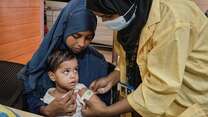
Three-year-old Issa’s family arrived In the Faya transit camp on June 3, 2011 after a perilous four-week journey from Libya. Throughout the ordeal, the little boy clutched his cherished cuddly toy. After arriving in Faya, Issa was treated by IRC staff at the hospital and vaccinated against measles.
Photo: Pasteur Ruberintwari/IRC
“I have drunk hardly any water for two weeks, but I’m safe and that’s what matters”
— Chadian refugee on his arrival in Chad from Libya.
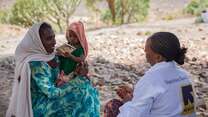
Over 80,000 Chadians who had been working in Libya returned to Chad during 2011 in the wake of violence that erupted in the North African country a year ago. More than 20,000 arrived back home weak and sick after a 500-kilometer journey (more than 300 miles) across the desert under harsh conditions. The International Rescue Committee began its emergency medical program to assist them last May.
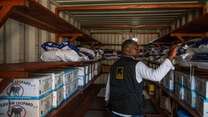
Sylvain Topan is the IRC’s field coordinator in Faya, a small oasis in Chad, and recalls the early days of the response, “I remember when I first met the migrants. I was shocked, as they were in very bad shape after travelling for weeks on top of trucks across the desert,” he says.
One particular refugee stands out in Sylvain’s memory. “His name was Mahamat Ibrahim. He told me, ‘I’m exhausted, I’m ill, it might be measles. I have drunk hardly any water for two weeks, but I’m safe now and that is what matters.’ I was happy to take Mahamat to the IRC doctor for a medical checkup, but also angry at how crazy our world can be.”
Almost one year later, thankfully, the situation in Chad is almost back to normal. “The IRC has made the decision to end its local support,” says Sylvain, “and hand over the health support services to the local medical authorities, together with a donation of drugs for them to continue the work.”
Posted in Emergency Response, Libya, Chad | Tags: health, emergency response, humanitarian aid, Arab Spring
No comments yet.
Voices From...
Contributors


Comments
Post new comment