Since 1933, the IRC has provided hope and humanitarian aid to refugees and other victims of oppression and violent conflict around the world.
The IRC on Twitter
-
Thanks to all who voiced support for U.S. #CIR! What your calls on the Senate immigration reform bill achieved: t.co/z5OAvG7uFs
May 24, 2013
-
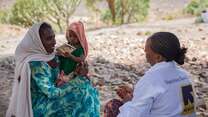
RT @DocEdH: The best of @theIRC: amazing local staff -in this case Immaculee M- listening thoughtfully to a community leader t.co/LH…
May 24, 2013
-
@angusa Thx for your interest in working with us! Positions posted at t.co/w3SDWahSdt; if a position isn't there it's no longer open.
May 24, 2013
-
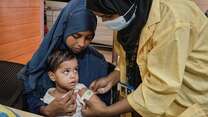
A woman awaits a checkup at an IRC clinic inside #Syria. t.co/KYCuHf1zWA Photo: Peter Biro/IRC t.co/qptp52tHvi
May 23, 2013
-
Please tweet @theIRC if you have questions, comments or requests!
May 23, 2013
VOICES FROM THE FIELDTHE IRC BLOG
Lost Chronicles Found - Part 3
July 23, 2008
By The IRC
Photo: Rosalie Hughes/The IRC |
| Last summer, Rosalie Hughes volunteered at a summer school program for refugee youth run by the IRC’s New York resettlement office. The six week program, which is located at Marymount Manhattan College, helps prepare newly arrived refugee children to go to school.
Hughes kept a journal of her experiences, however, her writings were never posted on the IRC’s blog as intended because of last summer’s steampipe explosion in Midtown Manhattan, which temporarily closed the IRC’s offices. We are happy to post them now. I am standing in front of a cramped banquet hall on the second floor of Marymount Manhattan College in the Upper East Side of New York, holding up a drawing by Fatumata Sanoe, an eleven year-old student from Liberia. The drawing shows two children linking arms. At the top of the page are the words Because We Are The World. At the bottom – The IRC World Kids. The earth rests above their heads and each child holds a small rectangle on which the words Out of Here are written. Sixty-five students sit on the floor in front of me, clapping. The faces looking up at me belong to the IRC’s Summer School, a six-week program for refugee children who have just arrived in this country. The students come from all over the world, including Liberia, Guinea, Tibet, Iran and Vietnam. In the front on my left An Doc, a small Bhutanese girl, and Trinh, an even smaller girl from Vietnam, link arms and pat the floor with their free hands. On my right, Aisatu, a sixteen year-old from Guinea, pokes Mohammad, from Liberia, giggling. Several girls in the junior high class wear thin black headscarves. Agibu, a seventeen year-old from Guinea, wears baggy jeans, an oversized button up t-shirt and a flat-brimmed baseball cap. Madion, a junior high girl school student from Sierra Leone, wears flair jeans, white sneakers and a striped button-up shirt. “It looks like we have a winner – Fatumata’s IRC Kids is our new school mascot!” CarmenLeah, the school supervisor, who is standing next to me, announces. Since we announced the school mascot contest last week the submissions have been flowing in. Most are drawings from the lower elementary students. Eehsar drew a pink elephant. Moussa drew a soccer ball. We chose Fatumata’s drawing as a finalist because it best represents the school’s most unique trait: its diverse student body. After the assembly, Fatumata comes up and hugs me, beaming. “I’m so exited,” she says. Her English is clear. Unlike many of the students, she has no trouble communicating – she has spoken English since she was a young girl in refugee camps in Guinea. That night I buy a ten-dollar frame for the drawing at K-mart and the next morning we hang the drawing in the office. Next to the posters and signs made of construction paper, the drawing is the most distinguished-looking item on the office walls. That morning Fatumata comes in to the office three times. “Just here to make sure it’s still there,” she says, with a smile that stretches her face. Later that day, I am on my way to the park with her class. I walk with Fatumata and her friend Madion. We talk about the drawing and I again tell her how much I like it. “But Fatumata,” I ask, “What are the children holding?” “The rectangles are books,” she explains. The title, Out of Here, she made up herself. “They are so happy to be out of there and into their new lives in America,” she says. |
No comments yet.
Voices From...
Contributors


Comments
Post new comment