Since 1933, the IRC has provided hope and humanitarian aid to refugees and other victims of oppression and violent conflict around the world.
Recent Posts
The IRC on Twitter
-
RT @MoveEndViolence: Why do we need a #movement to end #VAWG? #MovementMaker Heidi Lehmann of @theIRC on the blog. t.co/H74c80BdAs
May 20, 2013
-
@Doylech @oneworldadopt @Just_Naomi_chan @socialfund @AFRIpads @tamaraduker @lynndalsing @HuTerra @scribblymouse thanks for your support!
May 20, 2013
-
RT @IRCuk: Thanks @LCO_orchestra @RiyadNicolas @cadoganhall for an excellent concert & for supporting our work w. Syrian refugees #TheAsfar…
May 20, 2013
-
Call members of Senate Judiciary Ctte & ask them to retain #CIR provisions that protect refugees & asylees t.co/xLIoPRWloc #CIRmarkup
May 20, 2013
-
#CIRmarkup: Sec. 3405 of U.S. #CIR bill is in markup right now. It contains important protections for #refugees, asylees & stateless people.
May 20, 2013
VOICES FROM THE FIELDTHE IRC BLOG
Making sure women who left everything behind still have their dignity
In conflict-stricken North Kivu province, the IRC is delivering more than 12,000 emergency kits for women that support their dignity and safety.
When Jacqueline* and her two teenage daughters abruptly fled their village last fall because of fighting in North Kivu province, they managed to take but a pair of cooking pots and a small rug to sleep on. Since then, they have been forced to move several times among the informal camps sprouting up on the outskirts of Goma, the provincial capital near Congo’s border with Rwanda. They have had to sleep under the open sky, in makeshift tents, and on the cement floor of a school with hundreds of other displaced people, never feeling safe or enjoying the least bit of privacy.
Their situation is hardly unique. Scared for their lives and often without a place to go, women and girls in Congo flee their homes empty-handed. On the road, they have little opportunity to practice basic hygiene and are exposed to infection from wearing wet clothing continuously. The fact that for several days a month they cannot move about freely compromises their ability to search for food and fetch water—in short, their ability to survive.
“We felt very uncomfortable, always in the same clothes and not being able to wash properly,” Jacqueline says. “We really wanted new pagnes, but could not buy them.”
Pagne, the brightly colored, waxed cotton fabric that women make into dresses and head coverings, costs at least $12 at local markets, a sum Jaqueline could not contemplate. Her daily expenses, which she spends exclusively on food, rarely exceed one American dollar, and only when she is lucky enough to get an odd job.
![]() |
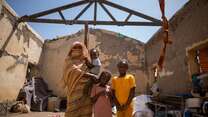
| To reduce the risks women face at night, the IRC kits supply them with flashlights and multiple sets of batteries, as well as whistles to blow in case they find themselves in danger. Photo: Sinziana Demian/IRC |
No comments yet.
Voices From...
Contributors


Comments
Post new comment