Since 1933, the IRC has provided hope and humanitarian aid to refugees and other victims of oppression and violent conflict around the world.
The IRC on Twitter
-
Thanks to all who voiced support for U.S. #CIR! What your calls on the Senate immigration reform bill achieved: t.co/z5OAvG7uFs
May 24, 2013
-
RT @DocEdH: The best of @theIRC: amazing local staff -in this case Immaculee M- listening thoughtfully to a community leader t.co/LH…
May 24, 2013
-
@angusa Thx for your interest in working with us! Positions posted at t.co/w3SDWahSdt; if a position isn't there it's no longer open.
May 24, 2013
-
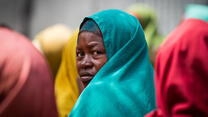
A woman awaits a checkup at an IRC clinic inside #Syria. t.co/KYCuHf1zWA Photo: Peter Biro/IRC t.co/qptp52tHvi
May 23, 2013
-
Please tweet @theIRC if you have questions, comments or requests!
May 23, 2013
VOICES FROM THE FIELDTHE IRC BLOG
Refugee Journeys: Alek Wek - Sudan, 1991
January 10, 2011
By The IRC
Alek Wek
"That was me and my family just walking along with so many other people, with whatever little we could carry and trying to go somewhere not knowing if it was going to be safe. Not knowing what’s ahead and trying to get to that safety and just hoping that it’s going to be okay. That is really the most important thing."
- Alek Wek
Alek Wek was born in 1977 in Wau, the second largest city in Southern Sudan, the seventh of nine children of a board of education administrator and a homemaker. Wek was nine when residents fled Wau to escape heavy fighting as Sudan’s long-running North-South civil war reached the city. The family began a long, hard trek to a rural village where kindly relatives sheltered them.
When Wek was 12, the family made their way to Khartoum, seeking medical treatment for her ailing father. Two years later, in 1991, Wek and a younger sister were admitted to the United Kingdom as refugees. An older married sister who had been living for years in London took them in. Wek enrolled in school and also found work, first stocking shelves in a supermarket and then as a clerk in a shop. In 1993 her mother, now a widow, and other siblings arrived in London.
Wek won a scholarship to study art at the London Institute — and earned expense money on the side, first by cleaning toilets at the BBC and then working as a gofer at a salon. At a street fair, a talent scout for a major modeling agency encountered Wek, presented her with her business card and suggested she consider becoming a model. Wek’s mother discouraged her from following up on the call, but eventually she relented.
Alek’s first year in modeling was a slow one, but she soon soared to the top of the industry. In 1999, she was named one of People magazine’s “50 Most Beautiful People,” and in 2005 New York magazine called her one of the “50 Most Beautiful New Yorkers.”
Wek resides in Brooklyn. She has designed multiple seasons of handbags for her line, Alek Wek 1933, whose name recalls the year of her father’s birth. She debuted as an actress in the 2002 film Four Feathers, alongside Kate Hudson and Heath Ledger. Her memoir, Alek: From Sudanese Refugee to International Supermodel (Amistad/Harpercollins) was published in 2007.
Wek has been active with Doctors Without Borders and the U.S. Committee for Refugees and Immigrants, and with organizations combating AIDS and breast cancer.
Alek Wek is one of 10 distinguished refugees who were honored by the International Rescue Committee at our 2010 Freedom Award Dinner in New York City. Check back each Monday for a new story of a refugee who has fled tyranny and persecution and who has made the most of the opportunity to begin again and thrive in the U.S. You can see all of the stories posted so far here.
Comments
blog
blog [url=http://www.google.com]blog[/url] blog blog http://www.google.com
Post new comment
Voices From...
Contributors