International Rescue Committee (IRC)

VOICES FROM THE FIELDTHE IRC BLOG

Pakistan’s flood survivors: "What are we going to do now?"

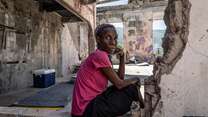
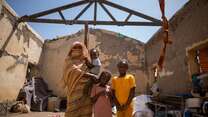
Zubadia Razia, 20, walks through the mud and rubble that was once her home in the devastated Charsadda district. She is looking for a suitcase she kept clothes in, but it is nowhere to be found.

Photo: Peter Biro/The IRC

Pakistan: Visiting communities ravaged by the floods

  • <p>The International Rescue Committee is on the ground providing aid to victims of the worst flooding in Pakistan&rsquo;s modern history. At least 1,600 people have been killed and a staggering 20 million people have been affected by the devastating monsoon rains.  (Photo: Peter Biro/The IRC)</p>
  • <p>A refugee from Afghanistan sits amid the rubble that was formerly his home in the Azakhel camp near the city of Peshawar in Nowshera district. The entire camp was crushed by the water masses when the nearby Kabul River burst its dams. (Photo: Peter Biro/The IRC)</p>
  • <p>Almost all the mud houses at Azakhel camp have been turned into clay mounds and twisted debris. (Photo: Peter Biro/The IRC)</p>
  • <p>The Afghan refugees have lived at Azakhel for more than three decades. Now they have once again been forced to flee. Most live nearby, in tents by the side of a busy highway. (Photo: Peter Biro/The IRC)</p>
  • <p>Allah Jan (right) from Azakhel has squatted under a tarpaulin for over two weeks. &ldquo;The clothes I wear are all that I own,&rdquo; she said. &ldquo;The local people here help me with some food, but that is all.&rdquo; (Photo: Peter Biro/The IRC)</p>
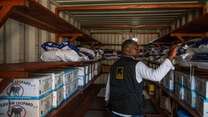
  • <p>In the first phase of a large aid effort, the IRC is going to distribute plastic sheeting for shelter, blankets, bed nets to prevent malaria, hygiene material, water purification tablets and other essential material. &ldquo;We need all that we can get,&rdquo; this man said.  (Photo: Peter Biro/The IRC)</p>

The IRC is providing aid to victims of the worst flooding in Pakistan’s modern history. As many as 20 million people have been affected by the devastating monsoon rains. Photos: Peter Biro/The IRC


All IRC Slideshows >
All Pakistan Slideshows >

The International Rescue Committee’s Peter Biro is travelling in western Pakistan where the IRC is delivering aid to victims of the worst flooding in Pakistan’s history.

In a rare reprieve from the heavy monsoon rains, Zubadia Razia, 20, walks through the mud and rubble that was once her home. She is looking for a suitcase she kept clothes in, but it is nowhere to be found. This area, near the city of Peshawar, was wiped out in Pakistan’s worst flooding in living memory. So far, the deluge has killed over 1,600 people, affected some 20 million people, washed away crops and farm animals and overwhelmed the Pakistani government. 
 
“This is what’s left of our house,” Razia says, gesturing toward a pile of rubble, her voice filled with despair. “We were 13 people living here and now everything is gone.”
 
As fierce rains continue to pound much of Pakistan, the people here are wondering what to do next. Food prices have soared and the livelihoods of entire villages have been washed away. All around us corn and wheat fields are under water.
 
“My husband made a living from selling ice cream,” Razia says, pointing to a small wooden vending cart, its twisted wheels buried in the rubble. “I stitch clothes for a living, but my sewing machine is also lost.”
 
Normally Razia’s family spends 350 rupees, or four U.S. dollars, per day on food. With any possibility of earning a living now shattered, the family is surviving on handouts and money borrowed from friends and relatives.
 
“We receive rice from people around us who can afford to give it away,” Zubadia says.
 
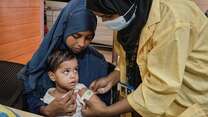
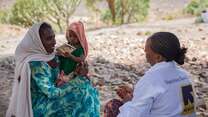
Poor sanitary conditions and a lack of safe drinking water have created the potential for serious outbreaks of disease. Health officials have confirmed at least one case of cholera in northwestern Pakistan and diarrhea and skin disease have started to spread. The United Nations has warned that a shortage of aid money is threatening six million people, the majority of them children and infants, with potentially lethal diseases carried by contaminated water. As a first step to thwart the spread of disease, my IRC colleagues are distributing water purification tablets. The next critical step, they tell me, is to bring clean water via tanker trucks to the devastated communities.

“With most of the infrastructure destroyed and supplies overstretched, this will be no easy task,” says Tammy Hasselfeldt, who runs IRC programs in Pakistan.
 
Not far from Razia’s wrecked house lies the Azakhel camp, which has been a home for refugees fleeing war and conflict in Afghanistan for over three decades. Now it’s all gone. When the banks of the Kabul River burst, almost all the mud houses were turned into clay mounds and twisted debris, leaving some 30,000 people homeless. Mattresses, twisted bed frames and fans lie buried in thick mud. The stench of rotting carcasses of livestock fills the hot midday air and in the pools of stagnant water, insects are visibly breeding.  Hasselfeldt says malaria is a growing threat.

 Most of the Afghan refugees are now taking shelter nearby, in tents by the side of the Grand Trunk road, once part of the legendary Silk Road and now a busy highway.
 
One of the Afghans, Serdar Wali, has been squatting under a tarpaulin for more than two weeks. “What are we going to do now?” he says with a bitter smile as heavy trucks roar by a couple of meters away. “Once again, we are refugees.” 

To Help: Make a gift to support our emergency efforts helping flood survivors in Pakistan.

8 comments

Comments

Thanks very much to everyone

Thanks very much to everyone who has contacted the IRC through this blog about your interest in joining our emergency response in Pakistan. We are unable to post comments that include resumes/CV’s and personal contact information. (You can learn more about our blog commenting guidelines here.)To apply for job, volunteer and internship opportunities with the IRC, please click the "Careers" link at the bottom of this page or visit www.IRCjobs.org.

I salute to IRC, for their

I salute to IRC, for their tremendous work for rehabilitation of the effected people of the world especially in Pakistan, Indeed this is a very very big humanitarian assistance.

Its very bad time is going at

Its very bad time is going at pakistan .,the same situations we have felt in earthquick 2005 . looking all situation i have plane to work for effeties .I don a great job at the ICRC plate forms i did work as Pharmasist ,storekeeper and Officeclerk So i am extremly requeted to you please give me the opertunity to serve the effecties . Best Regards Name : Abid Awan Add.

Its really too bad to see

Its really too bad to see this kinda situation once again in KPK Provice. First was Operations of army against Terrorism and now the Flood. I have worked in UNHCR at that time when more then two Million People migrated from their home town.
I want to help the flood affected Peoples on the Plateform of IRC. So if there would any Vacancy in future plz contect me. I will be so much Obliged. Thanks.

being an associate civil

being an associate civil engineer i m ready to work for flooding people of pakistan with you. i offer all of my services to you to help pakistani people.

Thanks very much for your

Thanks very much for your interest in working with the IRC, Tariq Shahzad. You can look for jobs and volunteer opportunities in Pakistan at http://www.theirc.org/careers 

(Kate Sands Adams, blog moderator)

How irc help the flood

How irc help the flood affected peoples of pakistan.

Thanks for your question,

Thanks for your question, Abdur Rashid. To learn more about the IRC's response in Pakistan, you can visit:
http://www.theirc.org/special-reports/special-report-pakistan

(Kate Sands Adams, blog moderator)

Post new comment

The content of this field is kept private and will not be shown publicly.
Image CAPTCHA
Enter the characters shown in the image.

ABOUT THIS BLOG        COMMENT GUIDELINES        DONATE        ARCHIVE