International Rescue Committee (IRC)

VOICES FROM THE FIELDTHE IRC BLOG

World Refugee Day: Remembering the real people behind the statistics

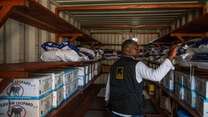
Photo: Joanne Offer/The IRC

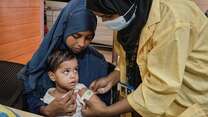
Photo: Joanne Offer/The IRC

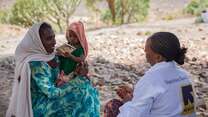
Photo: Joanne Offer/The IRC

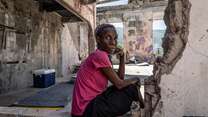
Photo: Joanne Offer/The IRC

Today is World Refugee Day.  Joanne Offer writes from Dadaab camp, eastern Kenya – now one of the largest refugee settlements in the world.

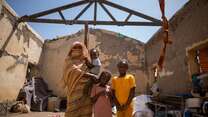
The official statistics tell us that the population in Dadaab refugee camp has now exploded past 275,000. Even though I’ve seen this for myself, I find it hard to put such numbers into context, they are so unimaginably huge. The theme of this year’s World Refugee Day – real people, real needs – is therefore apt. It’s a good time to remember the individual men, women and children who make up this massive population. Take 23-year-old Halima Ahmed Abdi. She’s been in Hagadera camp, Dadaab, for two months having recently fled civil war and drought in Somalia. “I came here from Baidoa because it was just too dangerous for human life,” says Halima. “There are too many problems in Somalia – there’s the worry that our enemy might kill us and the threat of starvation. We lost camels and cows to the drought.” Like all new arrivals, Halima was given a food ration card but she didn’t receive a plot of land. Dadaab’s camps were declared ‘full’ in August 2008, so all new refugees must stay with friends or relatives. Some are lucky and can share mud-brick houses with those refugees who have been on site for years. Others have to make do with what they can and erect flimsy structures out of plastic sheeting, rags and wooden sticks. Halima says: “My cousin has given me a room in their compound. It’s made of plastic sheeting and sticks. Fourteen people live in the compound and we don’t have a latrine so we share one with a neighbor.”

Halima  Photo: Joanne Offer/The IRC

Halima Photo: Joanne Offer/The IRC

Kenya is now entering its long rainy season, when diseases such as malaria and cholera typically become more widespread. In congested camps like Dadaab, where families are living so close together, the threat is all too real. Halima says: “My two boys are here at the hospital because they are very sick. They were not like this before the journey from Somalia, but it was tiring and since they’ve been in the camp they’ve had serious diarrhea and lost a lot of weight.” The International Rescue Committee runs a hospital and four health posts in Hagadera, Dadaab, and admissions typically jump during the wet season. On one of my visits, the pediatrics ward was struggling to cope, with 33 patients and only 27 beds. Our staff are working round the clock, but more funding and more resources are clearly needed as Dadaab’s population continues to spiral. The latest figures from the United Nations show an average of 7,000 newcomers every month so far this year. The Kenyan government and the international community must step up and do more to ensure that these people’s needs are met on World Refugee Day and beyond.

No comments yet.

Comments

Post new comment

The content of this field is kept private and will not be shown publicly.
Type the characters you see in this picture. (verify using audio)
Type the characters you see in the picture above; if you can't read them, submit the form and a new image will be generated. Not case sensitive.

ABOUT THIS BLOG        COMMENT GUIDELINES        DONATE        ARCHIVE