Since 1933, the IRC has provided hope and humanitarian aid to refugees and other victims of oppression and violent conflict around the world.
The IRC on Twitter
-
Thanks to all who voiced support for U.S. #CIR! What your calls on the Senate immigration reform bill achieved: t.co/z5OAvG7uFs
May 24, 2013
-
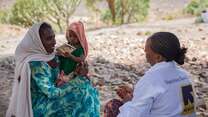
RT @DocEdH: The best of @theIRC: amazing local staff -in this case Immaculee M- listening thoughtfully to a community leader t.co/LH…
May 24, 2013
-
@angusa Thx for your interest in working with us! Positions posted at t.co/w3SDWahSdt; if a position isn't there it's no longer open.
May 24, 2013
-
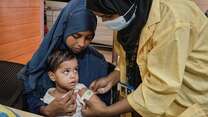
A woman awaits a checkup at an IRC clinic inside #Syria. t.co/KYCuHf1zWA Photo: Peter Biro/IRC t.co/qptp52tHvi
May 23, 2013
-
Please tweet @theIRC if you have questions, comments or requests!
May 23, 2013
VOICES FROM THE FIELDTHE IRC BLOG
Zimbabwe: "Can you rescue us?" (Part 2)
In this photo I am leading a health education session on cholera prevention in a village in eastern Zimbabwe. Cholera was not common in Zimbabwe before 2008 and so most people didn’t know how to prevent or treat the disease. By the start of 2009 an outbreak had killed over 4,000 people and sickened more than 100,000.
Protecting communities from cholera
A decade of economic troubles has eroded Zimbabwe's water and sanitation infrastructure, leaving its people vulnerable to cholera and other water borne illnesses. The IRC is working in the country's remote eastern highlands to help restore community water systems and respond to outbreaks of disease.
All IRC Slideshows >
All Africa, Zimbabwe Slideshows >
Protecting communities from cholera
A decade of economic troubles has eroded Zimbabwe's water and sanitation infrastructure, leaving its people vulnerable to cholera and other water borne illnesses. The IRC is working in the country's remote eastern highlands to help restore community water systems and respond to outbreaks of disease.
All IRC Slideshows >
All Africa, Zimbabwe Slideshows >
Yesterday I wrote about how a decade of economic troubles has eroded Zimbabwe's water and sanitation infrastructure, leaving its people vulnerable to cholera and other water borne illnesses. Today I will describe how my International Rescue Committee (IRC) colleagues and I are working in the remote highlands of eastern Zimbabwe to help restore community water systems and respond to outbreaks of disease.
It is very motivating working with people in the affected villages. Whenever I arrive in an area where there has been an outbreak of cholera people always stop the IRC vehicle and ask, “Can you rescue us?” They often ask many questions and have many misconceptions — for example, some still strongly believe that cholera is airborne since it always seems to affect their areas.
In one village, I met a lady who was giving her children two liters of oral rehydration solution every day whenever there was a cholera outbreak, even though they were not sick. In other communities people have accidently poisoned themselves by swallowing chlorine tablets -- used to treat household drinking water – because they mistook them for pills to prevent cholera. They often become even sicker than the cholera patients.
A lot of our work is therefore focused on community health education. Sometimes I feel like a teacher: With cholera outbreaks occurring now in a cycle of every three months I meet people who were successfully treated once who have become sick again. They are very eager to learn as much as they can about the disease and how to prevent it.
Recently with two teammates, Edgar Mvududu and Munhamo Pasirayi, I helped train over 200 village health workers to rapidly identify and report cholera cases. We also carry out cholera awareness campaigns in the villages and at schools with drama, songs and participation from the audience to help prevent more families becoming sick. We spread messages about washing with soap, drinking only safe water and other preventive measures. In all, we have assisted more than 50 villages in five districts. The communities welcome the IRC with open arms and tell us that they feel that we deliver real results.
Health officials here in Zimbabwe refer to the IRC as their ‘son-in-law’. In the culture of Zimbabwe’s Shona tribe, sons-in-law are always there to assist and support the family. Over the last two years we have helped families to protect their wells from contamination. We have built latrines and water systems for schools and clinics, and provided cholera treatment kits, disinfectants and cleaning supplies to health workers. We have also constructed incinerators and medical waste pits to help prevent the spread of infections to clinic staff and surrounding communities.
These efforts are making a difference. The number of people who have died in these recurring cholera outbreaks has decreased tremendously in eastern Zimbabwe. In fact, some districts where we work have recorded no cholera deaths at all this year. But we still face many challenges, including poor communication links with clinics in remote areas at the start of outbreaks, a shortage of skilled nurses (who are the primary caregivers in the clinics), and ongoing problems with poor sanitation and a lack of clean water in the communities where we work.
Cholera is a killer. We have gone a long way in making sure good hygiene practices that help deter the disease are widely adopted — and in improving the circumstances in which people live. This is taking a lot of time and effort. But it is all worth it so that many more lives are saved.
Comments
I really appreciate the good
I really appreciate the good work you are doing and I would like to be part of the volunteer team
Thanks very much for your
Thanks very much for your interest in volunteering with the IRC. You can find more information about our volunteer programs at http://www.rescue.org/volunteer
it is the community-based
it is the community-based approach , the grass root involvement that i admire most from the efforts yourself and your colleagues are making in these vulnerable communities.i firmly believe that the yoke of ensuring equity and quality in relation to health access should never be heaped on selected elements but should be shared by individuals, communities and organizations like yours.With health information being one of the the 6 health building blocks, i view it as a prerequisite and a key determinant for a functioning health delivery system and the picture that preludes this post reveals you are treating it as such. Empowering a community to take care of itself is the best way to build a nation.Will communities remain the same with organisations like the IRC?I beg to differ. Continue to champion a noble cause.
Post new comment
Voices From...
Contributors