Since 1933, the IRC has provided hope and humanitarian aid to refugees and other victims of oppression and violent conflict around the world.
The IRC on Twitter
-
A woman awaits a checkup at an IRC clinic inside #Syria. t.co/KYCuHf1zWA Photo: Peter Biro/IRC t.co/qptp52tHvi
May 23, 2013
-
Please tweet @theIRC if you have questions, comments or requests!
May 23, 2013
-
Thanks to your support, we made @Klout's list of the world's most influential NGOs on social media: t.co/Abc4bTjEY0 #KloutPulse
May 23, 2013
-
RT @So_Jo1: @theIRC's Felix Leger on VOA today t.co/vzvenVNEJ1
May 22, 2013
-
RT @So_Jo1: @theIRC will provide 70,000 liters of clean water daily--enough potable water for 5,000 people a day to drink, cook and bathe #…
May 22, 2013
VOICES FROM THE FIELDTHE IRC BLOG
Asha's story: An 18-year-old mother and mentor for Somali refugee girls
May 8, 2012
By The IRC
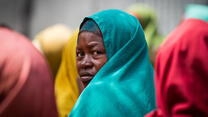
Conflict and the worst drought in six decades drove these Somali mothers and their children to the Dadaab camp in Kenya, home to nearly half a million refugees.
Dadaab, the world's largest refugee camp complex, isn't always a safe haven for women and girls who have fled fighting and famine in Somalia. Rape is common in and around the overcrowded camp, in northwestern Kenya. Women are sometimes forced to trade sex for food and other necessities. And during times of crisis they increasingly face abuse in their own homes.
Eighteen-year-old Asha* and her family arrived in Dadaab in 1991 from the war-torn Somali city of Kismayu. Asha started working with the International Rescue Committee's women's protection and empowerment team last November, serving as a role model for younger girls in the camp. Many Somali girls leave school, marry and become pregnant soon after puberty — often with serious health consequences — because bearing many children is a sign of prestige in their community. Asha recently shared her own story with the IRC’s Ruth Kimaathi:
“I came to the camp when I was one year old. I have three sisters and three brothers. My elder brother is mentally challenged and my two younger brothers are in school. All my sisters are married. After my mother passed away when I was a child, my father married another woman.
When I was 14 years old I was forced by my father to get married; now I have four children. Life has not been easy. From the very beginning, my husband beat me a lot and did not look after me or our children properly. I tried to separate from him but he kept harassing me and claiming that I was still his wife.
Soon he became even more abusive and stopped making any effort to get jobs. He waited for what little money I earned and forced me to give it to him to buy miraa [a narcotic plant]. He beat me every time I refused to give him the money and has threatened to kill me if I ever divorce him. What scares me most is that there are times when he is under the influence of drugs that he could easily carry out his threat.
One day he beat me so badly I could not hide it. Some of the young women I work with encouraged me to seek help at the IRC’s women’s support center. I was very ashamed to go but the staff there were very kind and helped me get treatment for my injuries. They also talked to me about my options. With their support I decided to leave my husband.
I’m now a mentor with the IRC, supporting other young girls in the camp so that they do not have to go through what I did. I lead weekly meetings with groups of girls from ages 10 to 14. Girls at this age are very vulnerable — to rape, to female genital mutilation and to forced marriage — so the IRC created these support groups to give them a place to turn when they need help.
We also give girls skills and knowledge to help make their journey to adulthood easier. During the weekly meetings, we teach them about women’s health, managing money and other “life skills,” and ways they can protect themselves from violence. We also help girls build self-esteem and teach them that they do not have to leave school to get married -- that they have a choice.
Today I am able to speak openly against forced marriage in my community: I will never force my children to get married before they finish their schooling. I will work hard to ensure they go to secondary school so that they will not have to experience what I did.
*not her real name
Mother's Day is May 13
Comments
I am very anxious the initial
I am very anxious the initial story of Asha concerning about her domestic violence that she had met from her husband.
Furthermore,it has concluded Asha'S story success and significant victory once she started a mentor supporting other young girls in the camp while she said that she doesn't like to have what she did. I contribute to the all Somalis girls take an exemplary what Asha has made!
She had been liberated from her own soul badly mistreatment and I am sure she will be an asset to any other organization.
Thanks IRC for bringing in this story on the page.
Omar
Many thanks to the IRC GBV
Many thanks to the IRC GBV Team who were mostly help the young girl tenage, who were realy lost hopes in the somali civil war, i would the IRC Team to ever contiue helping the vulnerables, who were the realy the hopless, infact i wld say thanks again, coz this website is so injoyable, Regards; Korah HIV/AIDs IRC
Post new comment
Voices From...
Contributors