Since 1933, the IRC has provided hope and humanitarian aid to refugees and other victims of oppression and violent conflict around the world.
The IRC on Twitter
-
RT @MoveEndViolence: Why do we need a #movement to end #VAWG? #MovementMaker Heidi Lehmann of @theIRC on the blog. t.co/H74c80BdAs
May 20, 2013
-
@Doylech @oneworldadopt @Just_Naomi_chan @socialfund @AFRIpads @tamaraduker @lynndalsing @HuTerra @scribblymouse thanks for your support!
May 20, 2013
-
RT @IRCuk: Thanks @LCO_orchestra @RiyadNicolas @cadoganhall for an excellent concert & for supporting our work w. Syrian refugees #TheAsfar…
May 20, 2013
-
Call members of Senate Judiciary Ctte & ask them to retain #CIR provisions that protect refugees & asylees t.co/xLIoPRWloc #CIRmarkup
May 20, 2013
-
#CIRmarkup: Sec. 3405 of U.S. #CIR bill is in markup right now. It contains important protections for #refugees, asylees & stateless people.
May 20, 2013
VOICES FROM THE FIELDTHE IRC BLOG
Haiti: Francette's story
June 3, 2011
By The IRC
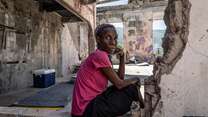
Francette Calixtus has been trained by the IRC to refer survivors of violence to appropriate medical or legal services and to provide them with ongoing support.
The International Rescue Committee (IRC) relies on a vast network of Haitian staff and volunteers throughout Port-au-Prince to carry out our programs—they are the backbone and the driving force of our work here. Here’s a glimpse into the lives of four women—Madeleine, Herta, Francette and Jeanne—who serve as volunteers in Port-au-Prince, trained to provide psychological and social support to survivors of sexual violence, with the IRC’s women’s protection and empowerment program.
Francette Calixtus is a wife, mother, accountant, and coordinator of a local organization, le Comite des Citoyens Organise de la Vallee de Bourdon (CCOVAB). She has lived in the Vallee de Bourdon for 10 years:
"Working in projects on violence against women has always appealed to me, so when I received the invitation to participate in an IRC project, I was very happy. I really needed a space to think about this problem, which is present in the site, and to find ways to help women. I’m happy and proud that we women are helping each other to get out of violent situations. Before, when women were subjected to violence in the site, they would go to the police. Taking into account the sluggishness with which the police treat these cases, for example in rape cases, 3 or 4 days would pass before the survivor would get a response to their complaint. Now women come to us. We give them moral support to help them find their strength, and then we refer them to service providers who provide them with care before 72 hours pass so that they don’t get pregnant and catch STIs [sexually transmitted infections].
I feel a great need to fight violence because I’m a witness of acts of violence in the area, which hurts me very much. I was also subjected to acts of violence. Now that I’m a psychosocial volunteer, a perpetrator will need to think twice before subjecting me to an act of violence, because people see what the volunteers have come to represent in the site. I feel good leaving my house and knowing that I’m going to meet other volunteers I enjoy working with. I feel I’m a different person. I always do my best to be present for the meetings because of the joyous atmosphere. We share our problems and speak about our worries. I feel proud and flattered to be a psychosocial agent.
Sometimes women accept domination because they don’t know their rights or their value, or because of their precarious economic situation. Once these women become aware, they realize their strength and the things that they should never accept.
Some perpetrators don’t understand the work that we do and they try to assault the volunteers when they help a survivor. Sometimes a survivor, despite psychological and social support, accepts to suffer acts of violence again. Her lack of economic means forces her to return to the perpetrator.
Before, violence was widespread in the area. With our presence, violence is starting to diminish considerably. Sometimes I fear not reaching people quickly, and that survivors are left feeling guilty instead of the perpetrators. When men are going to act violently and become aware of the psychosocial volunteers’ presence near them, they stop. We feel very respected in the area. I think that people understand the meaning of our work. The fight against violence against women is very important because sometimes parents tell you that if someone beats you it’s because he loves you and he doesn’t want to leave you. Even worse, some women accept this kind of violence because society tells them that if their partner did not love them, he wouldn’t beat them. We help women to understand that they do not deserve to be punished this way.
One psychosocial volunteer told me that before she began doing this work, her husband often subjected her to violence. One day her husband took an item to hit her. He noticed that his wife stood watching him without fear. Then he said: 'Oh I know why you’re not running to hide, because you have a group of women that you can report to.' Today her husband fears acting violent towards her because he knows that his wife is part of the psychosocial volunteers."
No comments yet.
Voices From...
Contributors


Comments
Post new comment