Since 1933, the IRC has provided hope and humanitarian aid to refugees and other victims of oppression and violent conflict around the world.
The IRC on Twitter
-
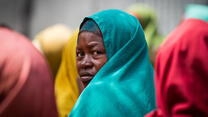
A woman awaits a checkup at an IRC clinic inside #Syria. t.co/KYCuHf1zWA Photo: Peter Biro/IRC t.co/qptp52tHvi
May 23, 2013
-
Please tweet @theIRC if you have questions, comments or requests!
May 23, 2013
-
Thanks to your support, we made @Klout's list of the world's most influential NGOs on social media: t.co/Abc4bTjEY0 #KloutPulse
May 23, 2013
-
RT @So_Jo1: @theIRC's Felix Leger on VOA today t.co/vzvenVNEJ1
May 22, 2013
-
RT @So_Jo1: @theIRC will provide 70,000 liters of clean water daily--enough potable water for 5,000 people a day to drink, cook and bathe #…
May 22, 2013
VOICES FROM THE FIELDTHE IRC BLOG
Haiti: Herta's story
May 20, 2011
By The IRC
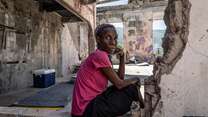
Herta Mettelus has been trained by the IRC to refer survivors of violence to appropriate medical or legal services and to provide them with ongoing support.
The International Rescue Committee (IRC) relies on a vast network of Haitian staff and volunteers throughout Port-au-Prince to carry out our programs—they are the backbone and the driving force of our work here. Here’s a glimpse into the lives of women who serve as volunteers in Port-au-Prince, trained to provide psychological and social support to survivors of sexual violence, with the IRC’s women’s protection and empowerment program.
Herta Mettelus, 40, is a preschool teacher and mother of two children. She lives in Teleco, one of the many tent cities that sprung up after the earthquake of January 12, 2010:
"I have faced a lot of problems since January 12th and I think that this is true for all women. What I’m doing right now has given me a chance to act for the good of others. Living so close to the problems that women are facing has changed a lot in me. It motivates me more. The main challenge is the men in Teleco who don’t see what we do in a positive light. They consider us enemies; they believe that we’re out to turn their wives against them when they come to us to report acts of violence. Another difficulty that we face is that women don’t have the ability to meet all the needs of survivors.
Sometimes when we refer survivors of gender-based violence, they don’t have the money to get to the services. Women’s lack of economic means to meet their needs further complicates their situation.
I remember a domestic violence case where the man was so violent that the situation had become uncontrollable. We summoned the president of the camp committee who, seeing the injuries that the husband had inflicted on his wife, said: “Take this chair and take revenge. Hit this vagabond!” At that moment we [psychosocial volunteers] intervened to explain to the camp committee president that this was not the best way forward. We still talk about it because the camp committee president’s reaction was unexpected."
No comments yet.
Voices From...
Contributors


Comments
Post new comment