Since 1933, the IRC has provided hope and humanitarian aid to refugees and other victims of oppression and violent conflict around the world.
Recent Posts
The IRC on Twitter
-
@IRCPress You've been quoted in my #Storify story "Crisis in Darfur, 10 Years On" t.co/guLOti8F02
May 21, 2013
-
RT @IRCPress: Race against time to aid new #Darfur #refugees in Chad before rains begin: t.co/z6eDBFeR1I
May 21, 2013
-
RT @MoveEndViolence: Why do we need a #movement to end #VAWG? #MovementMaker Heidi Lehmann of @theIRC on the blog. t.co/H74c80BdAs
May 20, 2013
-
@Doylech @oneworldadopt @Just_Naomi_chan @socialfund @AFRIpads @tamaraduker @lynndalsing @HuTerra @scribblymouse thanks for your support!
May 20, 2013
-
RT @IRCuk: Thanks @LCO_orchestra @RiyadNicolas @cadoganhall for an excellent concert & for supporting our work w. Syrian refugees #TheAsfar…
May 20, 2013
VOICES FROM THE FIELDTHE IRC BLOG
Q&A: "New Kids" author Brooke Hauser on refugee teens in America
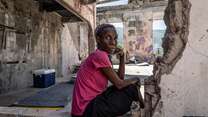
Chit Su in her room. When she arrived in New York from Myanmar, also known as Burma, no one in her new school spoke her language.
Journalist Brooke Hauser is the author of “The New Kids: Big Dreams and Brave Journeys at a High School for Immigrant Teens” — out in paperback this week. The book, which grew out of an article that Hauser wrote for The New York Times, chronicles a year in the life of five students at the International High School at Prospect Heights in Brooklyn, NY.![]() |
Chit Su's family album. Because she had lived in a refugee camp, Chit Su missed out on some schooling, though she had gotten a basic education. Photo: Brooke Hauser |
Other than the opportunity to learn English, what is the single most important thing a refugee student requires to succeed?
![]() |
Bilguissa is from Guinea, where it is not uncommon for teenage girls to marry and have children. With support from the International High School and her teachers, she pulled off being a mother and a top student. Photo: Brooke Hauser |
You write about the students turning to TV shows for cultural cues as they try to adjust to life in the U.S. These students also use e-mail and social media channels such as Facebook to communicate with each other. How is the resettlement experience for these newly arrived refugee teens different from the experience of those who came to the U.S. 15-20 years ago, both in terms of adjusting to life in America and maintaining ties back home?
Volunteer to Help Refugees
Comments
In a 2001 manuscript in
In a 2001 manuscript in ISSUES IN COMPREHENSIVE PEDIATRIC NURSING, H. Choi discusses the very difficult cultural transitions teens face. Her document is entitled "Cultural marginality: a concept analysis with implications for immigrant teens. As I recall, teens may be struggling with being treated as African-Americans in public without that history while at home they are treated by their parents as Ugandan, Nigerian, or other nationality. Another issue that may cause stress is that teens may acculturate more rapidly than their parents, You may find a large body of information relative to immigration in the Transcultural Nursing literature.
Here is another example of
Here is another example of how Esperanto can bridge the many gaps in our efforts at Multiculturalism. Why is it that nobody seems to take note on this? I've sent this basic message far & wide.
Allan C. Boschen.
Post new comment
Voices From...
Contributors