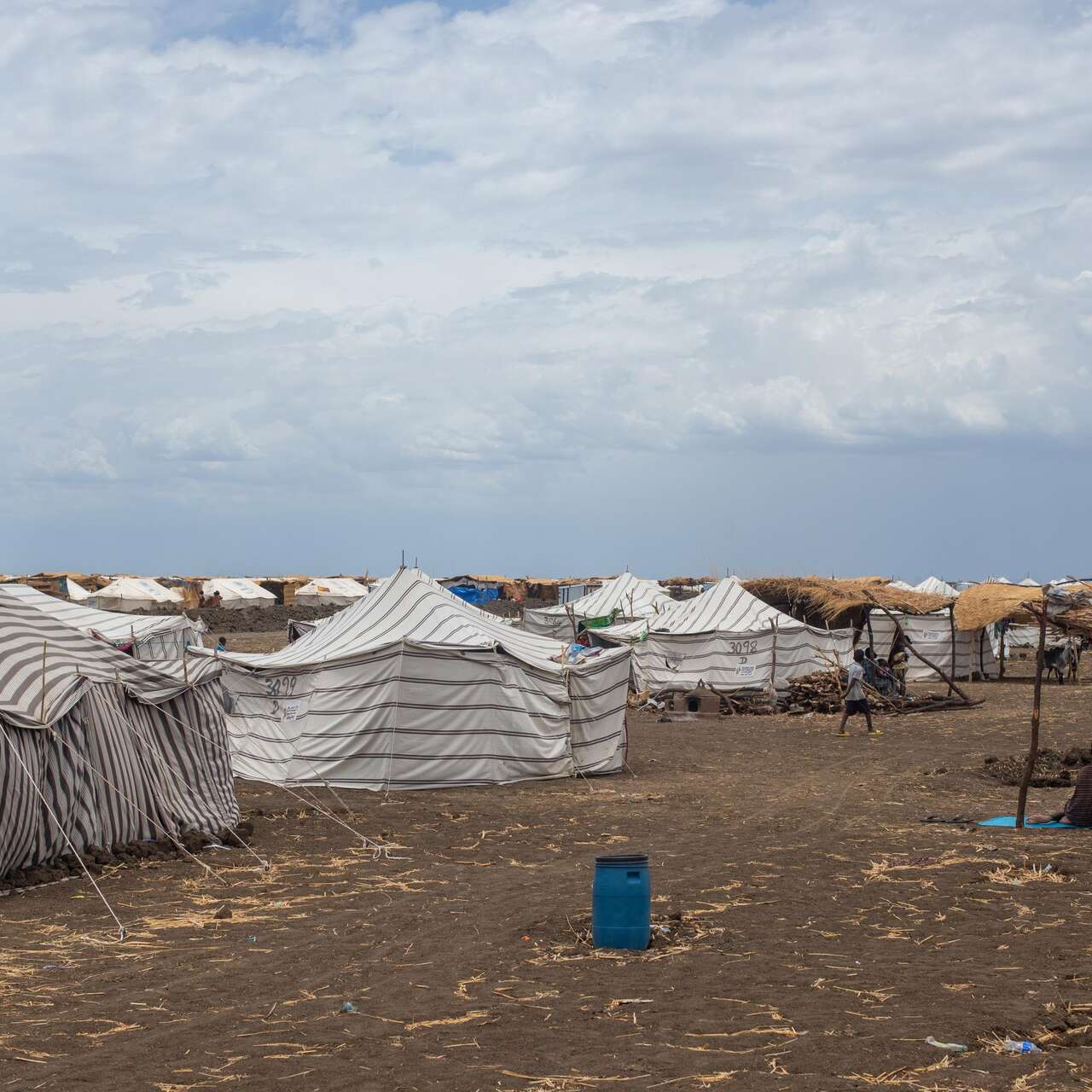
Crisis in Sudan
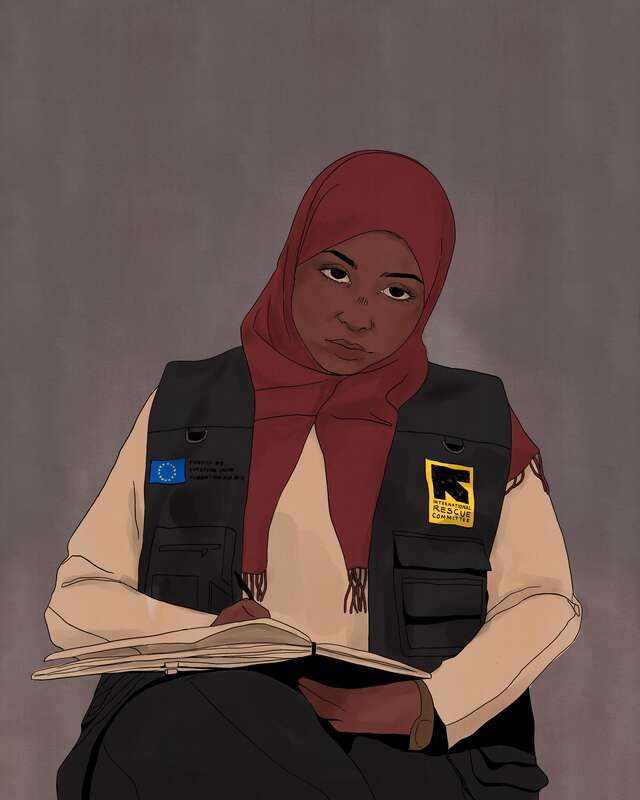
Five years ago, Azza Ali began working with the International Rescue Committee (IRC) as an integrated water, sanitation and hygiene (WASH) officer, supported by the European Union (EU). Today, Azza, 29, is a senior WASH manager who has served her community through two displacements.
“By the end, my family had to leave the country, but I chose to stay here and to continue my humanitarian work with the IRC,” she says. “My life has shifted—now my life is only work.”
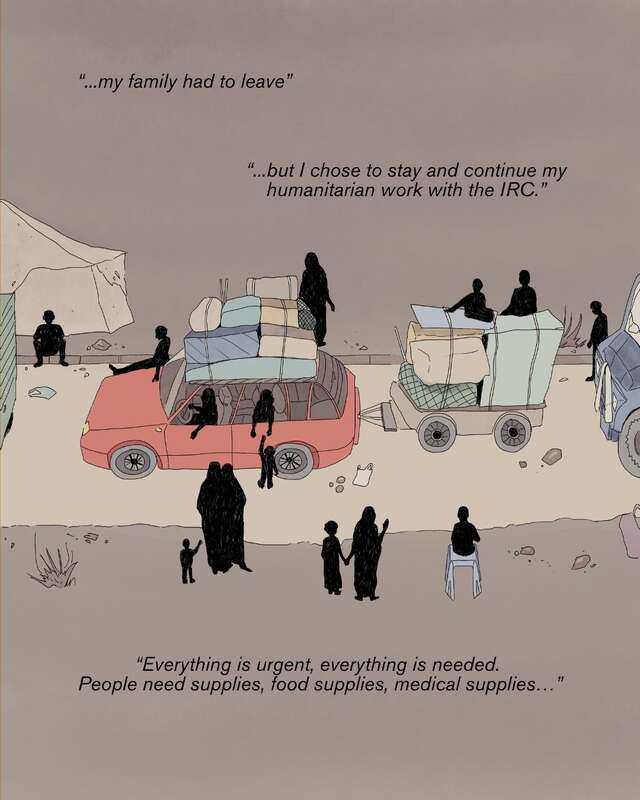
"It is not the same as before the war and I don't know if my life will actually go back, or if my family will be able to come back to Sudan," says Azza. "I'm still feeling like I'm on a mission and somehow it will end—and everything will go back to normal."
Recently, Azza agreed to share her experiences in the field, while artist Aya Mohamed brings her story to life through powerful illustrations.
Sudan's conflict has devastated the health system. More than 70% of hospitals have been destroyed, leaving millions without access to essential healthcare.
"Many hospitals were closed and there was also poor sanitation. We don't have a structured sanitation drainage system. So the flood water, combined with poor sanitation, has created the perfect environment for the outbreak," Azza explains.
By October 25, 2025, Khartoum had recorded more than 20,000 dengue cases. With EU funding, Azza's team immediately launched hygiene promotion activities and updated hygiene kits to include mosquito nets and other dengue mitigation materials.
"We also provided IPC [Infection Prevention and Control] materials to protect the infection control within the health facilities. In addition to that, we increased hygiene promotion. We trained 140 volunteers in addition to 14 community mobilizers to raise awareness at the household level," Azza explains.
These measures have been indispensable to meeting the growing needs of affected populations.
Each morning, Azza checks in with her two teams: one in River Nile State, the other in Khartoum. With EU support, they build latrines, install water tanks, rehabilitate water networks and carry out hygiene promotion activities.
“I usually do a weekly site visit—I go to the field maybe two or three days per week to visit each intervention site and carry out monitoring visits," she explains.
"Then we meet with the communities, which is very important. We sit with the WASH committees at each site and we visit the health facilities and discuss with the medical supervisor to see if there are any improvements that we can make."
The team debriefs at the office to plan next steps. "And then we start again the next day," Azza adds.
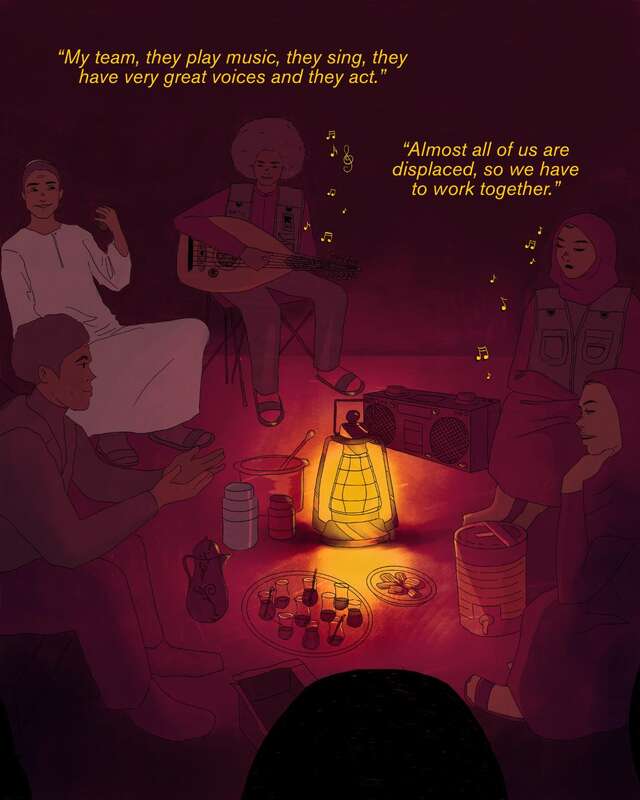
Azza feels proud to have kept serving Sudan's people after the war started, despite many in the humanitarian sector being forced to leave the country.
“Almost all the humanitarian workers, almost all our teams, are displaced. So we have to work together,” she says.
Since conflict broke out in Sudan in April 2023, over 12 million people have been displaced. A majority of the 8.8 million internally displaced persons (IDPs) struggle to access clean water, food, healthcare and essential survival supplies.
The few hospitals still functioning are overwhelmed and running out of medicine, leaving displaced and suffering communities without treatment.
“Currently the main entrance for Sudan is through Port Sudan, which is more than 1000 miles away from Khartoum. So even to transport the supplies from Port Sudan to Khartoum, it takes a very long time,” Azza explains.
“And we have seen families who don't even have income to transport themselves to the hospital. This is why I started working in the primary healthcare center, to be close to the communities.”
The fast-changing situation demands constant innovation.
“One of the things that we have adapted since the conflict started is turning to mobile services instead of building infrastructure,” says Azza.
"The reason behind this is that we are moving from location to location. We start in a certain location, then the situation gets worse. The RSF [Rapid Support Forces] attack the area, and then within one or two days we find that the displaced communities have left, so we start our responses again in a new place."
Whether adding more volunteer shifts, deploying more healthcare workers or expanding community outreach, the IRC's EU-funded emergency response allows Azza's team to adapt constantly to meet urgent needs.
Sudan is experiencing the fastest-growing displacement crisis. The longer the conflict continues and the more hospitals close, the greater the threat to the 12 million people displaced. Despite the dangers, the IRC's EU-funded teams remain on the ground.
Attacks on humanitarian aid workers have made an already difficult mission harder. For Azza's team, every field visit comes with extreme security concerns.
"Most of the time when something happens, you might inform the Humanitarian Access and Security team, but you are the one who's facing it, so you have to act by yourself."
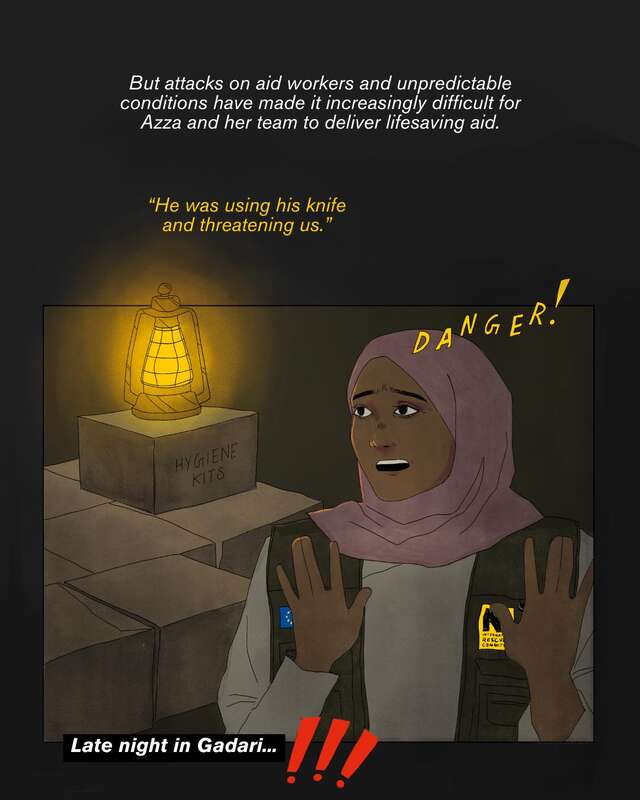
"There is always a challenge. The network is cut off. Roads are not accessible. There are rainy season challenges. It is just unpredictable. So usually when you go to the field you can expect anything to happen, even robbery," Azza says.
"Most of the time when something happens, you might inform the Humanitarian Access and Security team, but you are the one who's facing it, so you have to act by yourself."
Despite all this, Azza remains committed—preparing for the unexpected and potentially life-threatening situations she may face.
One moment captures the urgency for Azza. During a hygiene kit distribution and orientation session—kits included a metallic basin for washing clothes and kitchen utensils—a woman lifted up the basin and cried out:
"Oh my God, they brought me this. Now I don't have to wash my clothes in a bucket. I don't have to look for something to wash my clothes in!"
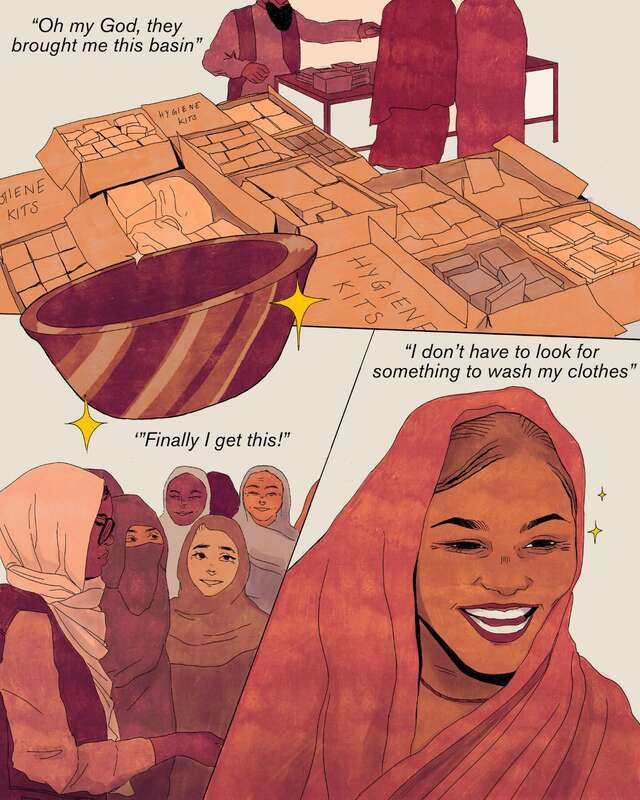
"I know that we do things that seem very small from the outside, but they are very meaningful to the people who actually need them," says Azza.
Such moments of appreciation from her community motivate Azza to persevere in her commitment to delivering humanitarian aid. “There is a rewarding feeling that comes with that,” she explains.
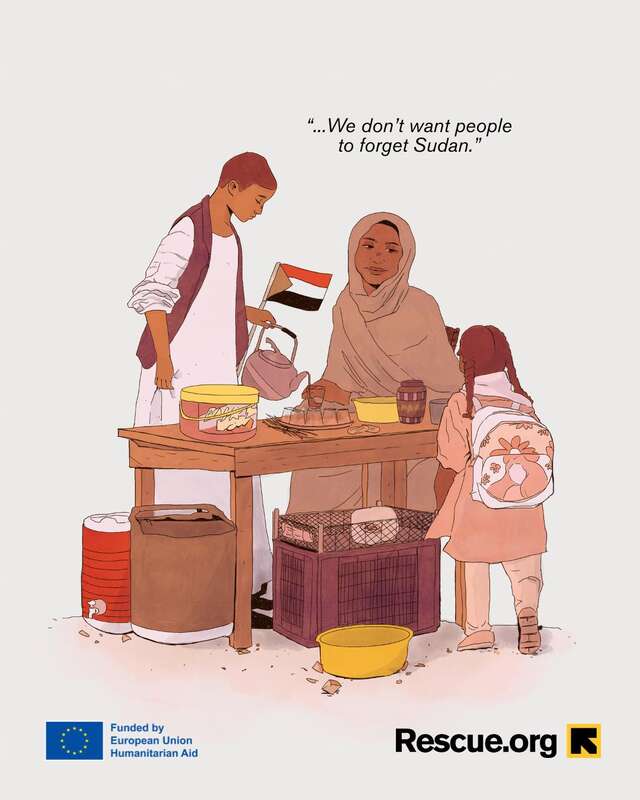
"This is different from anything I have seen before the war when I was working with the IRC. There are needs everywhere. The communities who have been displaced, they are in need. The host communities themselves also need humanitarian support.”
“We want the world not to forget about Sudan. We want to increase the funding as much as possible and to highlight the actual needs that are on the ground," says Azza, a determined look in her eyes.
Through continued partnership with the European Union, the IRC will keep delivering lifesaving aid to people across Sudan.
The International Rescue Committee (IRC) is delivering comprehensive humanitarian aid across Sudan and in neighboring countries where refugees are seeking safety. Our teams are on the ground, navigating security risks and displacement, to bring care directly to those most in need, including in difficult-to-access regions at the frontline of war.
Around the world, the IRC is delivering lifesaving medical services, food, water, protection, livelihood assistance and other essential aid, where it's needed most.

The International Rescue Committee partners with the European Union to provide life-saving support to people caught in conflict and disasters around the world. Our work funded by the EU enables people to survive, recover and rebuild their lives.