Emergency cash assistance in Yemen
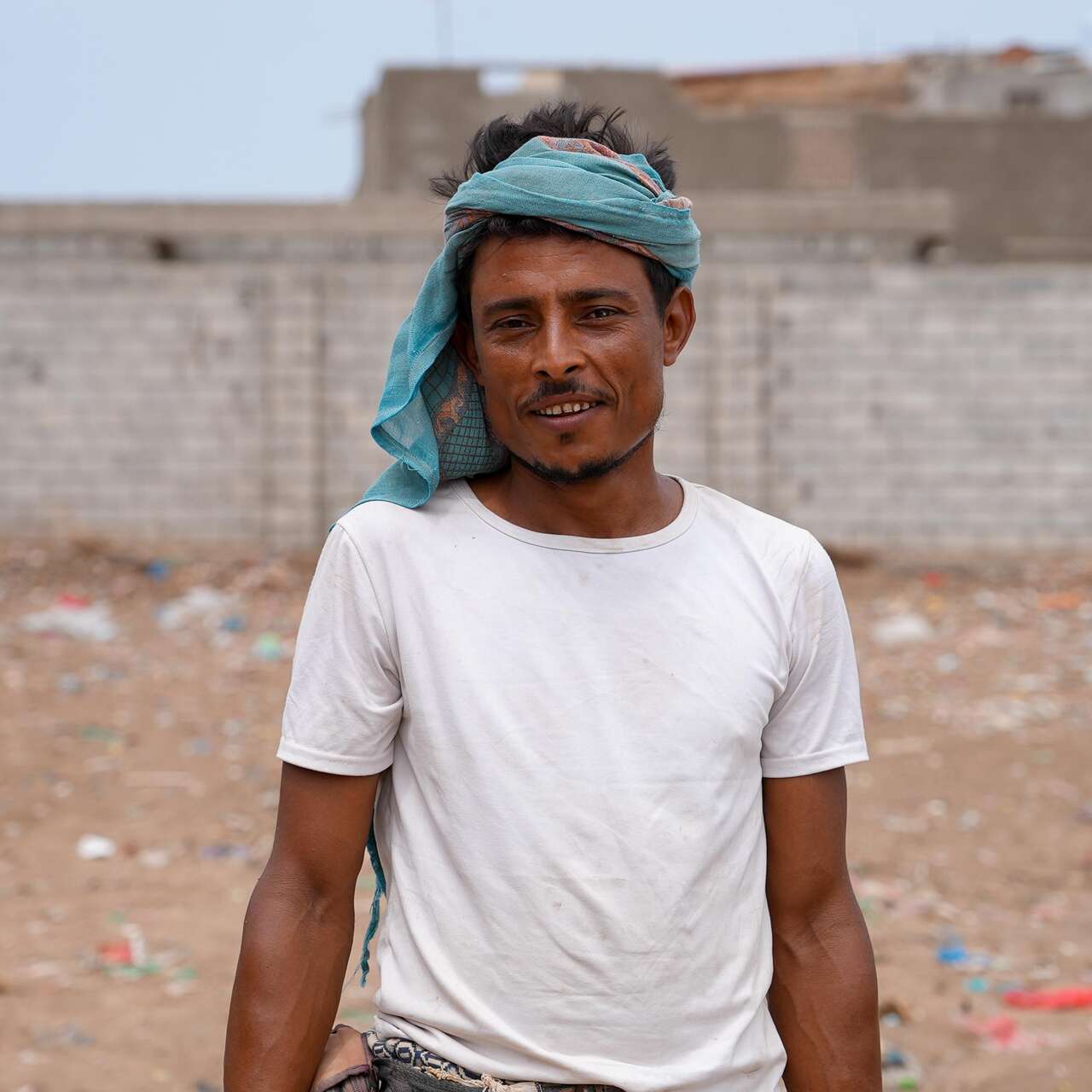
Across Yemen, years of conflict and repeated displacement have left many people living in precarious housing that offers little protection from the elements or extreme weather. Ahmed, a 26-year-old father of four, lives with his wife and children in one of those makeshift shelters in Al-Makha district, on Yemen’s western coast. The family’s home is built from mud and wood, offering little protection when heavy rain turns the floor to mud and water seeps through the walls.
“I have to lift our mattresses and blankets, and we sit on small wooden chairs all night,” Ahmed says. “Sometimes we can’t sleep at all until the sun comes out and dries everything.”
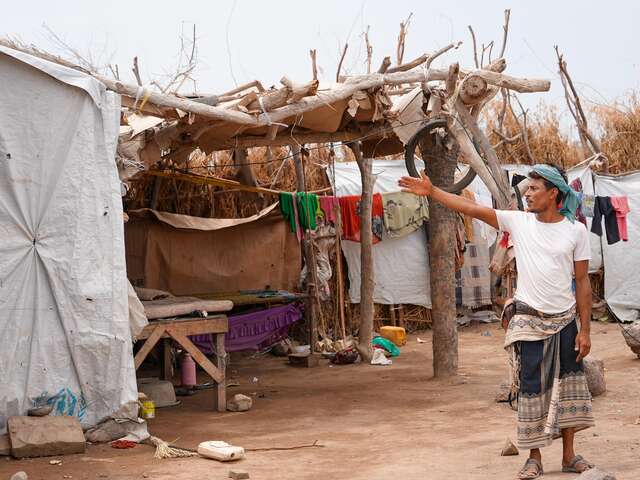
For a family already living with displacement and uncertainty, flooding can quickly turn a difficult situation into an emergency. Soaked mattresses, standing water, and mud make it harder for Ahmed’s four children, Nada (7), Mohammed (6), Ali (5), and Abdullah (3), to sleep, move around safely, and stay healthy.
Ahmed’s family originally comes from Mawza district in Taiz governorate – six years ago, landmines were laid throughout their village, making it unsafe for the family to continue living there. Returning home remains unsafe. Ahmed’s cousin made the fatal mistake of trying to go back, and a landmine exploded near the family home before he could enter.
“He died while looking at his own home,” Ahmed says.
Since then, the family has remained displaced in Al-Makha district. Ahmed works as a daily-wage construction labourer and sometimes uses his motorcycle to take on small jobs. Each day, he works to provide food and necessities while trying to protect his family from the conditions around them.
Water is another daily concern. Ahmed spends hours looking for clean water, while the family’s shelter provides little security from the heat and rain.
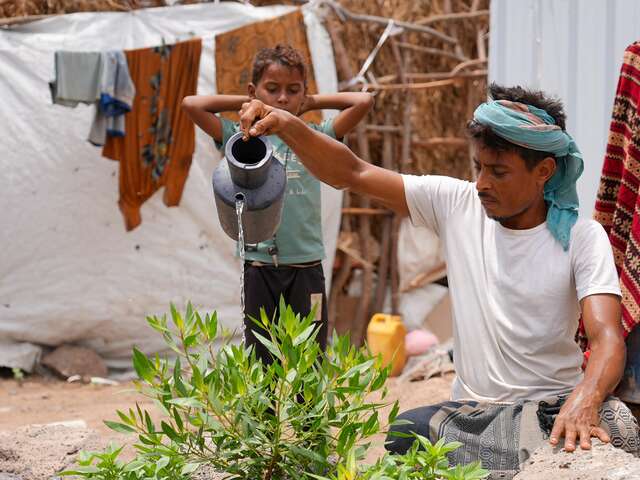
Displacement has also affected the children’s education. The nearest school is several kilometres away, so Ahmed takes them there by motorcycle. The journey is expensive and exhausting – especially in the heat.
“If there was a school closer, it would reduce my daily burdens and risks,” he says.
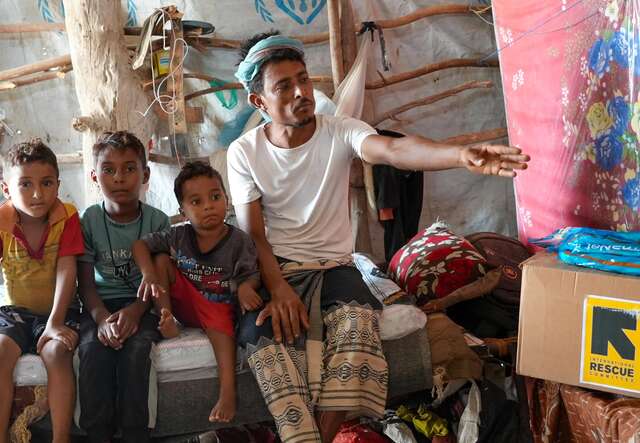
In the last week of August 2025, heavy rains and floods affected Al-Makha and other parts of southern Yemen. The floods damaged homes, roads and water and sanitation infrastructure. The International Rescue Committee, with financial support from the European Union, provided emergency assistance to families affected in Taiz, Lahj, and Abyan governorates.
Ahmed’s household received 171,000 Yemeni riyals ($105) in cash assistance, along with mattresses, blankets, mosquito nets, a kitchen set, hygiene kits, and water containers.
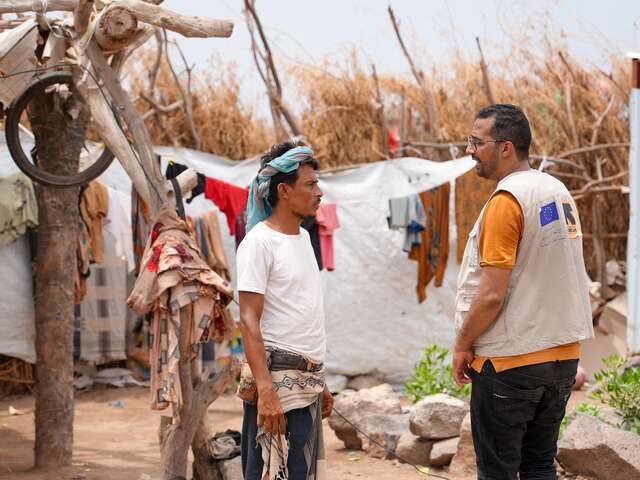
This support gave the family flexibility to cover urgent needs, including food and transportation. The household items provided immediate protection and comfort: dry mattresses for the children, mosquito nets to reduce exposure to insects, and containers to store water more safely. For Ahmed, the difference is both practical and immediate.
“The support from IRC made a real difference,” he says. “We now have dry beds and basic items for my children. It gives us hope that things can get better.”
For families living in fragile shelters, basic household items can offer a brief respite. A mattress means children do not have to sleep on a wet floor. A blanket offers some warmth when belongings have been soaked. A mosquito net can help reduce exposure to insects and diseases, while hygiene supplies and water containers help prevent illnesses .
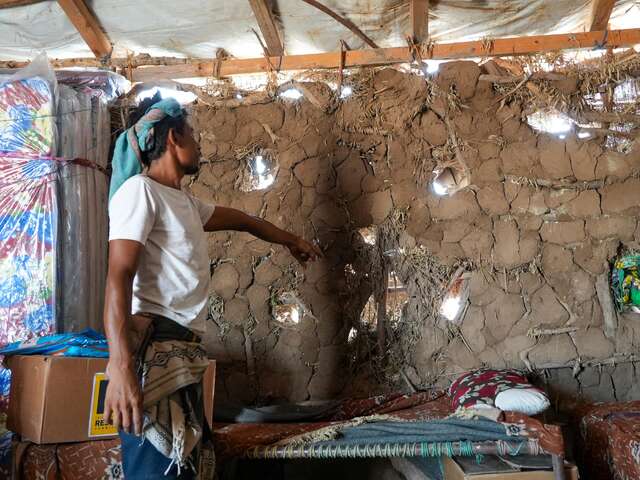
Ahmed still worries about the future. His income remains uncertain, the family cannot return home, and access to education remains difficult. But the support has given them a moment of relief and offered some means to protect what matters most: their children. He hopes that one day they will live in a safe home where they can sleep peacefully, without fear of floods.
For now, the family continues to rebuild with what they have. The IRC’s rapid response has helped relieve some of the hard living conditions, offer some protection for the children, and ease some of the daily burdens of displacement.
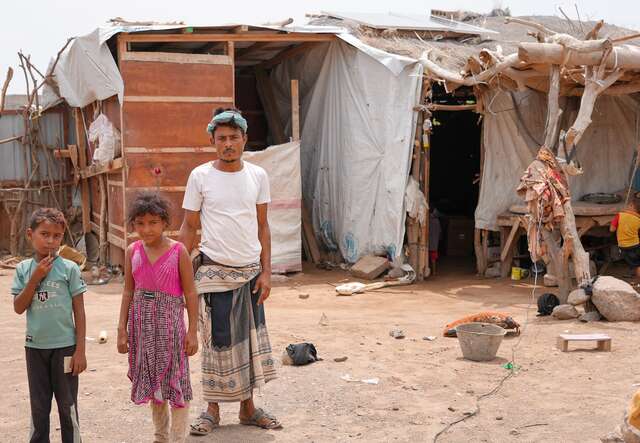
Between August and September 2025, with support from the European Union and other donors, IRC Yemen responded to the immediate needs of almost 6,500 people affected by the floods in Taiz, Lahj, and Abyan governorates. Teams provided cash assistance, hygiene supplies, and essential household items to help families meet urgent needs, protect their health, and recover with dignity amid the ongoing crisis.
More than a year later, families in southern Yemen continue to face profound insecurity. In September 2026, conflict escalations and territorial changes around Al-Makha displaced tens of thousands more people across Taiz and Al-Hodeidah governorates and surrounding provinces. Civilians are experiencing severe shortages of shelter, clean water, and emergency medical services while damaged infrastructure and widespread fear are paralysing their daily lives.
Thanks to reliable and flexible funding from donors such as the European Union, the IRC is able to quickly mobilise resources to provide emergency assistance to newly displaced families.

The International Rescue Committee partners with the European Union to provide life-saving support to people caught in conflict and disasters around the world. Our work funded by the EU enables people to survive, recover and rebuild their lives.