Rohingya crisis
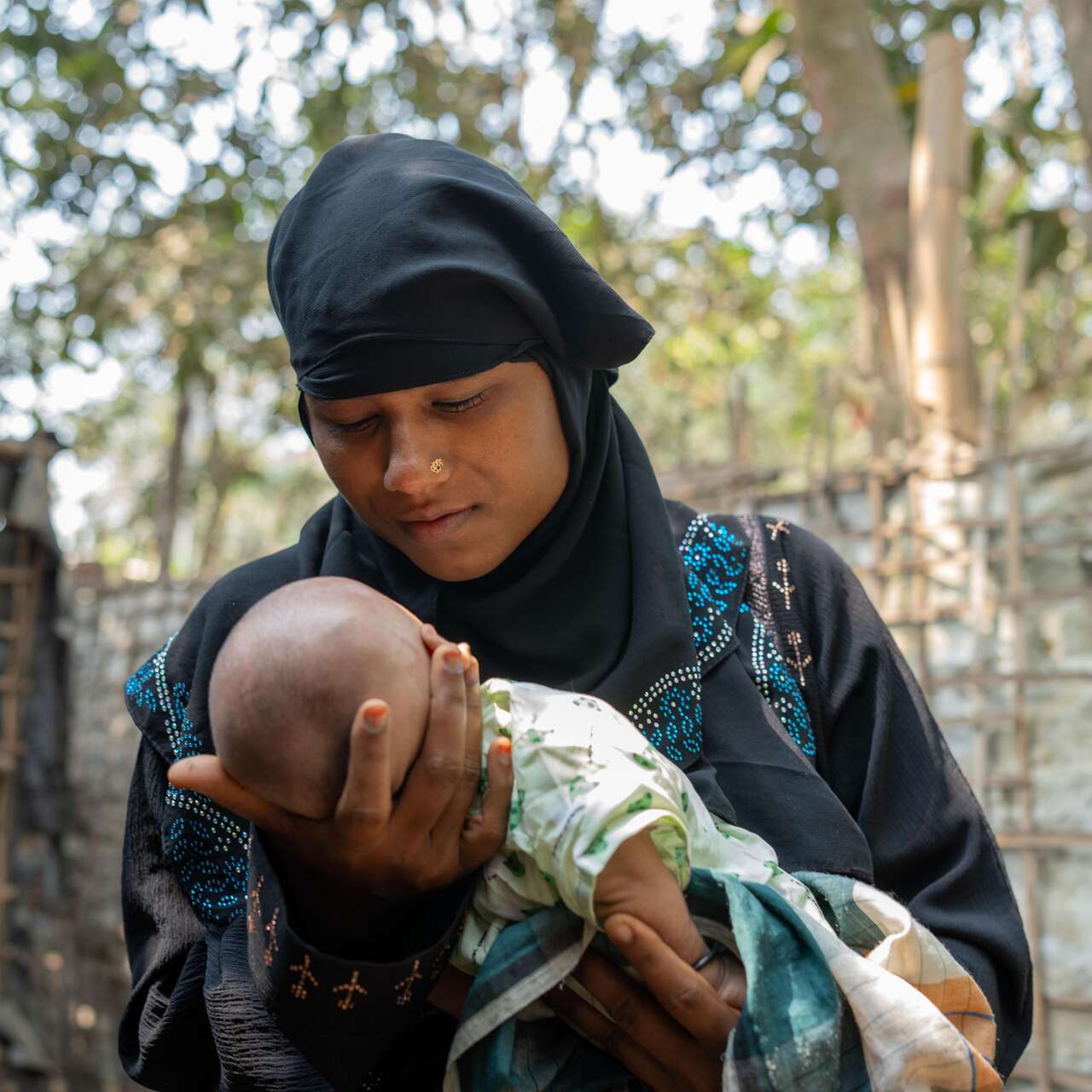
Samira is one among nearly one million refugees in Bangladesh who have fled Myanmar in 2017. “Our house was burned down,” she says, recalling the day she had to leave everything behind. “But we survived because we were outside at that time. We fled to Bangladesh on that very day.” During the journey, she was separated from her mother and five sisters.
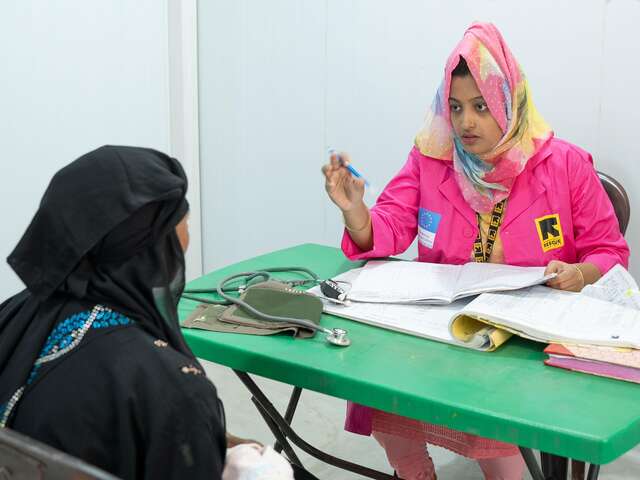
That was 9 years ago. Today, Samira lives with her husband and three children in Cox’s Bazar—a coastal district in Bangladesh that hosts the largest refugee camp in the world.
Her husband struggles to find a stable source of income and as a result, their family faces rising food insecurity. “If he does not get work, it becomes very difficult for us to manage our daily meals,” Samira explains. She spends her day taking care of her children—cooking, washing clothes and collecting drinking water.
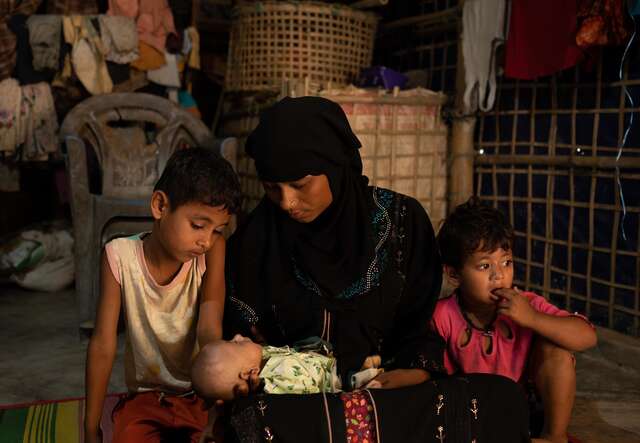
On the day of the birth of her youngest son, she felt dizzy after completing the day’s chores and fainted. Shortly after, her labour pains started and her husband rushed her to the IRC’s EU-funded primary health care centre, where the medical team quickly sprang into action. They checked her vitals and conducted physical examinations—and for a moment, everything seemed fine. “All the findings were normal at that time,” she explains, ”The delivery proceeded without complications.”
It was only after delivery that complications began. Samira developed severe postpartum bleeding, which led to critically low haemoglobin levels that continued to decline.
Jahanara Eli, the IRC midwife who was present during the birth, wasted no time. She referred Samira for an immediate blood transfusion—eventually saving both Samira and her baby’s life.
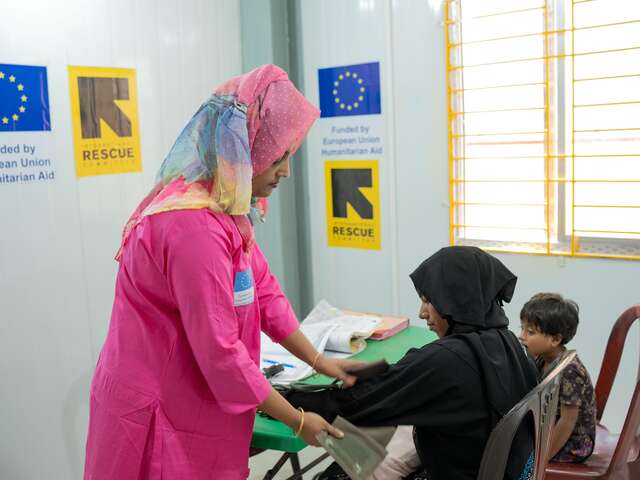
“I have always only wanted to save young mothers and babies.” – Jahanara Eli, IRC midwife
Jahanara is no stranger to these situations. Having worked with the IRC since February 2022, she learned about the high mortality rates among expectant mothers and their children in Bangladesh during her training—inspiring her lifelong dedication to preventing such situations from becoming the norm.
Jahanara works at the sexual and reproductive health department at the IRC’s EU-funded primary health care centre. She offers delivery services, and facilitates antenatal and postnatal checkups. “I also work on child health, malnutrition and manage domestic violence cases that we come across,” she explains.
Crucially, she also conducts sessions on raising awareness on reproductive health: “Shockingly, many people are still unaware of sexual and reproductive health and rights, to the level where menstruation is seen as a taboo in society.”
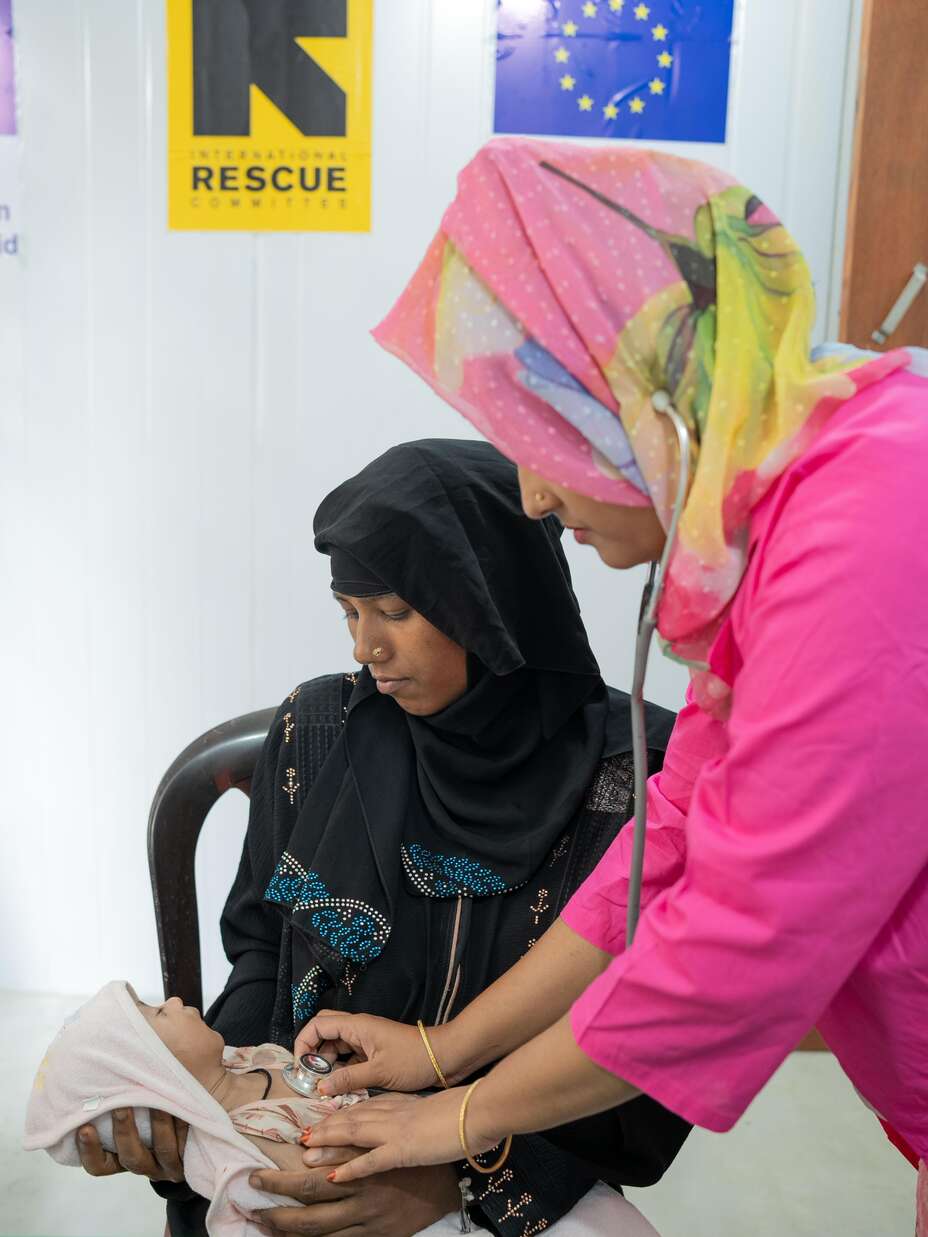
With support from the European Union (EU), the IRC’s healthcare facility has expanded significantly. “We used to see only five to six expectant mothers every month at this healthcare centre, which serves both the local community and people living in the camp,” Jahanara explains. “The centre has now grown into a much larger facility offering a range of services. Today, we deliver around 60 babies every month.”
The medical team increased the frequency of awareness sessions, now scheduling them on a weekly basis. “More volunteers have joined us, and they are very active, which gives us a strong ground here, catering to patients’ needs.”
In the camps, Jahanara confronts complex socio-religious challenges—including deeply rooted superstitions regarding blood transfusions and C-sections, which can sometimes stand in the way of life-saving care to mothers and their babies.
Jahanara explains how women in her society rarely speak about their suffering, which is often exacerbated by non-cooperative husbands whose lack of basic knowledge of sexual and reproductive health makes them sceptical of hospital births. “In fact, many do not even know, or do not emphasise, the importance of being healthy in order to conceive, or that expecting mothers need nutritious food,” says Jahanara.
“There have also been instances where we had to involve the local police and camp authorities to bring a mother in labour into our facility for delivery,” she elaborates. “Thus, the follow-ups and home visits are very important to ensure both baby and mother are safe.”
Over her four years of working in Cox’s Bazar, she has witnessed multiple cases where routine deliveries resulted in the preventable death of either mother or child—and sometimes both.
“Such instances have raised some awareness,” she says. “However, there’s still a long way to go.”
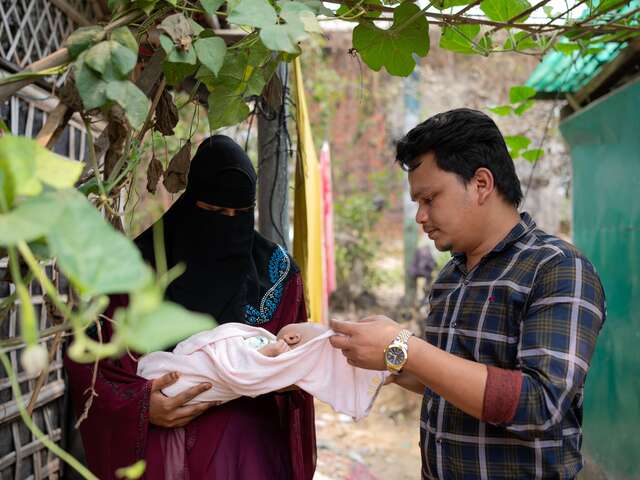
Having faced these obstacles so frequently,Jahanara was relieved when Samira agreed to the blood transfusion. She quickly reached out to the local blood donor society, a group of volunteers in the camp who have signed up to donate their blood in emergency situations. They managed to find a donor—Mohammad Kubas—within 10 minutes.
Mohammad Kubas recalls how he felt the day he got the phone call. “Her condition was critical, and I felt it was my duty to help. If my actions can save someone’s life, that is truly valuable and meaningful for me, ” he says. “She survived and hearing that news brought me great happiness.”
In collaboration with the European Union, essential funding extends the deployment of IRC’s ambulance services to the local blood donor society. As Samira’s story demonstrates, these services remain vital to dispense life-saving aid, in a timely manner.
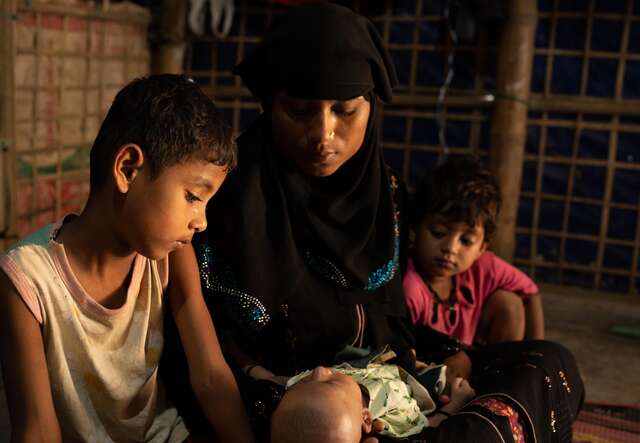
Jahanara and other members of the IRC team at the health facility work tirelessly to provide comprehensive sexual and reproductive healthcare that safeguards the lives of vulnerable women and children disproportionately affected by conditions in the refugee camp in Bangladesh.
The International Rescue Committee partners with the European Union to provide life-saving support to people caught in conflict and disasters around the world. Our work funded by the EU enables people to survive, recover and rebuild their lives.