Pakistan Livelihood
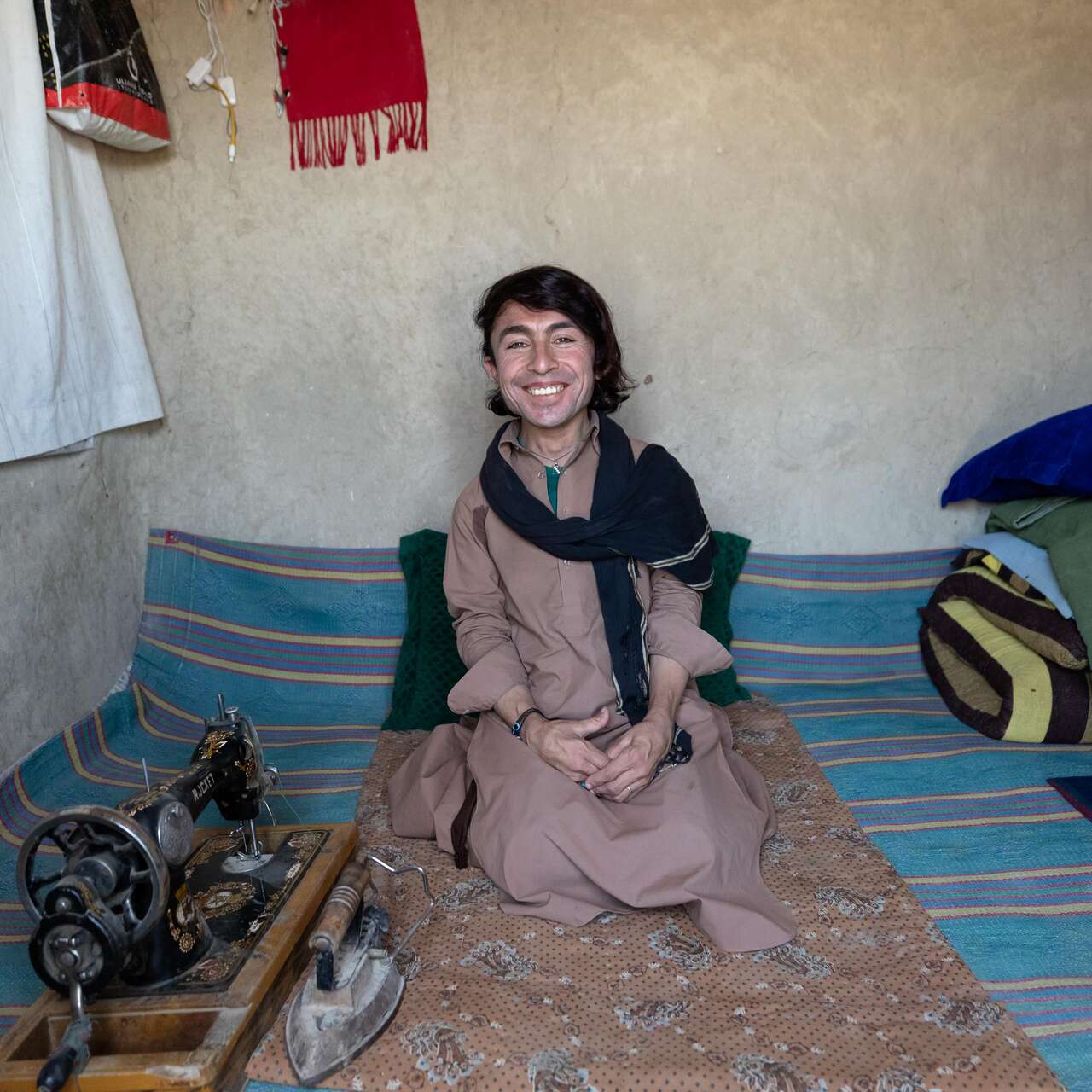
Darweza grew up in Balochistan, a southwestern region of Pakistan near the Afghan border, where he spent much of his life caring for his family while confronting hardship, stigma, and uncertainty about his future. Today, with support from the International Rescue Committee (IRC) and the Taraqee Foundation, funded by the European Union's , Darweza has built a small hemming business that allows him to earn an income, support his family, and move toward greater independence.
Darweza remembers his childhood as a time of both hardship and happiness when his family lived together and found joy in everyday routines. When he was 12, his older sister married and moved away, leaving their mother to raise the younger children alone. As one of the older children still at home, Darweza stepped up to run the household: “I took care of everything, cooking, cleaning, whatever needed doing, and kept the house running for her,” he says. “There were other relatives around, but they were all young boys, so the responsibility fell on me.”
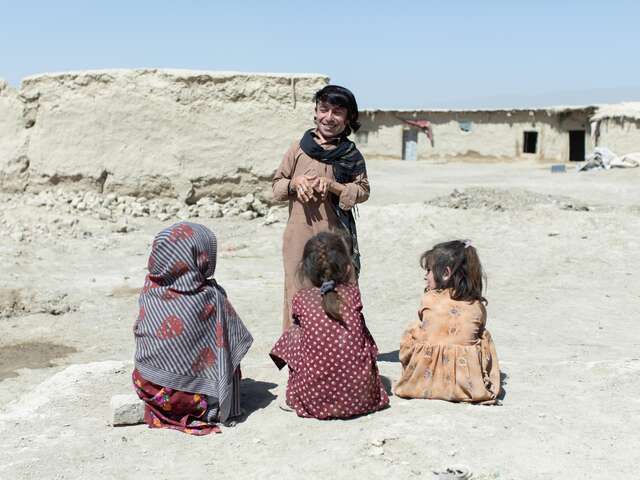
Darweza, with his 71-year-old father, Hayat Khan, and his nieces and nephews at their home.
As his responsibilities grew, so did the obstacles in his path. After breaking his leg, Darweza travelled from a local clinic to a hospital in Quetta for treatment. Once he recovered, he took on a series of jobs, working in a salon, preparing food, and doing laundry, while developing his skills in tailoring, hemming, and stitching. Through each setback, Darweza held on to a resilient, forward-looking mindset.
“Hardship is part of destiny,” he says. “All a person can do is make a clear intention of what they want to do with themselves.”
That belief helped Darweza keep moving forward, even when he had very little to begin with.
Determined to build his own livelihood, Darweza saved what he could until he was able to buy a sewing machine and set up a small workspace at home. At first, operating the machine was painful because his hands were weak, but he pushed through. Through his determination, Darweza built a small but consistent customer base, and as his work grew, he began earning a modest income through hemming and tailoring.
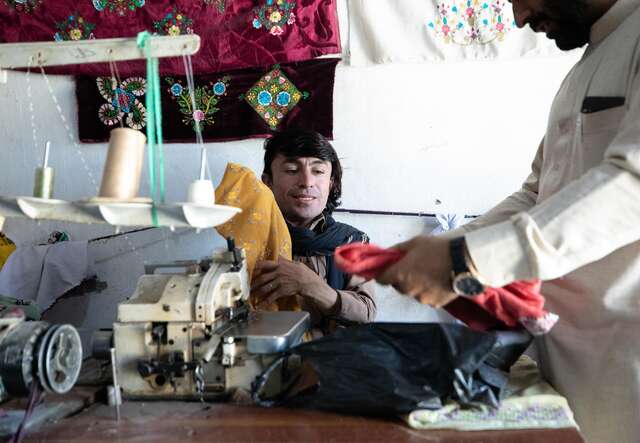
“I built things up piece by piece by doing different things,” he says. “I got up every day, went out, and got things done. This is how my work took off.” For Darweza, work became more than a way to earn money. It gave him confidence, independence, and a sense of purpose: “I did it for myself, by myself, and I held my head up doing it,” he says.
Darweza also draws strength from poetry and music. He credits the work of singer Haroon Bacha, whose music he first heard on Mashal Radio, with having a profound effect on him. When asked to recite a few lines, he shared a poem about beauty, longing, and the enduring power of a smile:
“Show me your face, beloved, the beauty moves through the village. My heart stirs because of you; it trembles at your door.”
For Darweza, these words offer a reminder that beauty and feeling can endure, even through difficult times.
Darweza is pictured getting ready at home before heading out to work.
As Darweza began working more publicly and building connections in the market, the social pressure grew difficult to manage. He worried about gossip and felt that people misunderstood him. “For a long time, I felt that anyone with real compassion had moved on and left me behind,” he says.
That began to change when Darweza met Farman Ullah at a local help centre. Farman listened to his concerns and connected him with the Taraqee Foundation, which helped him resolve documentation and registration issues before referring his case to the IRC for further support.
“They heard all my problems,” Darweza says. “They actually saw what I was going through, heard me, and were empathetic.” The experience of being listened to without judgment mattered deeply.
“They reassured me and made me feel that there are people who will show up for you,” he says.
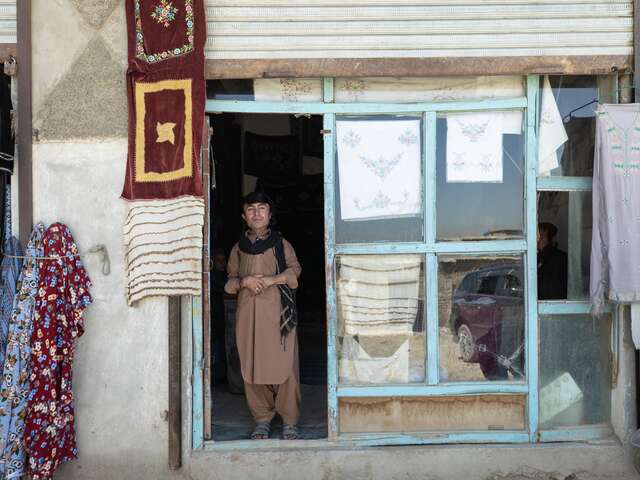
With assistance from the IRC, Darweza purchased the materials needed to set up his hemming station at a local tailor's shop. This support gave him the practical tools to restart his work, earn an income, and begin saving for the future.
“They gave me something to start with,” he says. “I needed a sewing machine, and those are not cheap. They cost a lot of money.”
With his equipment in place, Darweza can continue working and contribute financially to his family. “I can have my sewing machine and continue this work,” he says.
Darweza remains anxious about the possibility of being sent to Afghanistan, a country where he was neither born nor raised. “Pakistan is my home, it's my youth, it's who I am,” he says. This uncertainty makes it difficult to plan for the future, but Darweza continues to draw on the self-belief that has carried him through earlier challenges.
“I believe in work,” he says. “And I believe that if you build faith in yourself, you can change the direction of your own life.”
For Darweza, the support he received from the IRC and its partners has helped turn that belief into something tangible: a sewing machine, a place to work, an income, and a stronger sense of control over his future.
Darweza's story reflects the impact of the IRC's Building Resilience of Communities through Integrated Protection, Health, and Education Assistance programme in Balochistan, which supports the most vulnerable and host communities by connecting them to protection services, documentation assistance, referrals, and livelihood support.
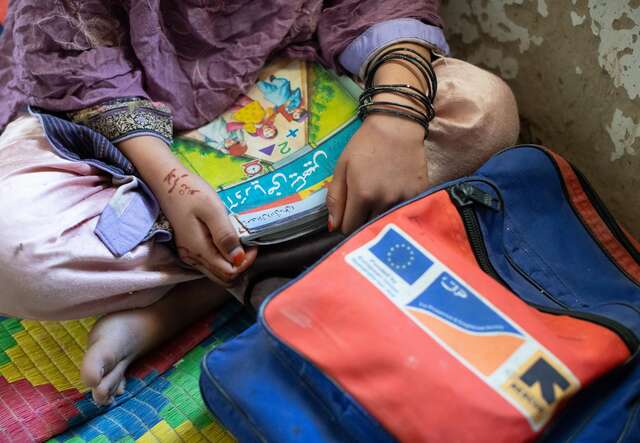
By combining financial assistance with trusted, compassionate casework, the IRC and European Union help people like Darweza address immediate challenges while building the confidence, independence, and resilience needed to move forward.

The International Rescue Committee partners with the European Union to provide life-saving support to people caught in conflict and disasters around the world. Our work funded by the EU enables people to survive, recover and rebuild their lives.