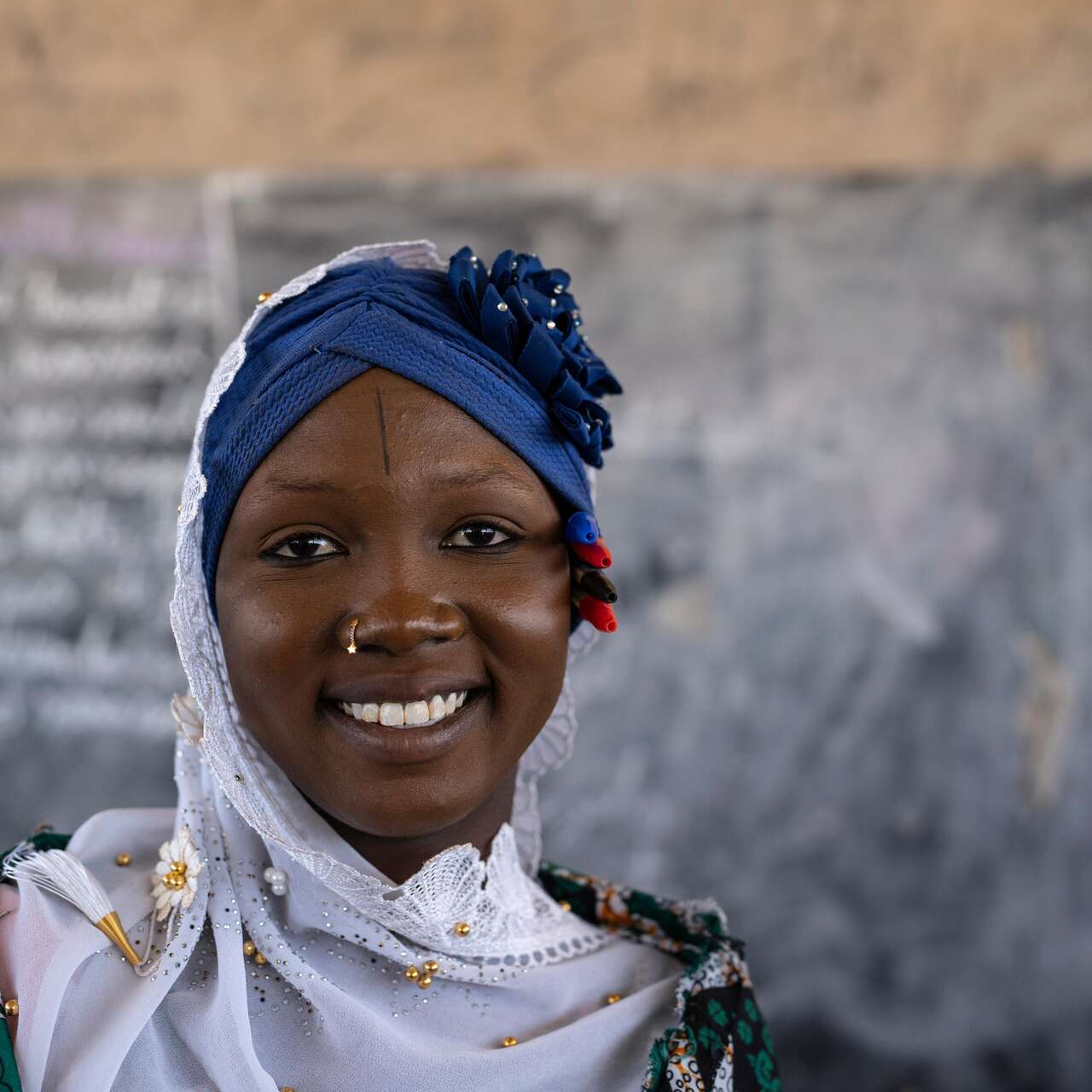
Girl Shine
Together with her family, 14-year-old Yangou was forced to flee her village in the Lake region of western Chad two years ago due to the constant threat of nonstate armed groups. They now live in the Fourkoulom camp, home to thousands of people displaced by long-standing conflict in the region.
Adjusting to life in the camp was not easy for Yangou, especially after losing her father, who was kidnapped by nonstate armed groups and later died of illness. Yangou, her mother and three sisters relied on the support of her brother as they faced food insecurity.
"Life is better now," Yangou says. However, challenges persist for Yangou and the women and girls of the camp—the group most vulnerable to gender-based-violence (GBV) in the area.
Funded by the European Union (EU), the International Rescue Committee (IRC) runs a Girl Shine center at the Fourkoulom camp, offering an empowerment program for displaced adolescent girls like Yangou. The center has become a safe space for girls to come together to learn about their rights, find joy and build strong support networks that bolster their protection.
A year of enrollment into the Girl Shine programme has changed Yangou’s life. She explains how Tuesdays are now her favourite day because she gets to participate in the EU-funded Girl Shine activities: “I understood things I didn't know and discovered things about a girl's life and about my own life.”
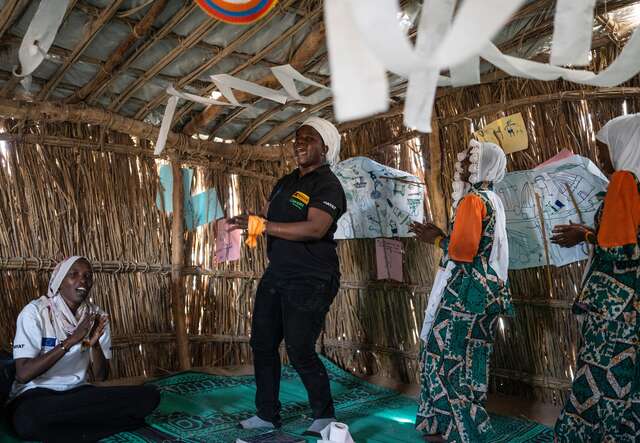
The recreational activities at the center inspired Yangou to open up to her peers, forge meaningful connections, and improve her physical and mental health. Sharing stories and creating together helped Yangou process her experiences—and gradually she found herself getting into fewer conflicts. “I used to get into a lot of fights,” she explains, “but I've managed to make friends thanks to Girl Shine.”
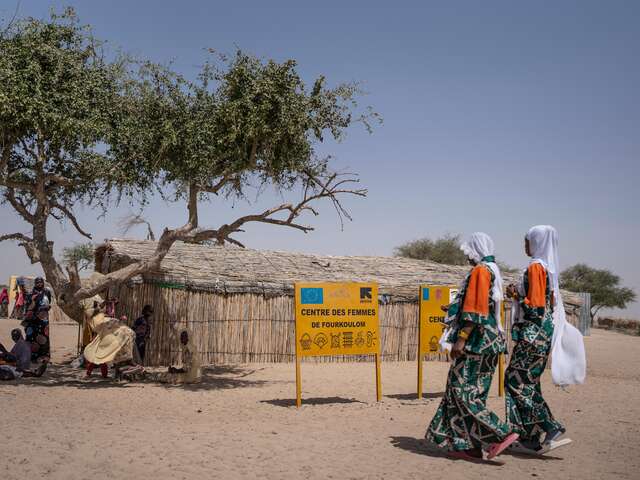
Yangou’s friendship with another Girl Shine participant and fellow classmate in school, Zara, has been particularly transformative. Spending a lot of time together at the center, they have forged a strong sense of community with other teenage girls. Yangou and Zara are now inseparable; together they sell doughnuts and broth, buy condiments, and make visits to the borehole.
Friendship has become an essential part of Yangou’s life. As she puts it: “Friendship is important because we share personal secrets, we support each other in difficult times, and give each other advice.”
They not only rely on each other for emotional support, but also for the sense of safety that comes with community.
Alongside learning important concepts that affect women and girls, such as the menstrual cycle, bodily autonomy and privacy, as well as sexual violence, the girls at the center are also taught safety tips for preventing and responding to GBV.
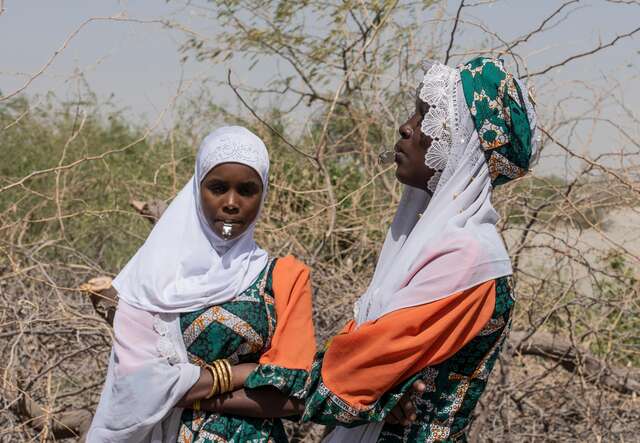
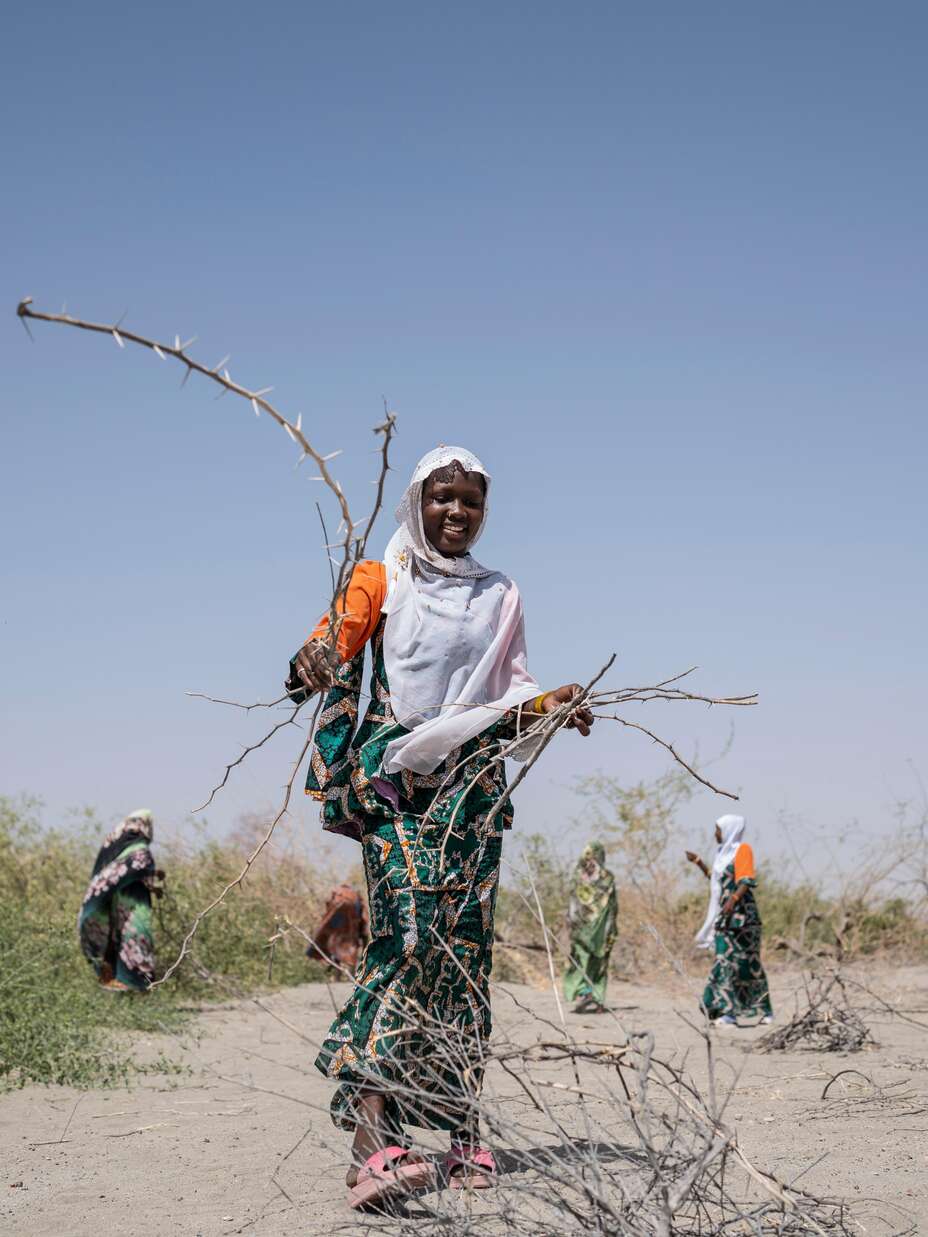
Yangou explains how she learned that collecting firewood alone puts her at heightened risk of violence. They use strategies of cooperation to stay safe: they travel in groups, wear matching dresses they make themselves at the EU-funded Girl Shine sessions to signal that they are part of a support network and carry whistles, which can be used to call for immediate assistance if anyone encounters danger.
These strategies offer Yangou and her friends a sense of safety through solidarity.
Empowerment and protection are the primary goals of the IRC and EU’s Girl Shine program at the Fourkoulom camp. The girls are encouraged to imagine a future beyond their current circumstances. As Yangou and Zara embark on their joint venture of selling goods, they become an inspiration for others in the program.
The center provides women and girls with materials and tools so they can develop practical skills, such as knitting and fan-making, that may help them gain financial independence. Yangou even hopes for opportunities that can expand her skills: “We need more income-generating activities like pasta-making, sewing machines and recreational equipment.”
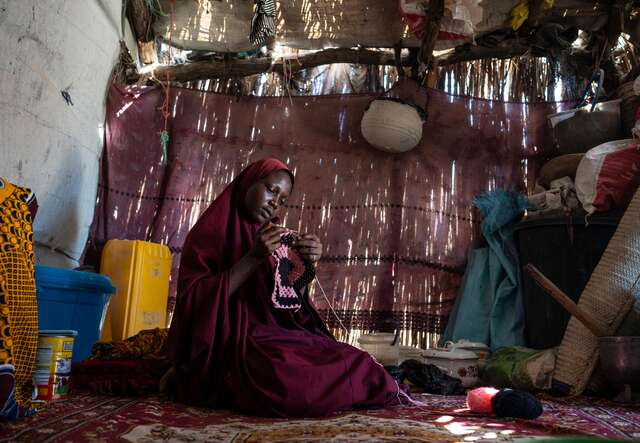
For Yangou, the future is as big as she can imagine. Her current role model is Bebata Pagaye, a psychosocial assistant at the IRC, whose sessions at the center have inspired Yangou's dream of supporting her community as a psychosocial assistant.
Despite the ongoing crisis in Chad, girls like Yangou continue to nurture community and invest in a future built through mutual support.
The International Rescue Committee partners with the European Union to provide life-saving support to people caught in conflict and disasters around the world. Our work funded by the EU enables people to survive, recover and rebuild their lives.