Education in emergencies
In northeast Nigeria, two fathers are doing everything they can to keep their children healthy, learning, and hopeful after conflict forced their families from their homes. With European Union support to the IRC, partnered with local NGOs Life Helpers Initiative and CHAD International, Abubakar is keeping his 16 children in school, while Yahaya is helping his son Ibrahim recover, learn again, and dream of becoming a doctor.
For 38-year-old Abubakar, fatherhood means hard work, sacrifice and making sure his children have a future beyond the hardships that shaped his own. A farmer and petty trader, and a father of 16 children, he says education is one of the most important things he can give them.
"I am managing to make ends meet so that I can help my children, put them in school," he says.
All 16 are enrolled—some in primary school, others in private school.
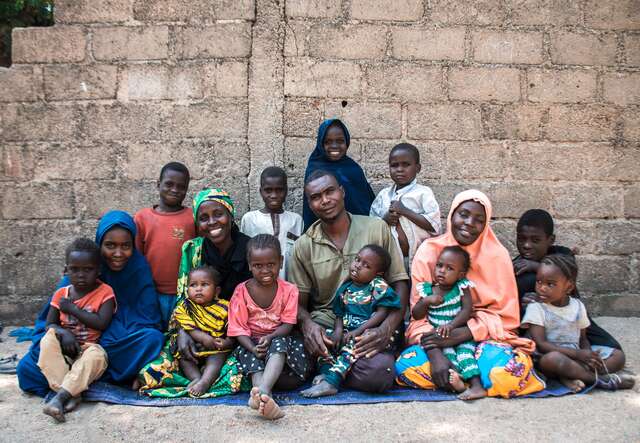
That commitment was tested when his 3-year-old son, Kalil, fell seriously ill with malaria. Kalil was weak and feverish, unable to play with his brothers or walk. "He is always on the bed lying down," Abubakar says. For a father supporting a large family, the illness brought everything else to a halt, he could not get to his farm at all.
Abubakar had heard about the IRC hospital in Hausari and decided to take Kalil there. Staff did not delay. "They checked him immediately and referred us to a doctor," he explains. Tests showed Kalil had malaria and needed more blood. Abubakar volunteered to donate his own, though the news shook him.
"Honestly the way I felt when I heard my son does not have enough blood, I was not happy at all. I felt sick immediately," he says. "I was ready to do anything I had to do."
Treatment at the EU-funded hospital was free, including medication.
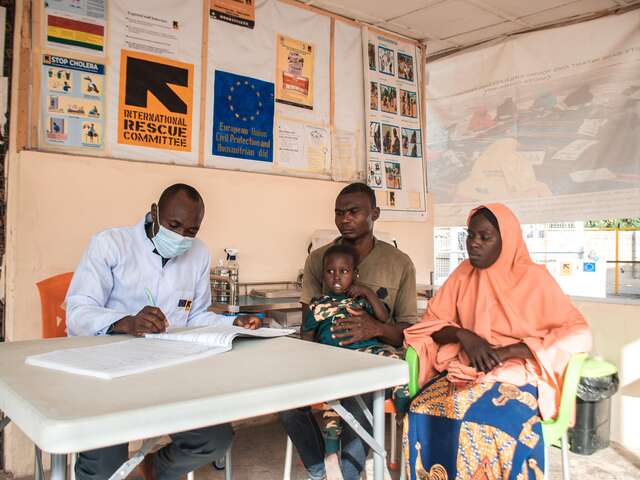
The treatment made a visible difference. After receiving care, Kalil began to recover, and Abubakar could see his son returning to normal life. “I have too much joy and happiness right now,” he said, “The health and wellbeing of your child should be the most important thing to you.” For him, the outcome was not just a medical recovery, but a reminder of how much a father will do when his child’s life is on the line.
The difference was visible. "He couldn't eat food at all, he couldn't walk, he was running temperature and always lying down," Abubakar says. "But now the story is different, he can walk, eat, play, his health is perfectly ok now."
His advice to other parents facing this situation is simple: "The health and wellbeing of your child should be the most important thing to you. I have too much joy and happiness right now.”
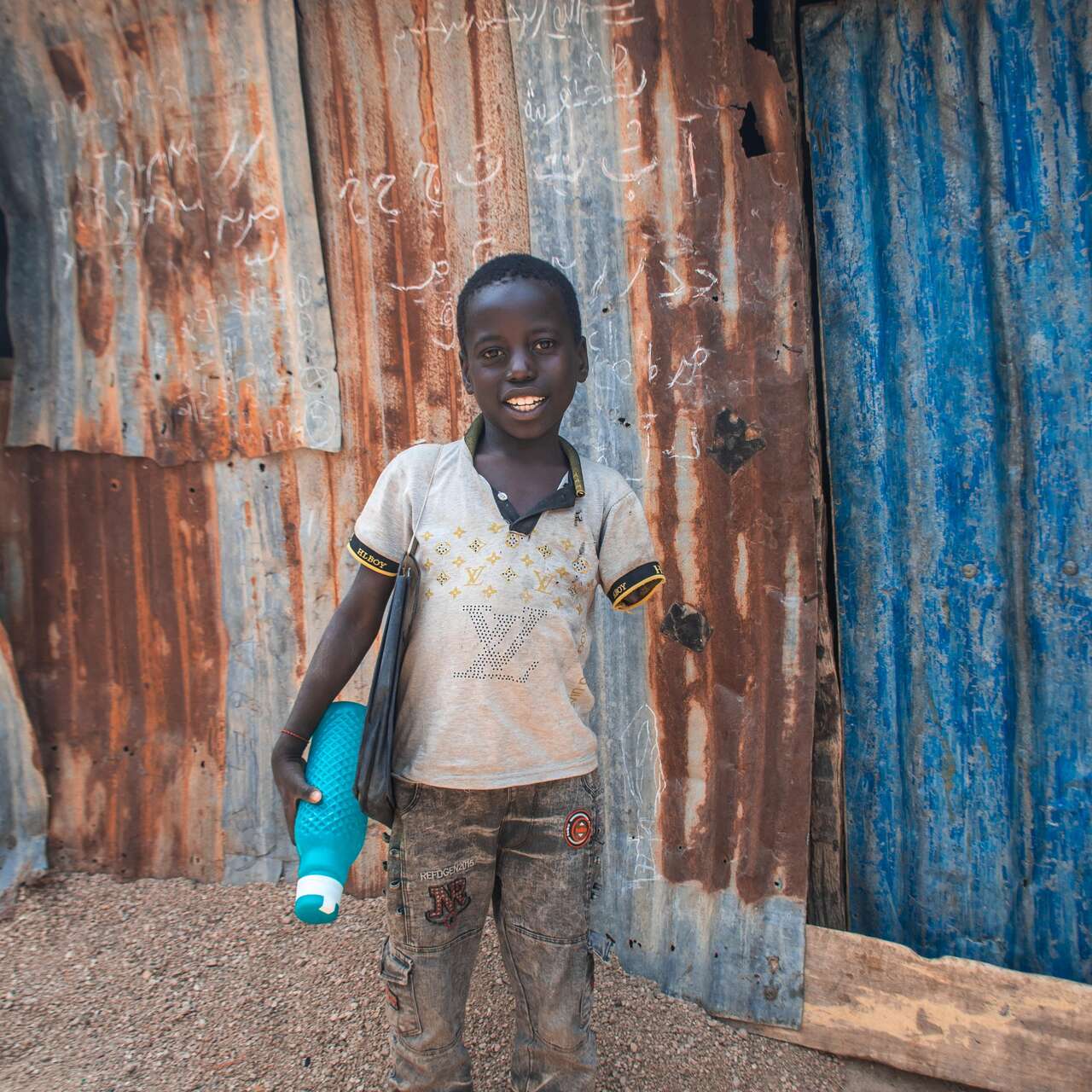
47-year-old Yahaya Musa's story begins with devastating loss. A refugee from Gudu now living in Gwoza, he supports his family by fetching and selling firewood. His wife and daughter were killed in an attack. His 10-year-old son Ibrahim survived, but lost his hand.
“My wife and son here with his elder sister went out to get some water, and a bomb was thrown on them,” Yahaya says, wistfully. “I lost his sister and mom.”
Ibrahim was treated at a hospital in Maiduguri. When he recovered, the family returned to Gwoza.
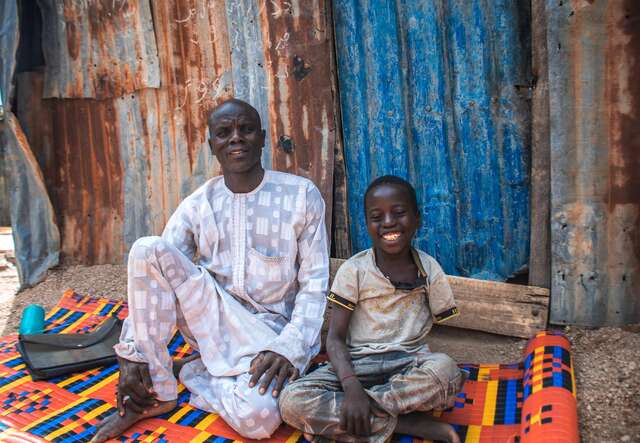
Even after that loss, Yahaya kept thinking about how to give Ibrahim a future. "When we got back to Gwoza, the IRC heard about the situation we were in so they assisted and put him in a non-formal school where he goes to learn," he says. The school is funded by the European Union.
The change has been striking. Ibrahim, who is 10, could not recognize a single letter before he enrolled. "He didn't know A before but now he can tell you all the alphabet A-Z, he didn't know 1 but now he can count from 1-100," Yahaya says. "So you see that is a lot of change."
The difference shows in his confidence, too. "Now he can face an audience no matter how big they are," Yahaya says proudly. "He will face them and speak, he couldn't do that before, but he can do that now."
School has brought back a sense of possibility for Ibrahim, and he has big dreams. "When I finish school I would like to become a doctor," he says. His reason is simple: "So I can help people."
The IRC also gave him school supplies—a bag, water bottle, books, eraser, sharpener and sandals—which his father could not have afforded on his own.
"When all these items were given to him I felt a lot of happiness because I didn't have the money to buy all of them," Yahaya says.
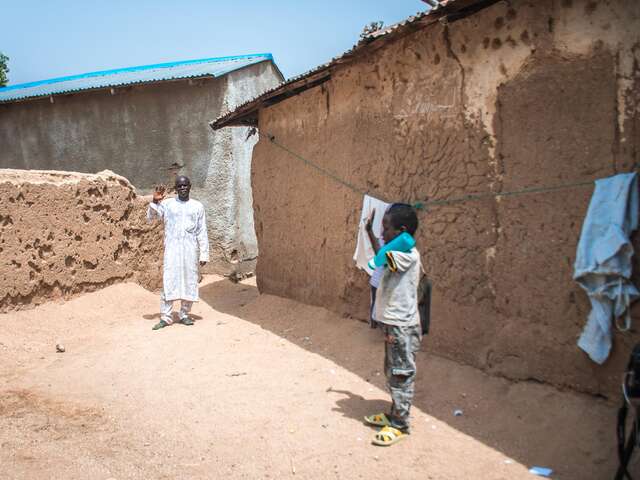
Yahaya sees education as the key to a better future—not only for his son but for the family as a whole. “Education is very important especially in this generation,” he says.
For him, the hope is deeply personal: “My wish for him is to become great in life.”
For Yahaya, what his son has gained cannot be taken away. "I am really grateful to them for bringing this education free of charge because what they have done is ever lasting," he says. "No one can take this education away from him."
The IRC, funded by the EU, and its partners are providing integrated support in hard-to-reach parts of northeast and northwest Nigeria, including health, nutrition, education, WASH, and protection services. In Borno, that includes education in emergencies alongside health, nutrition, and protection; in Zamfara and Sokoto, the response focuses on health and nutrition with protection mainstreamed throughout.
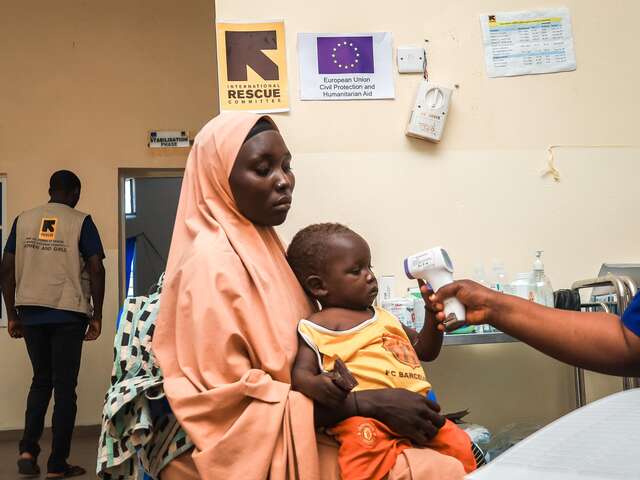
By bringing services closer to vulnerable families and working through local partners, the IRC helps children like Kalil and Ibrahim get care and learning opportunities that can change the direction of their lives.
The International Rescue Committee partners with the European Union to provide life-saving support to people caught in conflict and disasters around the world. Our work funded by the EU enables people to survive, recover and rebuild their lives.