Crisis in Sudan
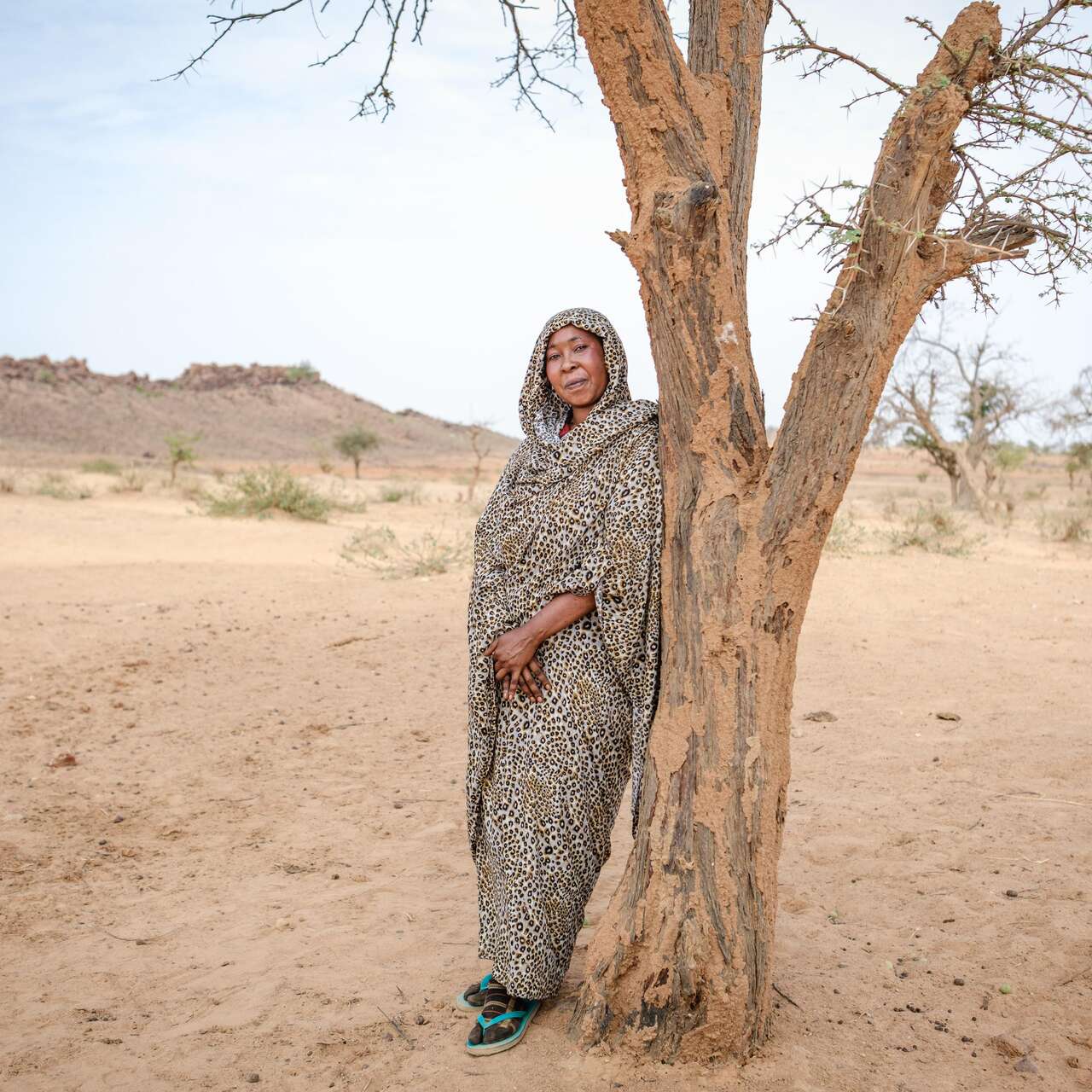
Nidal is a Sudanese psychologist. After fleeing the war in Sudan with her family, including her aunt, who was shot during the escape, she now counsels fellow refugees at an IRC health clinic in eastern Chad. With funding from the European Union (EU), the IRC is helping refugees in the camp access mental health care close to where they live. For Nidal, that has also meant returning to the work she loves and slowly rebuilding her own life.
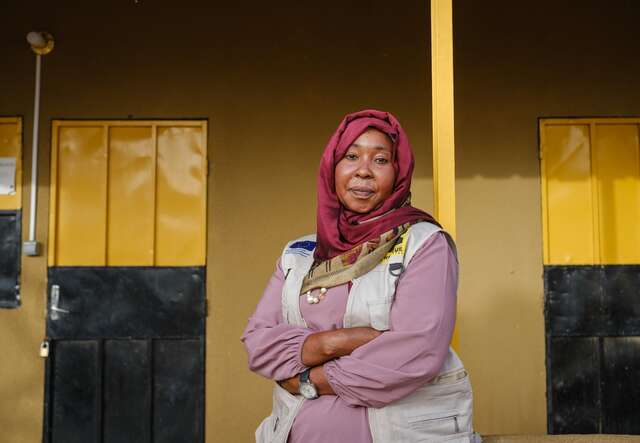
Before the war, Nidal's life was rooted in study, work and family. She had trained as a psychologist, a profession she is deeply passionate about. “I love it from the bottom of my heart,” she says. Then the war reached her home, and her family was forced to flee.
“We never imagined that a war would come and we would be separated like this,” she recalls. “We didn't take anything with us, thinking we would just leave temporarily.”
During the escape, Nidal's aunt, Hassania, was shot in the stomach and severely injured. The family was separated in the chaos, and for a terrifying moment, Nidal feared they had lost one another. “We were really scared,” she says. Like so many families caught in the violence, they left their home with no sense of what would come next.
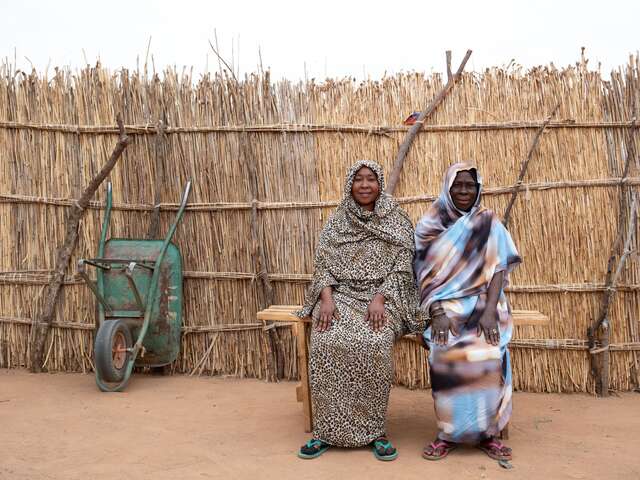
When they found Hassania again, Nidal and her sisters refused to move on without her, despite their aunt's protests that they should save themselves. “We absolutely would not leave our aunt behind,” Nidal says.
What followed was a desperate effort to keep Hassania alive over a 28-kilometer journey toward the border with Chad. They tore strips of cloth to bind her wound, dismantled a bed to make a stretcher and carried her as far as they could. Later, exhausted and still far from safety, they found a wheelbarrow beside the body of its owner. “I suggested taking it and putting my aunt in it,” Nidal recalls. The sisters settled her inside and pushed her through mud and crowds until they reached the border.
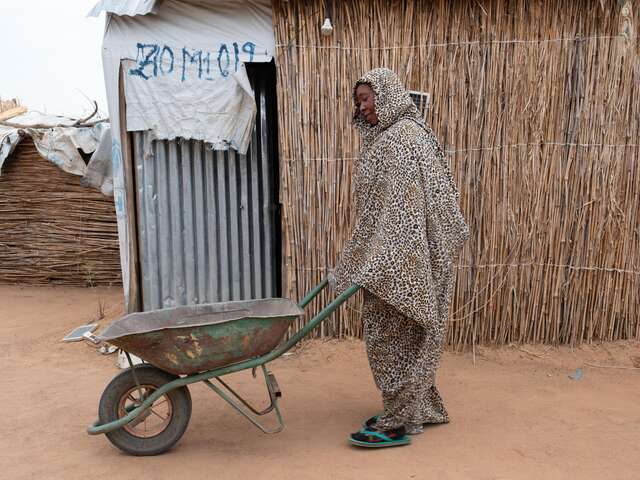
When they reached Chad, Hassania was admitted to the hospital and received emergency care that saved her life.
“The most painful moment for me was leaving my country in that way, but when I saw my aunt being taken to the hospital, I felt that finally she would be saved here,” Nidal says, recounting their arrival.
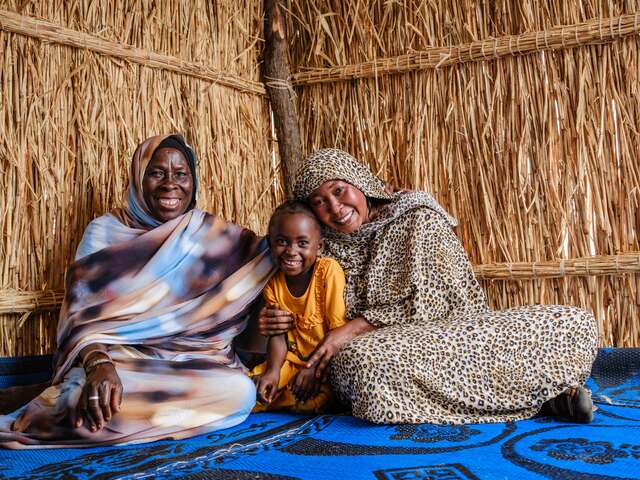
Today, Nidal lives in the camp with Hassania, her brother Mutaz and her niece Insaf. Nidal's sister died from a genetic condition a month before the war broke out. Since then, Nidal and Hassania have taken responsibility for caring for Insaf.
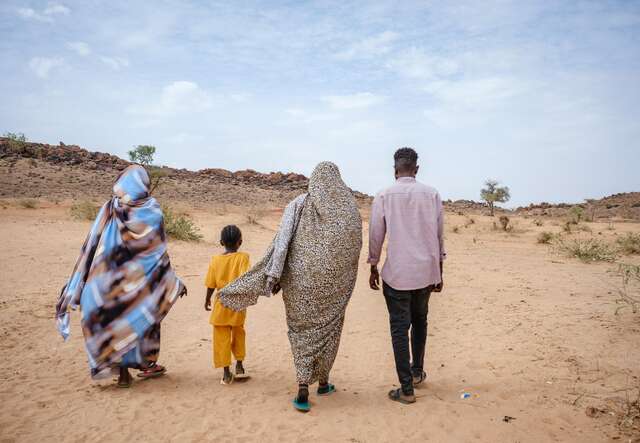
While Hassania was recovering, Nidal's sisters left the camp to look for work, leaving the four of them behind with no steady income and no clear way to plan for the future. Even in safety, the family remains scattered, caught between the need to survive and the wish to stay together. “Most people were displaced from their homes, lost their jobs, lost their families, lost their children, and lost loved ones,” Nidal says. “We ended up here in displacement.”
In Chad, Nidal has been able to practice as a psychologist again through an EU-funded IRC program, something she had feared she might lose.
Now she spends her days running group sessions, individual counseling, home visits and awareness sessions. “Every Wednesday I conduct a focus group for my patients,” she explains. “Every Monday and Friday, we hold individual sessions.” For people who cannot come to the clinic, she and her colleagues go to them.
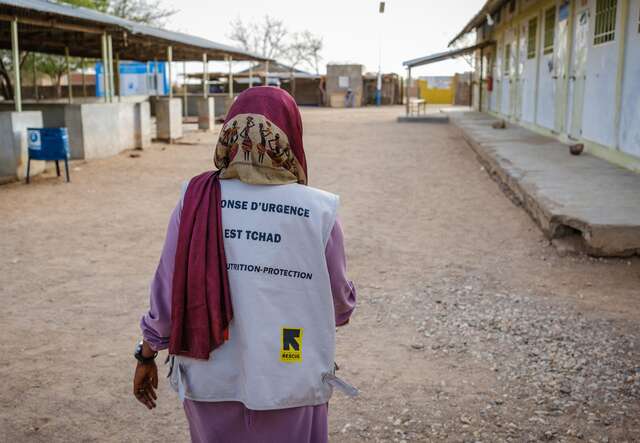
The work is demanding, but it feels deeply meaningful to her. It allows Nidal to use her training in the middle of a crisis she is also living through. She thinks of psychology not just as a job, but as a way to sit with other people's pain and try to move forward together.
“It was a challenge for me, and I wanted to take it on,” she says. “[I wanted] to see whether or not people would accept me and whether I would be able to offer what psychologists provide to others.”
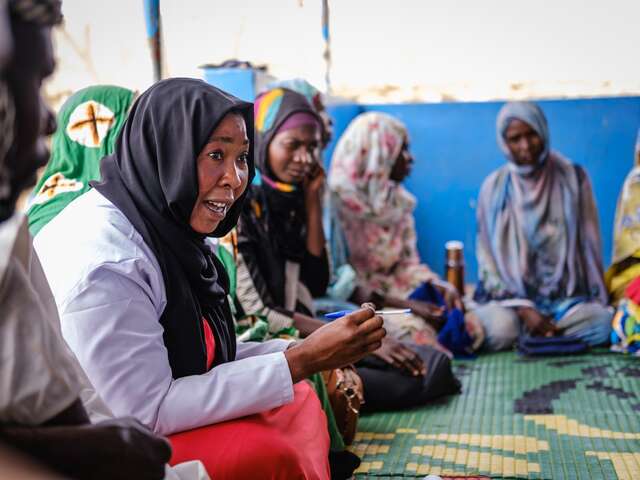
In the camp, Nidal is both a survivor and a practitioner. With support from the EU and the IRC, she has found a way to help others who carry similar memories of violence and loss—even as she continues to heal from her own.
With funding from the EU, the IRC's work in eastern Chad provides refugees with healthcare, mental health and psychosocial support, nutrition services and other essential assistance close to where they live.
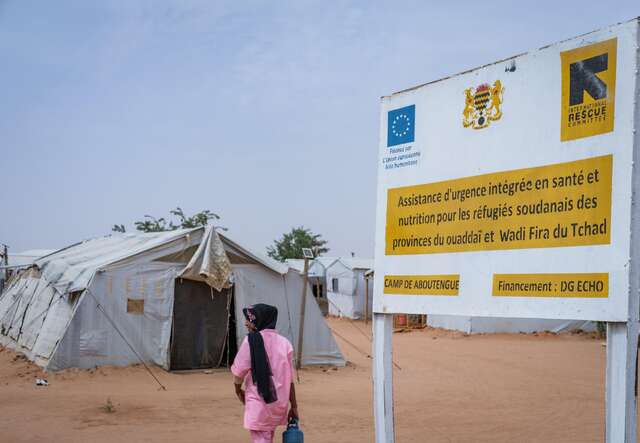
For families affected by war, injury and displacement, this support helps reduce the barriers of distance, cost and stigma that can keep people from getting help. For Nidal, it has meant the chance to return to her profession and use her skills to support others, while also rebuilding her own life.

The International Rescue Committee partners with the European Union to provide life-saving support to people caught in conflict and disasters around the world. Our work funded by the EU enables people to survive, recover and rebuild their lives.