Women and girls
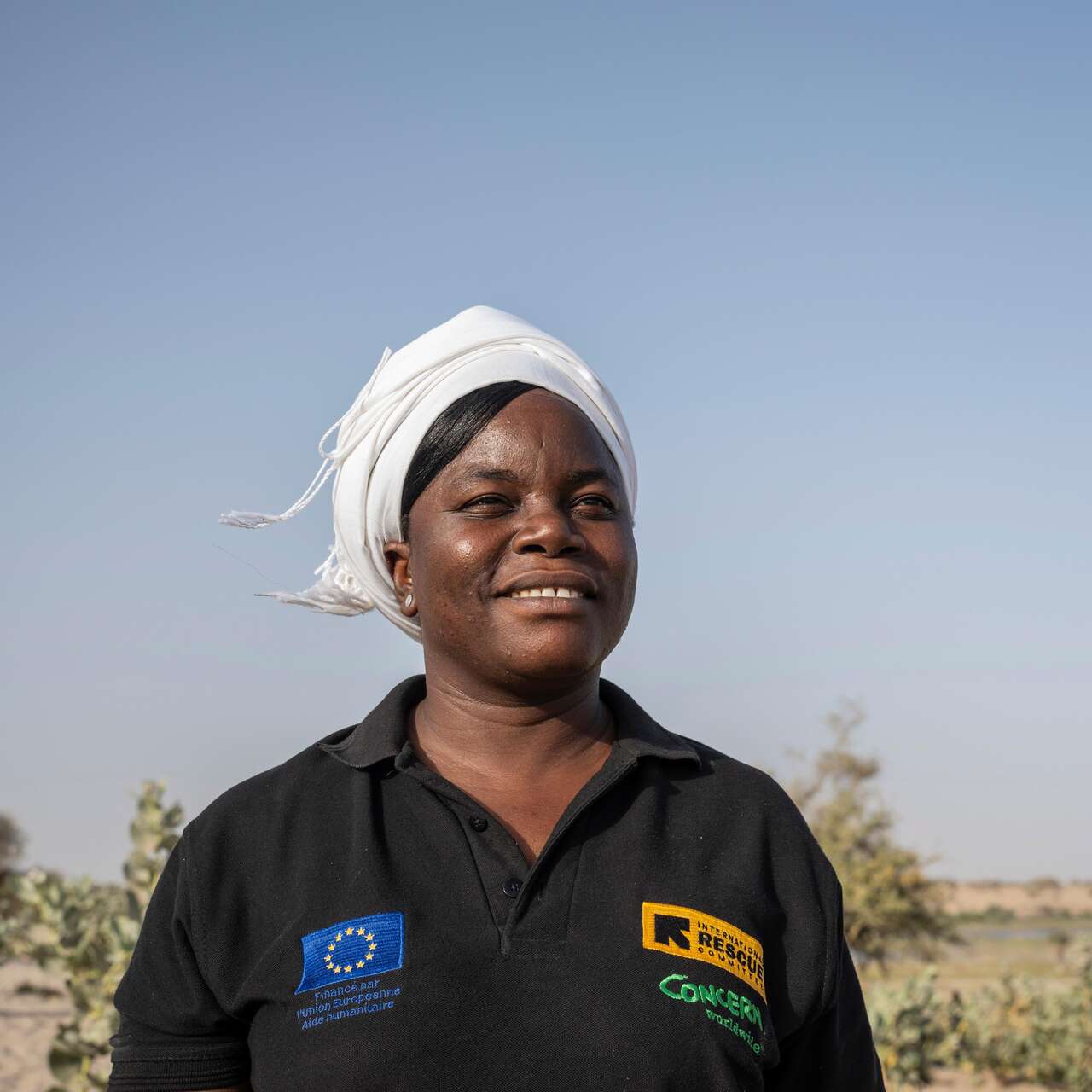
"Our job is to come and listen to people's stories about gender-based violence and give them a remedy," says 35-year-old Bebata. "Because when a person carries a burden and doesn't find someone to listen to them, they can die and succumb to their problem."
Bebata knows this from both sides. She is a survivor of gender-based violence (GBV) herself.
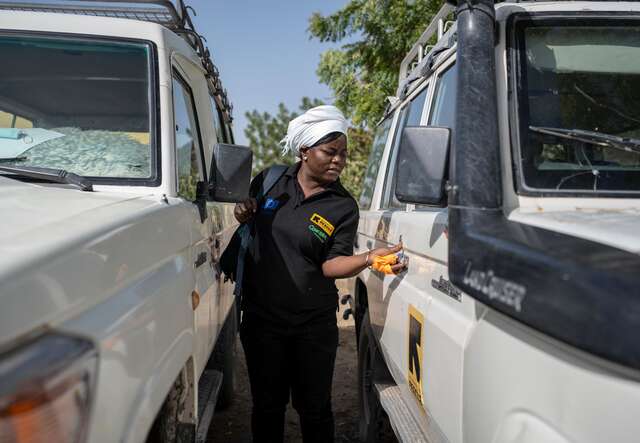
Today she is based in Baga Sola, Chad, where she works as a psychosocial assistant with the International Rescue Committee (IRC). With funding from the European Union (EU), she travels 71 kilometers each way to reach remote camps on unpaved roads to lead awareness and empowerment programs for internally displaced women and girls at risk of GBV.
At the EU-funded women's center, Bebata's work begins with an informative session on the types of gender-based violence—a crucial step for survivors deciding what support they need. "We are raising awareness to really make women understand what GBV is, what the consequences are and what help is available," she says.
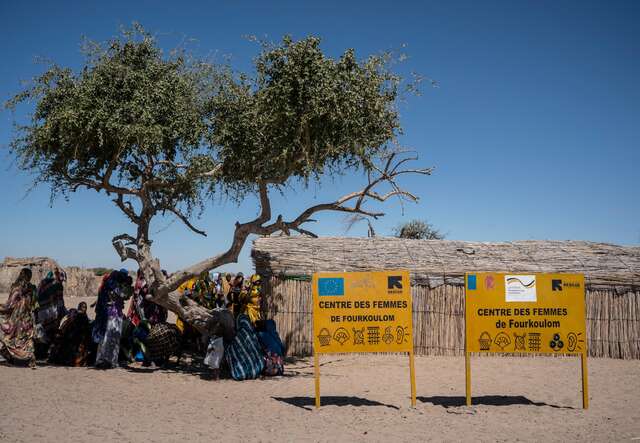
She then moves into a listening room, where women are free to join if they feel comfortable. Cases of sexual violence require time and care. "For a woman to say she's been raped, you need at least 1 hour of time, because you have to give her as much time as possible and let her choose the service she wants," Bebata explains. "Case management is survivor-centered; we move at the survivor's pace."
“We encourage women, talk to them, listen to them, give them the freedom of choice.”
From there, she connects women with specialized services—including legal advice through the IRC's partners—based on what each woman chooses.
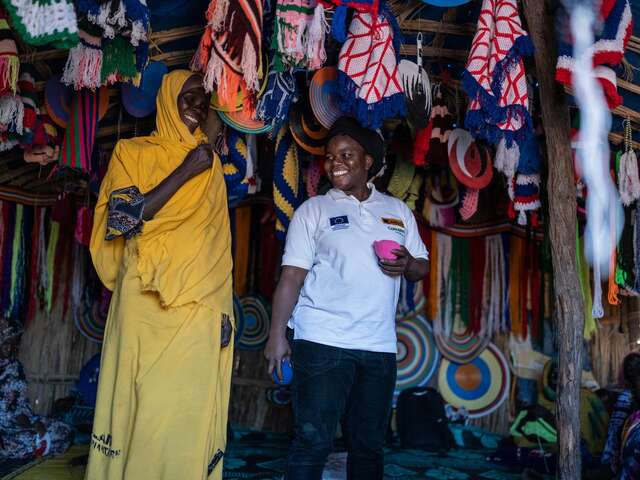
Afterwards, Bebata returns to the center for recreational activities chosen by the women themselves. She and her team invite participants with particular expertise to teach the others. Together they make tablecloths, fans and decorative scarves.
“My wish is that these girls succeed in life.”
Bebata advocates for a response that integrates psychosocial, medical and legal services to protect survivors' safety and dignity. "You feel proud, really, to give a smile to someone who was crying, to someone who was depressed," she says. "The job I'm doing works better for me than hospital-prescribed medication."
Bebata also works with Girl Shine, an EU-funded program supporting, protecting and empowering girls aged 10 to 19. Participants learn about gender-based violence and how to protect themselves from it.
Girl Shine also teaches practical skills such as weaving and knitting, which can help girls earn an income toward their education when their parents cannot afford it.
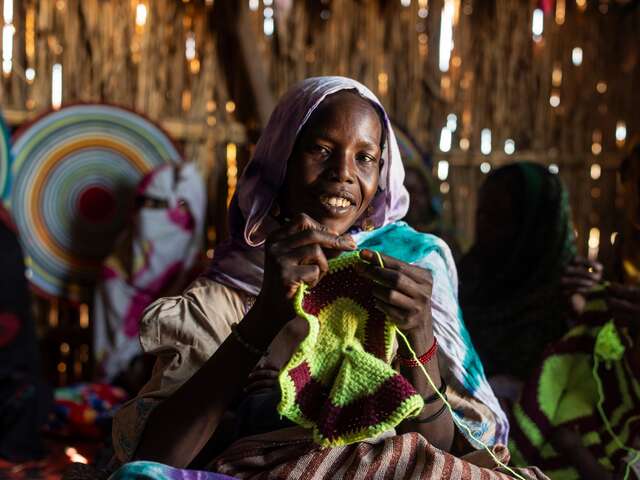
"You have to be patient to be able to work with teenagers," Bebata says. To identify what girls need, she carries out an opportunities and risks survey.
She also works with parents—addressing stigma, encouraging reluctant families to allow their daughters to take part, and helping them follow the girls' progress at home.
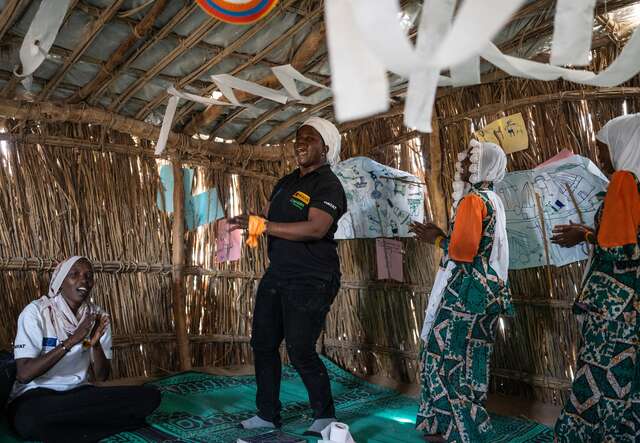
Once the girls feel safe, Bebata sets up mentorships. Each participant chooses a local woman she trusts, "so that if she has a problem, she can turn to them easily," Bebata explains. She helps them build listening skills and healthy friendships, strengthening their sense of community.
"Some of the Girl Shine girls became mentors themselves," she says.
Education is central to how Bebata approaches her work—because of what it cost her.
She had her first child as a teenager and dropped out of school after her second. Her husband was physically and psychologically violent with her. “I can say that I experienced almost all 6 types of GBV," she says.
“I'm proof of the resilience, dedication and courage I'm talking about.
Her teachers wouldn't let her forget what she was capable of. "I was good at school, so my teachers knew me very well," she explains. "Every time I would see them, they would ask me why I dropped out of school. Their reassurance and words of encouragement got me thinking!"
When she went back, her partner refused to support her. "So, I made up my mind," she says. "One day, I left the house, went to the police to ask for help and they came to take him away."
She left with three children and moved in with her elderly parents. To pay for her education and theirs, she sold cakes from four in the morning, braided hair in the afternoons and studied in between. After three years, she qualified as a state-qualified midwife. She is now a mother of four; her eldest is studying in Senegal.
Her message to girls is direct: "I'd like my story to inspire you. Having kids in school doesn't mean it's the end of your life. You have to be brave enough to carry on with your studies. Only our studies and our success can save us."
The work also carries deep meaning for her . "This is my therapy today," she says.
With funding from the European Union, the IRC has provided access to support and protection for more than 11,000 women in Chad's Lac province, including 344 adolescent girls reached through Girl Shine.
Across Chad, 4.5 million people need immediate assistance , and a worsening refugee crisis is placing further strain on humanitarian resources. Continued support remains critical so that vulnerable communities can access lifesaving services and protection.
The International Rescue Committee partners with the European Union to provide life-saving support to people caught in conflict and disasters around the world. Our work funded by the EU enables people to survive, recover and rebuild their lives.