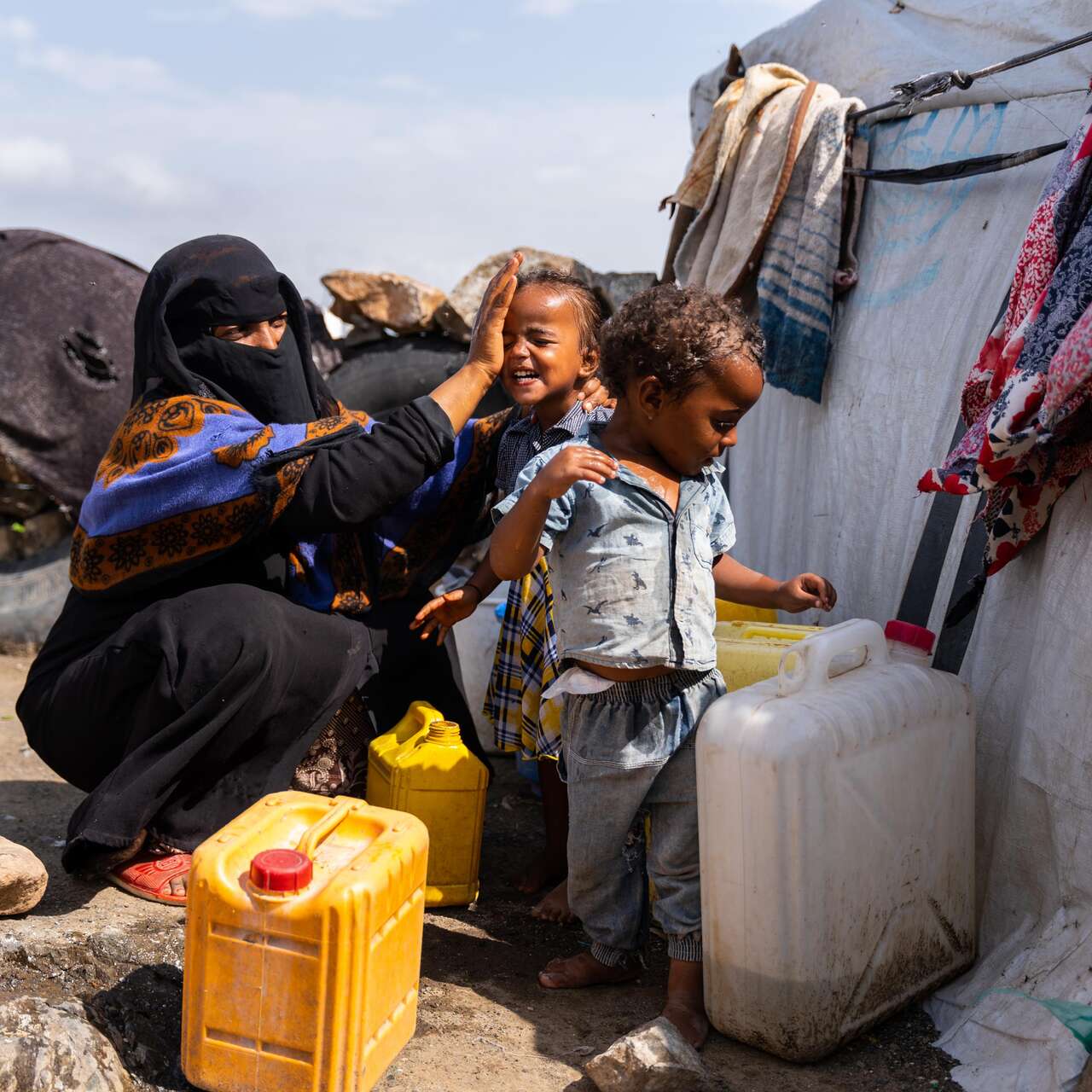
Yemen Malnutrition
In Yemen, protracted conflict, economic collapse and prolonged displacement are fueling one of the world's largest humanitarian crises, with levels of malnutrition and food insecurity among the highest globally. More than 18 million people in Yemen are currently experiencing acute food insecurity, of whom 1.3 million pregnant and breastfeeding mothers and 2.2 million children under five are currently at risk of severe malnutrition.
Meanwhile, access to care is extremely limited across many districts . Most health facilities are either non-functional or only partially functional, while shortages of staff and equipment, active front lines, difficult roads, long distances and transport costs make it challenging for families to reach essential services.
In this context, the IRC mobile health teams were a lifeline for families such as Asriya's, who live in the food-scarce Al Dhale governorate. However, due to funding cuts, the IRC is no longer able to support Asriya’s and other families residing in the Sahdah displacement camp in Al Dhale.
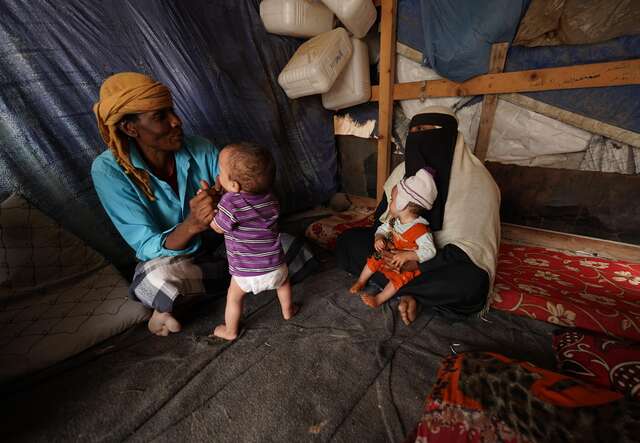
In 2022, Asriya, an internally displaced mother of twins, received treatment for malnutrition by IRC’s mobile health team, with funding from the European Union.
Originally from Al-Druaihimi district in Hodeidah, Asriya had been living in Sahdah camp in Al Dhale's governate with her family after fleeing the war years before.
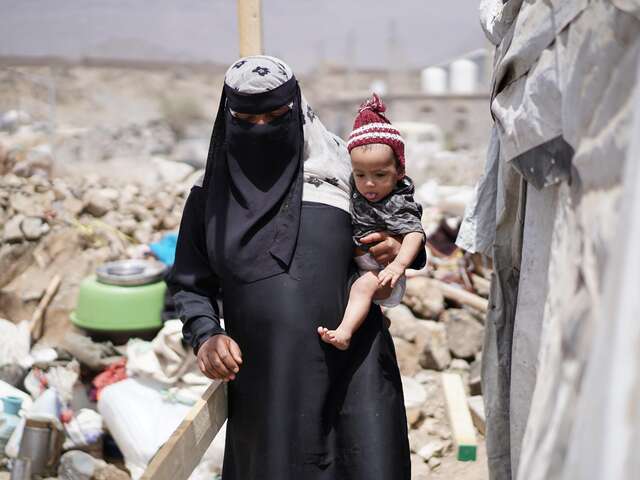
The IRC mobile health team met Asriya in 2022, after her then 9-month-old twins, Asma and Abdo, started showing signs of severe malnutrition. They had developed a lingering fever and little energy to crawl or play.
Asriya was extremely worried: “No one was expecting [my children] to live. We were exhausted by seeking their treatment. I wasn't eating or drinking during their sickness, sitting next to them, waiting for their death.”
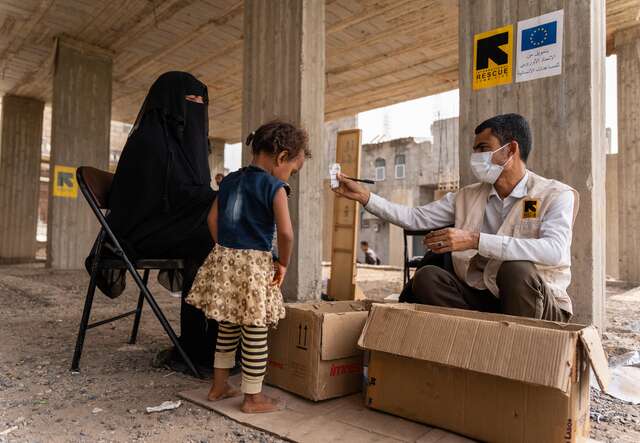
The IRC's Nutrition Officers came to her camp and screened the children to confirm the malnutrition diagnosis. They then provided Asma and Abdo with treatment that allowed them to slowly recover and regain some weight. Asriya recalls, “At first, I didn't expect them to make it, but now, thank God,they play, walk, eat, and drink.”
As part of the IRC nutrition support, the mobile health team also provided both parents with Infant and Young Child Feeding (IYCF) counselling, teaching them about the best ways to keep their children healthy.
However, the family's needs didn't stop there. From 2022 to 2024, they continued to regularly visit the EU-funded IRC mobile health clinic as their only source of healthcare for their various health conditions. “Two years ago, I took my children to the mobile health unit to treat them for malnutrition, and they started to get better. Now, I always visit the vehicle to get treatments for them. We all receive treatment there. We all depend on the vehicle for treatment,” Asriya told the IRC back in 2024.
This continued support proved to be vital as the family struggled to secure a consistent source of income. In 2022, Asriya's husband started struggling with mental and physical disabilities following an accident that left him with an untreated broken leg.
As the sole income earner of her family and suffering from diabetes and high blood pressure herself, Asriya found it extremely difficult to earn enough money to buy sufficient food or improve the family's living conditions, which left the twins at continued risk of relapsing into malnutrition.
Asriya's story is a known pattern to Dr Ahmed Abdullatif, the IRC's Nutrition Coordinator in Yemen. With years of experience in nutrition care, he knows that treating malnutrition is never a one-off intervention; it requires multiple visits and follow-ups over the span of years. He says “Recovery is fragile, especially in young children when families are unable to afford enough food or lack access to safe water and hygiene facilities. One treatment for malnutrition is not enough to prevent them from coming back to the same state.” All the IYCF advice provided can only support long-term health if the families have the resources to follow the recommendations.
As a result, Dr Abdullatif and the IRC teams often see children returning months or years after they recovered with renewed case of severe malnutrition.
In recent years, as funding shrank and with only a few donors, such as the European Union, renewing their support, the IRC had to reduce its operational footprint in Yemen and prioritise locations with the highest severity levels. Before the cuts, the IRC worked in more than 33 districts across 10 governorates. Today, with half the staff remaining, activities were reduced to 12 districts across 6 governorates. Sahdah camp, where Asriya’s family lived, was among the sites where support could not be sustained.
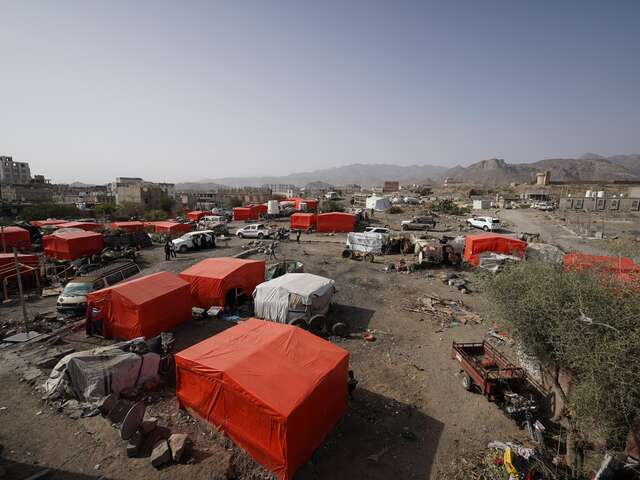
For families living in displacement camps and hard-to-reach areas, the loss of a mobile health team can mean losing their only accessible source of malnutrition screening, treatment, follow-up and counselling.
Dr Ahmed Abdullatif explained the IRC’s efforts in linking families to nearby health facilities before closing the clinics, but many could not afford the transport costs. He further explains, “we know that most of [the families] will not go there because they don't have money to go to the health facilities and maybe the services inside that health facility are not free.”
These cuts and resulting reductions in activities are life threatening for families such as Asriya's because they create gaps in care which often result in relapses with possible complications. “We spend months treating people for malnutrition, only for this funding gap to risk the relapse of many,” Dr Abdullatif worries “I know that when we will go to work again in those areas, we'll see a lot of cases with complications. ”
Indeed, repeated or untreated malnutrition can have life-long consequences such as stunting growth, cognitive difficulties, greater vulnerability to infection, and social stigma due to physical and mental disabilities.
Amid this challenging situation, renewed support from the European Union is helping the IRC to continue to deliver lifesaving nutrition and health services in some of the communities facing the greatest need.
A new EU-funded programme launched in 2026 is being implemented with nine Yemeni organisations. It aims to improve access to protection, health, nutrition, and safety services, while also strengthening emergency preparedness and rapid response.
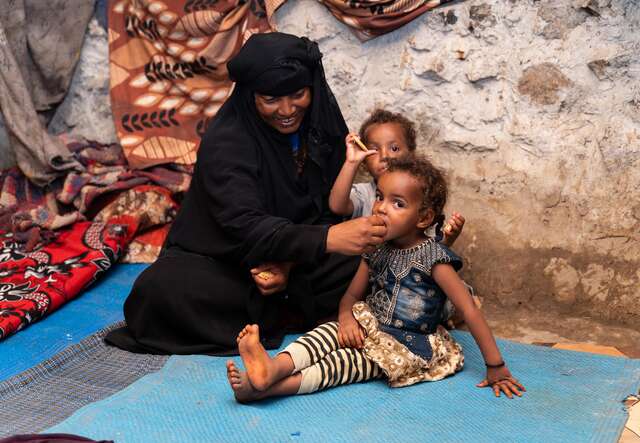
Asma and Abdo's recovery in 2022 shows what sustained accessible nutrition care can achieve, but the family's continued struggle to afford food and access healthcare also shows why recovery cannot be treated as an endpoint. The camp where we last saw Asriya is now left without IRC support, which means that many children are more at risk of relapsing into malnutrition while we look for solutions to resume activities in the area.
Sustainable and reliable humanitarian funding is essential to allow children to recover fully and grow into the healthy, fulfilled adults that their parents dream about.

The International Rescue Committee partners with the European Union to provide life-saving support to people caught in conflict and disasters around the world. Our work funded by the EU enables people to survive, recover and rebuild their lives.